

Audio By Carbonatix
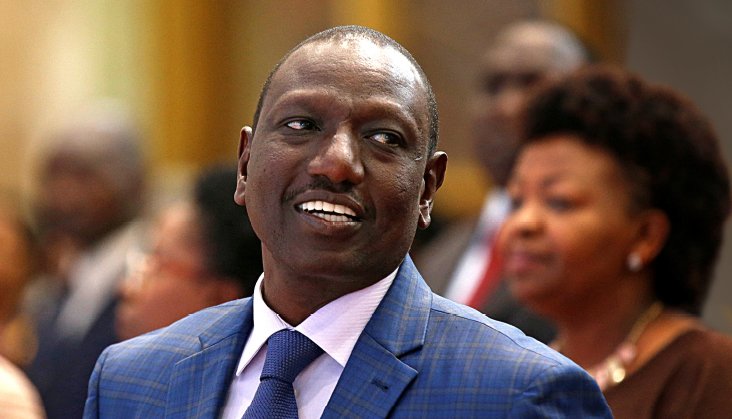
While leaders around the world are introducing subsidies to protect people from the rising cost of living, in his first major policy announcement, Kenya's President William Ruto has surprised the nation by scrapping a subsidy on petrol which has increased the retail price to an all-time high.
This has led to something of a backlash on social media, while analysts warn he risks losing support right at the start of his time in office, after narrowly winning last month's election.
"I stopped driving to work some months back and now I'm worried my commute will become too expensive in case matatus [public service vehicles] hike fares," Nairobi resident John Maina told the BBC.
President Ruto based his election campaign on a populist "Hustler" narrative - promising to improve the lives of ordinary citizens, create jobs and lower the cost of living, while emphasising his own poor background.
One of his campaign pledges was to remove taxes on fuel to lower its cost and so reduce the cost of basic commodities.
But in his inaugural speech, the president announced the end of the subsidy programme, saying it would cost the country $2.3bn (£2bn) by the end of the current financial year, in June 2023.
"This is equivalent to the entire national government development budget," he said, adding that the subsidy had failed to achieve the intended purpose of lowering the cost of living.
Economists agree that subsidies are unsustainable for Kenya and are often just an opportunity for people to swindle money but in the short-term, ordinary Kenyans will feel the pain of a 13% increase in the cost of a litre of petrol to $1.49.
"The impact will definitely be felt because the price of everything is bound to increase," analyst Herman Manyora told the BBC.
He said there was no need to rush such a big decision even before a new government was formed because it made it look like "one man's decision rather than a well-thought government decision".
President Ruto is yet to appoint cabinet ministers who will then require parliament's approval before taking office.
Analyst Javas Bigambo agreed, and said Mr Ruto should have taken more time to explain it to Kenyans first, and also to explain how the money would be used elsewhere, in order to garner public support for the move.
Mr Ruto also said he would not be renewing a subsidy which had halved the cost of the staple food, maize flour, which was introduced just before the elections.
Kenya is currently struggling with record debts and under the terms of a loan with the International Monetary Fund (IMF), it had to remove the subsidies, which describes them as "regressive".
"The benefits of these subsidies tend to accrue to richer households [more] than poorer households," said IMF Africa director Abebe Selassie.
President Ruto has maintained a small subsidy on diesel - used mostly by transporters and manufacturers, and kerosene - which is crucial to rural households for cooking and lighting.
And while removing subsidies on fuel and maize flour, he said he would instead reduce the cost of fertilizer, which has also shot up since Russia's invasion of Ukraine.
Kenya does not produce enough maize to feed itself and he wants to increase national production.
"Our strategy to bring down the cost of living is predicated on empowering producers," said Mr Ruto, who enjoys huge support among Kenya's farming community.
The new administration therefore said it would provide 1.4 million 50kg bags of fertiliser at $29, down from the current market price of $54, beginning on Monday.
But if these decisions don't lower the cost of living in the coming months, Mr Bigambo warned that President Ruto's popularity could take a big hit.
"It will depend on how many other things he does right. If the decisions will not lower the cost of living within the next six to eight months then the joy of the ordinary citizens will not last long," he said.
Latest Stories
-
Arteta signs new contract with champions Arsenal
9 minutes -
Former Man City player Silva comes out of retirement
18 minutes -
‘I have a screen in my office’ – Akandoh on real-time emergency bed tracking
23 minutes -
Government begins pilot of national emergency bed management system
44 minutes -
GRA forms 9-member committee to probe alleged missing containers at Tema Port
1 hour -
Foreign Minister inspects VFS Global Visa Centre, highlights commitment to service quality standards
1 hour -
Declan Rice close to agreeing new Arsenal deal
2 hours -
‘Draining’ few days for Gauff after online racist abuse
2 hours -
Media worker, journalist remanded over alleged GH¢800,000 fraud
2 hours -
PAC sends Ghana Water hearing back, demands Minister and MD appear over financial status
2 hours -
Foreign Affairs Minister inspects 20+ visa centres, demands better conditions for Ghanaian applicants
2 hours -
Guardiola set to attend Man City v PSG next week
3 hours -
GACL to hold full-scale emergency simulation exercise on October 15
3 hours -
327 entries submitted for 30th GJA Media Awards
3 hours -
Mahama proposes rent-to-own scheme for unfinished houses
3 hours