

Audio By Carbonatix
Anti-corruption campaigner Vitus Azeem has cautioned that the increasing use of plea bargain arrangements in corruption-related cases could weaken Ghana's fight against graft if not handled with transparency and strict safeguards.
Commenting on reports that the Ashanti Regional Chairman of the New Patriotic Party (NPP), Bernard Antwi Boasiako, popularly known as Chairman Wontumi, is seeking a plea bargain arrangement in the ongoing GH¢30 million Exim Bank fraud trial, Mr Azeem said such agreements, although provided for under Ghanaian law, could create the impression that individuals accused of financial wrongdoing can avoid meaningful sanctions by simply agreeing to repay funds.
READ ALSO: Wontumi seeks plea deal in GH¢30m Exim Bank fraud trial — AG notifies High Court
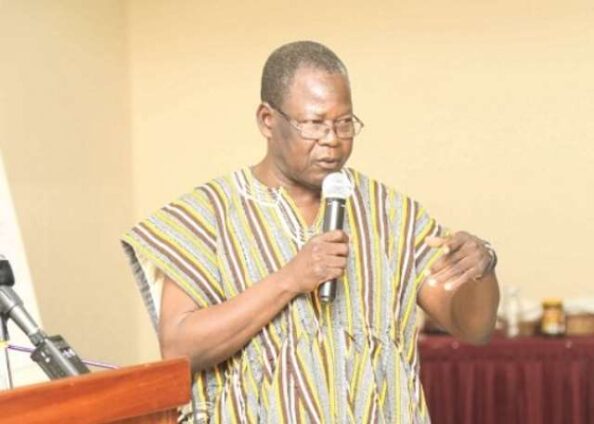
Speaking on The Pulse programme on JoyNews on Thursday, June 11, Mr Azeem argued that while plea bargaining may sometimes serve the interests of the state, it should not become a routine mechanism for resolving corruption cases.
"Well, it doesn't actually help the fight against corruption. Because if you can legally take money and then at some stage you plead to pay it back and the state accepts you to pay it back without any sanctions, I think that doesn't help the fight against corruption," he stated.
Difficult choice for the state
Mr Azeem acknowledged, however, that governments are often confronted with difficult decisions when dealing with economic crimes, particularly where the recovery of state funds is concerned.
According to him, authorities may sometimes have to balance the prospects of recovering substantial sums of money against the costs and consequences of pursuing lengthy criminal prosecutions.
"Well, it's a very difficult decision for the government to take. Because sometimes you look at, if we forfeit all this money and we go and lock up the person himself in jail, and then the state continues to feed him and take care of him in jail, what will be the benefit?" he said.
"So you have to weigh that against the money that you've lost and the effect it will have in the fight against corruption."
He stressed that such decisions must be made carefully and in the broader public interest, noting that the potential impact on public confidence in anti-corruption efforts cannot be ignored.
Not a practice to encourage
The anti-corruption advocate warned that normalising plea bargains in corruption cases could create perverse incentives for public officials and businesspersons.
He explained that if individuals believe they can unlawfully benefit from state resources, invest or utilise those funds for years and later negotiate repayment when investigations catch up with them, the deterrent effect of anti-corruption laws could be significantly weakened.
"As I've just said, I think we should not encourage it, but sometimes if there's no way out," he said.
He added: "When you encourage it, then I can take common money to go and spend it or invest it in something and in three years' time you start a trial and I want to pay back the money. Maybe even with interest, but then I would have had the benefit of my investment."
"And so that is the situation that we should not be encouraging."
Call for transparency
Mr Azeem also urged government institutions to be fully transparent whenever plea bargain arrangements are considered in high-profile corruption cases.
According to him, civil society organisations and anti-corruption groups have a responsibility to scrutinise such agreements and ensure that the public is adequately informed about the conditions under which they are reached.
"It is advocacy to put pressure on the government to accept it. And to insist that government should be transparent in the conditions for accepting that plea bargain so that everyone will see whether there's reason to accept it or no reason to accept it," he stated.
His comments come amid growing public interest in the legal proceedings involving Chairman Wontumi and discussions over whether a negotiated settlement would better serve the state's interests than a prolonged court process.
Law should remain
Despite his reservations about the frequent use of plea bargains, Mr Azeem opposed calls for the legal provisions governing such arrangements to be abolished.
He argued that plea bargaining remains a necessary tool within the justice system because certain circumstances may warrant negotiated settlements.
"I think the law is necessary. As I said, in certain cases you have no choice. So why change the law?" he said.
According to him, the existing legal framework already grants discretion to the state to determine whether a plea bargain is appropriate based on the specific facts and merits of each case.
"The law should remain as it is so that the government can take a decision based on the individual cases, the merit of each individual matter," he added.
Latest Stories
-
Power restoration fault suspected in Kumasi Central Market fire
4 hours -
The 7-foot giant of Ngleshie Amanfro: Seven-foot Ghanaian Ephraim Saawa dreams of joining the national basketball team
4 hours -
Government promises support for Kumasi Central Market fire victims
5 hours -
Vibes The Movie: Big Ghun’s Ghanaian film earns five nominations at 2026 REFFA
5 hours -
MamaCare CEO warns unresolved conflicts among health workers could undermine maternal and neonatal care
5 hours -
Health professionals urged to translate medical knowledge into practice to save mothers
6 hours -
Conflicts among care providers linked to maternal, neonatal deaths – Expert
7 hours -
GIS marks 10th TIME conference, champions improved teaching practices
7 hours -
BRICS Or Balance? What Ghana’s bid really means
8 hours -
GPRTU wants full TRAFFITECH-GH implementation to start in 2027
8 hours -
Mahama announces plans to import electric wheelchairs for PWDs
8 hours -
KGL U17 Colts 2026: Western beat Prempeh Elite Academy to set up final final with Greater Accra Region
8 hours -
Late Solanke strike salvages 10-man Spurs draw at Man United
9 hours -
Gender Ministry to monitor welfare of Nana Akua Addo’s children amid domestic violence case
9 hours -
Benedict Okyere Yeboah: Ghana’s football problem goes beyond sacking a coach
9 hours