

Audio By Carbonatix
The World Bank has expressed concern about Ghana's increasing reliance on its natural resources.
In its 2022 report on Country Climate and Development Report (CCDRS) on Ghana, the World Bank noted that Ghana has not been able to maintain its natural resources.
It said the country lags behind on most indicators of sustainable use of natural resources and environmental health.
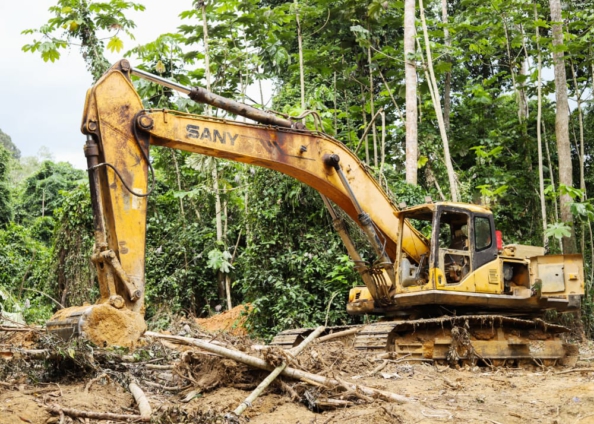
“First, Ghana’s economy has become more, not less, reliant on natural resources extraction…Ghana has been depleting its renewable natural capital, which is a key source of livelihoods… Deforestation is high and spatially concentrated in areas of high poverty, with land use change from forest to agriculture causing about 92 percent of deforestation,” the report stated.
According to the report, since 1997, Ghana’s demand per person for global natural resources has been exceeding the biocapacity causing a steady rise in the ecological deficit.
It explained that “Ghana’s high population growth and increased demand for natural resources makes the demand per person on global natural resource an increasingly pressing concern since a shrinking natural capital stock will need to be shared with larger future generations, hampering the capacity of remaining ecosystems to deliver their services.”
World Bank says Ghana’s over-reliance on natural resources has already affected the climate in the country.
“The average number of ‘hot’ days has increased by 13 percent, while the number of hot nights per year increased by 20 percent. This is highly significant for a country with a tropical climate, an average annual temperature of 28 degree Celsius (2020), and relative humidity between 77 and 85 percent.”
It added that rainfall has become more erratic, sea level has risen and there has been increased coastal erosion due to changes in hydrodynamics.
The report was published in the wake of Ghana’s plan to procure oil with gold for the Ghanaian market. This is expected to address the “dwindling foreign exchange reserves” to procure oil products.
Vice-President Dr. Mahamudu Bawumia disclosed this on his Facebook page last week Thursday.
“The barter of sustainably mined gold for oil is one of the most important economic policy changes in Ghana since its independence.”
He said the government expects “this new framework to be fully operational by the end of the first quarter of 2023.”
Latest Stories
-
World Cup 2026: Black Stars players to receive $100,000 as appearance fee – Sports Minister
4 hours -
Nigerian retired general abducted with his wife in the north-west
4 hours -
TTU crowned Overall Best Innovator at ARCTUG 2026
4 hours -
NPP members oppose resumption of Asante Mampong polling station elections
4 hours -
Educators, traditional leaders call for stronger link between humanities and skills development
4 hours -
Severe rainstorm wreaks havoc at Adaklu Kodzobi Ando
4 hours -
Hundreds arrested and dozens of police injured after Champions League riots in France
5 hours -
AMECO launches 80th anniversary with a focus on infrastructure development
5 hours -
Health Ministry receives pulse oximeter donation to support Free Primary Healthcare initiative
5 hours -
Will controlling hostel rents solve the accommodation challenges on our campuses?
5 hours -
2026 U17 WWCQ: Black Maidens to face Senegal in final round
5 hours -
McDan graces Hitz Rep Ur Jersey at Aviation Social Centre, makes commentary debut in UCL final
7 hours -
Damang Gold Mine invests $250 million in mining equipment
7 hours -
Richard Ankomah beats competition to win Hitz FM Rep Ur Jersey 2026 Quiz
8 hours -
Afriyie Wutah marks birthday with ‘Summer Jam’ featuring Maxi Priest
9 hours