

Audio By Carbonatix
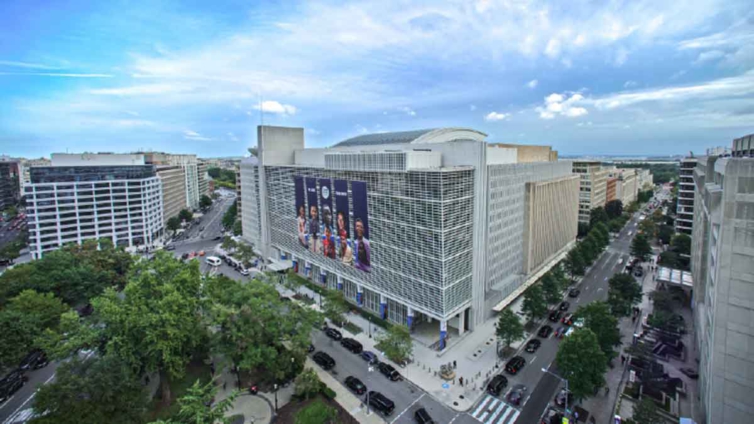
With less than three months to end the year, the World Bank is projecting a significant rise in Ghana's total public debt for this year.
According to the Bretton Wood's institution October 2020 Africa Pulse Report, this is due to the widening fiscal deficit as a result lower revenue and high expenditure brought about by covid-19.
The country’s debt has already hit GHS263 billion, about 68.3% of Gross Domestic Product in July 2020.
Ghana still remains a high risk debt distress country, according to the World Bank’s analysis. Neighboring Ivory Coast is however classified as having moderate debt levels and in the moderate risk category.
The Sub Saharan Africa region’s level of public debt will however hit 63.1% of GDP in 2020.
The World Bank said sustainability of post-COVID-19 will depend on the ability of Sub-Saharan African countries to alleviate their mounting debt burdens and create increased fiscal space.
According to volume 21 of the Africa’s Pulse, the World Bank said effective economic policies, which include macroeconomic and debt management, will increase a country’s capacity to repay its debts. “Enhancing debt management requires better debt transparency and improved efficiency in the use of borrowed resources to expand the fiscal space”, it said.
It also emphasized that creating fiscal space will help the economy cushion the effects of the pandemic crisis and avoid a deeper recession—including in countries with less diversified economic structures.
Additionally, managing a country’s borrowing patterns will reduce the risk profile of debt and may help alleviate the adverse growth effect of the pandemic shock, it added.
Components of Ghana’s debt
The external component of the GHS263 billion debt is estimated at GHS138 billion [$24.3bn], representing 35.8 percent of GDP.
The domestic component of the debt is also estimated at GHS125.1 billion, approximately 32.5% of GDP.
The financial sector resolution bond however constitutes GHS14.2 billion, which is equivalent to 3.7 percent of GDP.
Interest payments
Ghana is expected to pay about GHS26 billion on interest payments for this year alone.
This will be a little over GHS6 billion interest payments in 2019. Last year, interest payments cost the nation about GHS19.756 billion on loans borrowed.
Out of this, GHS4.60 billion was spent on the external debt, while GHS15.156 billion was used to service loans contracted from the domestic market.
Latest Stories
-
NPP revises internal election guidelines to strengthen transparency and inclusiveness
50 minutes -
NACOC set to issue licences to qualified applicants for cannabis cultivation – Deputy Director-General
58 minutes -
Easter Outreach: Victory Bible Church offers free healthcare, NHIS support to hundreds
1 hour -
NPP cannot pressure Mahama to sign a bill not yet received—Solomon Owusu
1 hour -
MPs, institutions deepen support for Ghana Sports Fund with fresh contributions
1 hour -
Four people die trying to board boat in Channel crossing attempt
1 hour -
Abirem MP announces GH₵500,000 education fund to support needy students
1 hour -
African stakeholders call for stronger ‘One Health’ action on climate and health crises
1 hour -
DVLA to commission 5 new service centres in Greater Accra
2 hours -
Agenda 111 and the right to health: A broken social contract
2 hours -
Bawa-Rock Ltd funds GH¢400,000 free surgeries for 102 vulnerable patients
2 hours -
Lambussie MP awards over GH¢200,000 in scholarships to students
2 hours -
Vice President expresses gratitude after double enstoolment in Volta Region
2 hours -
Beyond the Noise: Rebuilding trust in journalism in a digital age
2 hours -
I have to follow the law – CAF president tells Senegal regarding AFCON saga
2 hours