

Audio By Carbonatix
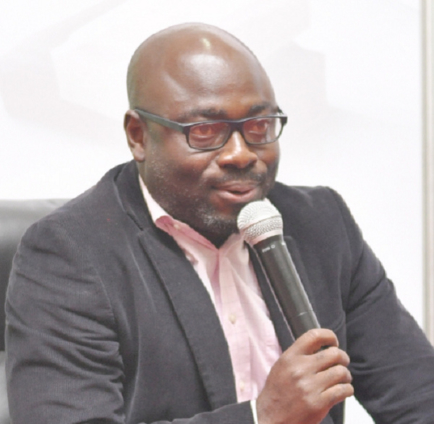
A finance professor at the University of Ghana Business School (UGBS) says the World Bank's assessment of Ghana's economy is a true reflection of the reality on the grounds.
According to Professor Lord Mensah, the recent economic analysis by the World Bank is not far from the truth.
In an interview with Benjamin Akakpo on the AM Show, he explained that over the years, the calculation of Ghana's debt has been done in a way that does not reflect the true state of the country's indebtedness.
This he said, is responsible for the current economic crisis in Ghana.
"Being an external stakeholder of this economy, it is anticipated that once in a while, they'll come and give us their perspective of the Ghanaian economy. And truly, what they said is a reflection of what is happening on the grounds", he stressed.
Professor Mensah continued: "Looking at our debt, I think we've been calculating our debt without the contingent liabilities over the years, and if I say contingent liabilities, what I mean is the liabilities that have some inflows to them so we think it is not debt".
"And we should know that all those inflows that are tied to this debt operate under a certain umbrella which is the economy. So if the economy is not doing well, obviously those inflows will also be impaired and it can affect your debt payment".
The comments by Professor Lord Mensah follow the latest World Bank report which classified Ghana as a high debt distress country.
A country which is highly debt distressed is unable to fulfil its financial obligations and, therefore, debt restructuring is required.
The report indicated that the country's debt to Gross Domestic Product (GDP), is expected to hit 104.6% by the end of 2022.
According to its October 2022 Africa Pulse Report, debt is expected to jump significantly from 76.6% a year earlier, amid a widened government deficit, massive weakening of the Cedi, and rising debt service costs.
These pronouncements by the World Bank have since thrown a lot of concerned stakeholders into worry; with many questioning the future of Ghana's economy.
This is because already, the country is in talks with the International Monetary Fund (IMF) to conduct a debt sustainability analysis amidst the present economic woes.
Commenting on the issue, Professor Lord Mensah said this is the time for government to invest more effort into its economic policies to help salvage the situation.
Meanwhile, government maintains that it is working assiduously around the clock to place the country's economy on a better footing, amidst the challenges.
Latest Stories
-
Muntaka vows not to compromise in prosecuting drug suspects despite political pressure
16 minutes -
Cannabis traffickers using ambulances and bullion vans – Interior Minister
21 minutes -
Over 90% of people displaced by Savannah conflict back home – Muntaka
27 minutes -
LA28: Desmond Ofei invites 32 Black Meteors players for Libya clash
37 minutes -
ECG to undertake maintenance work in parts of Accra from October 12 to 16
42 minutes -
Ablakwa: Ghana’s Embassies, High Commissions to support World Assemblies of God Congress
50 minutes -
Joyce Bawah Mogtari cites infrastructure, healthcare reforms as evidence of Mahama’s development agenda
51 minutes -
Ghana had no single gadget to detect narcotics when we took office – Muntaka
57 minutes -
GES to consult stakeholders on academic calendar adjustments
1 hour -
Mahama reaffirms commitment to equitable development across Ghana
1 hour -
Youth employment must remain central to Ghana’s economic reset – Joyce Bawah Mogtari
1 hour -
Ethnic conflicts, land disputes and illicit drugs remain major security concerns – Muntaka
1 hour -
Mahama Ayariga visits Kumasi Central Market fire scene to assess damage
1 hour -
Ghana has 48 legitimate entry points but over 300 illegal crossing points – Interior Minister
2 hours -
Ghana is much safer now than in 2025 – Muntaka
2 hours