

Audio By Carbonatix
The Trades Union Congress (TUC) has issued a seven-day ultimatum to the government, demanding the withdrawal of the imposition of Value Added Tax (VAT) on electricity consumption beyond the lifeline threshold.
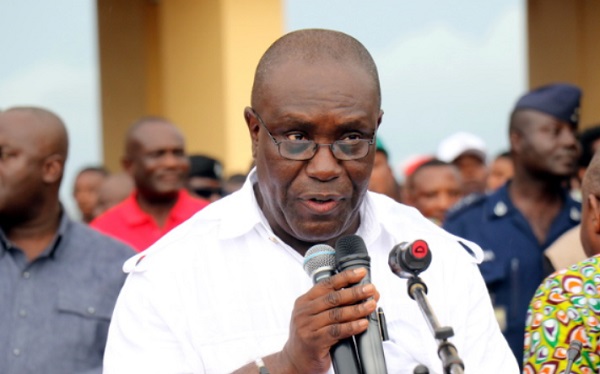
The Secretary General of TUC, Dr. Yaw Baah stressed on the detrimental impact of this move on the livelihoods of ordinary Ghanaians, particularly pensioners and those with low incomes.
During a press conference on Tuesday, January 23, Dr. Baah emphasised that the impoverished population in the country cannot afford to bear the additional tax burden.
He called on the government and its agencies to promptly retract the implementation of the proposed tax.
“It’s always the poor people in this country, including pensioners, who bear the brunt. And we should not allow that to continue. Organised Labour, we have come together and our message to the government is very simple, we cannot pay VAT on electricity.
“We will not pay it today or tomorrow. Organised Labour is demanding the immediate withdrawal of the letter, and another directive from the Finance Minister to Ghana Grid Company (GRIDCo), ECG to stop the implementation of the VAT on electricity. We are giving the government, up to January 31, 2024, to withdraw the letter,” Dr Yaw Baah said.
He emphasised that they would take the necessary action if the Finance Minister does not instruct GRIDCo and ECG to retract the letter.
“If by that time the Minister of Finance fails to give directive to GRIDCO and ECG, we will advise ourselves,” he said.
In a letter dated January 1, Finance Minister Ken Ofori-Atta instructed the Electricity Company of Ghana (ECG) and the Northern Electricity Distribution Company (NEDCO) to implement the VAT, with the goal of generating revenue for the COVID-19 recovery programme.
The government has outlined the rationale for the imposition of a 15 percent VAT on electricity consumption.
This measure is part of the government's COVID-19 recovery programme, aiming to generate additional revenue.
Deputy Energy Minister Agyapa Mercer speaking in an interview with Citi FM on Monday, January 15, emphasised that while it was a challenging decision, it is necessary to settle debts owed to independent power producers.
“Obviously, if you look at the scope of the tax and what it is intended to do—raise revenue to meet some obligations of the government in the energy sector—it will interest you to know that, as we speak, as of July 2023, the amount of money that we owe to the IPPs alone is in the region of GH¢1.7 billion.
Latest Stories
-
China reaffirms unwavering ties with Ghana as Ambassador presents credentials
15 minutes -
Wrongful teacher postings undermine early childhood education in Upper East
20 minutes -
Five new envoys present Letters of Credence to Mahama
25 minutes -
BoG Governor says building buffers and lowering credit costs go together
31 minutes -
Fuel shock looms as petrol nears GH¢15.19, diesel GH¢17.85 from April 1
38 minutes -
From May to December, nothing works – Tomato traders reveal harsh reality for farmers
51 minutes -
Ghanaian farmer can’t grow tomatoes because of lack of irrigation – Tomato Importers Association president
1 hour -
Social media firms must better enforce Australia under-16 ban, watchdog says
2 hours -
King Charles should meet Epstein victims, US lawmaker says
2 hours -
Belgian ex-diplomat appeals order to stand trial in Congo’s Lumumba murder
2 hours -
Cholera aid for African countries stalled by Iran conflict
2 hours -
The Oscars are leaving Hollywood
2 hours -
Too watery, too risky – Why Ghanaian traders prefer Burkina tomatoes
2 hours -
We buy from Burkina because ours rot fast – Tomato traders defend import dependence
3 hours -
Nigeria’s giant oil refinery fails to prevent record gasoline prices
3 hours