

Audio By Carbonatix
A youth-led anti-corruption organisation, the Bright Future Alliance, is accusing Ghana’s judiciary of weakening the country’s fight against corruption through prolonged trials, legal setbacks, and poor outcomes in high-profile cases.
At a press conference at the Mikado Holdings Plaza, in Accra, the group criticised what it describes as a troubling pattern of judicial decisions that undermine the work of anti-corruption institutions such as the Office of the Special Prosecutor (OSP), the Attorney-General’s Department, and the Economic and Organised Crime Office (EOCO).
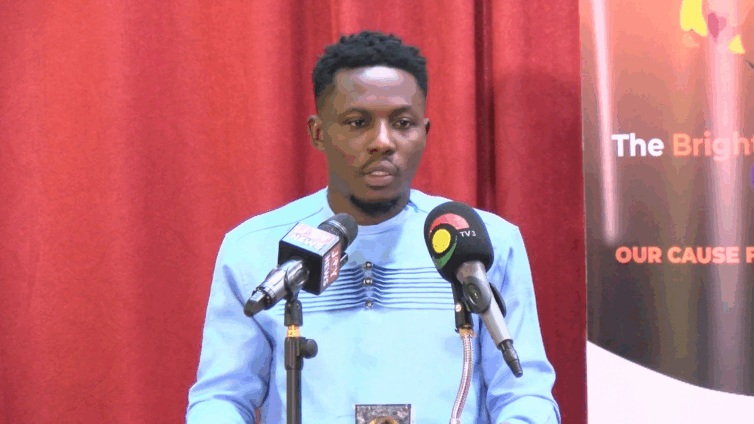
Executive Director of the Alliance and a member of the Youth Integrity Advisory Board under the United Nations Office on Drugs and Crime, Bright Ofori, cited several cases as evidence of systemic failure within Ghana’s courts.
“The case involving former PPA CEO Adjenim Boateng Adjei, accused of procurement corruption, has dragged on since 2020 and is still stuck at the case management stage. Former Sanitation Minister Cecilia Dapaah was found with large sums of unexplained cash. Her frozen accounts were later unfrozen by the court due to lack of evidence, and the case was eventually dropped. Charles Bissue, accused of corruption linked to illegal mining, has experienced repeated delays. The OSP was fined for slow responses, and the matter is now adjourned to May 2025. In Kumasi, a video showed an MCE nominee allegedly bribing assembly members for confirmation. Despite video and witness evidence, the court acquitted and discharged him,” he said.
According to the Alliance, such outcomes erode accountability and suggest that politically connected individuals can evade justice, while marginalised citizens face swift punishment for minor offences.
The group is calling on the Acting Chief Justice and the Judicial Council to treat corruption cases with the same urgency and rigour as political or election-related petitions.
They are also demanding enhanced institutional support for prosecutorial and anti-corruption bodies—through adequate funding, legal protection, and a judiciary that recognises the importance of their work.
They argue that Ghanaians—particularly the youth—are increasingly disillusioned with what they see as judicial inaction. Without urgent reform, they warn, public confidence in the justice system and in Ghana’s democratic institutions may collapse.
Despite these frustrations, the group remains hopeful that with the right changes, the judiciary can be repositioned to serve justice and ensure those involved in corrupt acts are duly held accountable.
Latest Stories
-
Mahama to open African Court judicial year in Arusha, mark 20th anniversary
4 minutes -
Ghana begins partial evacuation of Tehran Embassy as Middle East tensions escalate
19 minutes -
EPA tightens surveillance on industries, moves to cut emissions with real-time monitoring system
34 minutes -
Police conduct show of force exercise ahead of Ayawaso East by-election
2 hours -
Ghana launches revised Early Childhood Care and Development Policy to strengthen child development framework
3 hours -
AI to transform 49% of jobs in Africa within three years – PwC Survey
3 hours -
Physicist raises scientific and cost concerns over $35m EPA’s galamsey water cleaning technology
3 hours -
The road to approval: Inside Ghana’s AI strategy and KNUST’s leadership
4 hours -
Infrastructure deficit and power challenges affecting academics at AAMUSTED – SRC President
4 hours -
Former US diplomat sentenced to life for abusing two girls in Burkina Faso
4 hours -
At least 20 killed after military plane carrying banknotes crashes in Bolivia
4 hours -
UK reaffirms investment commitment at study UK Alumni Awards Ghana 2026
4 hours -
NCCE pays courtesy call on 66 Artillery Regiment, deepens stakeholder engagement
4 hours -
GHATOF leadership pays courtesy call on Chief of Staff, Julius Debrah
5 hours -
KiDi unleashes first single of the year ‘Babylon’
5 hours