

Audio By Carbonatix
The government has announced a major intervention to transform secondary education and eliminate the double-track system through a US$300 million World Bank-supported project.
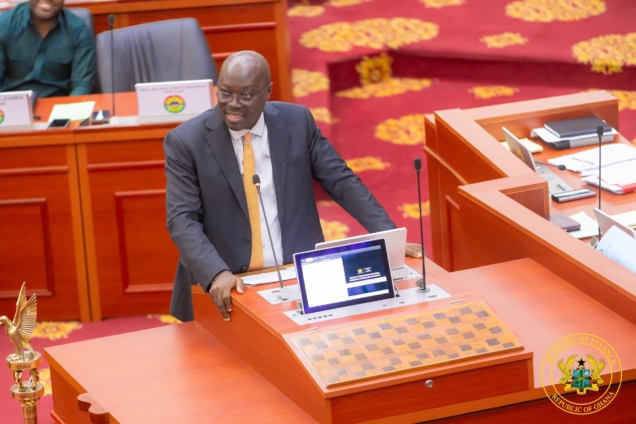
Finance Minister Dr Cassiel Ato Forson, presenting the 2026 Mid-Year Budget Review in Parliament on Thursday, July 23, said the initiative forms part of the government’s efforts to improve access to quality education, expand participation in STEM and Technical and Vocational Education and Training (TVET), and equip young people with skills needed for the future job market.
According to him, the project will deliver 210 major infrastructure interventions across the country, including the construction of 10 new secondary schools and the rehabilitation of 150 existing schools.
Additionally, 30 Category C schools will be upgraded to Category B status, while 20 Category B schools will be upgraded to Category A. The project will also include the provision of furniture for beneficiary institutions.
Dr Forson said the new schools will be strategically distributed across regions with limited access to secondary education.
“One new school each will be constructed in the Western, Western North, Greater Accra, Volta, Oti, Northern, Upper East, Upper West, Savannah, and Central Regions,” he told Parliament.
The Finance Minister explained that the intervention is expected to benefit about 2.3 million students, more than 100,000 teachers, and approximately 2,000 school leaders nationwide.
He said the investment will support the government’s broader objective of improving learning outcomes, particularly in Mathematics and Science, while creating a more effective secondary education system.
“Education remains one of the most powerful investments we can make in the future of our country,” Dr. Forson said.
He added that the project will "contribute significantly to the government’s commitment to ending the double-track system and ensuring that students have access to improved learning environments."
The government has maintained that expanding infrastructure, strengthening STEM and TVET education, and developing digital and green skills among young people are critical to preparing Ghana’s workforce for future economic opportunities.
Latest Stories
-
Conflicts among care providers linked to maternal, neonatal deaths – Expert
36 minutes -
GIS marks 10th TIME conference, champions improved teaching practices
43 minutes -
BRICS Or Balance? What Ghana’s bid really means
1 hour -
GPRTU wants full TRAFFITECH-GH implementation to start in 2027
1 hour -
Mahama announces plans to import electric wheelchairs for PWDs
2 hours -
KGL U17 Colts 2026: Western beat Prempeh Elite Academy to set up final final with Greater Accra Region
2 hours -
Late Solanke strike salvages 10-man Spurs draw at Man United
2 hours -
Gender Ministry to monitor welfare of Nana Akua Addo’s children amid domestic violence case
2 hours -
Benedict Okyere Yeboah: Ghana’s football problem goes beyond sacking a coach
2 hours -
GPL 2026/27: Darkwah Wiafe’s winner sees All Blacks beat Kotoko
2 hours -
ITF World Tour : Patel Wins Boys’ Singles Final at J100 Accra
3 hours -
Ghana must pursue BRICS partnership if it brings economic benefits – Kpebu
3 hours -
Success and Wright Claims J100 Accra Girls’ Doubles Championship
3 hours -
ITF J100: America’s Wright wins J100 Accra Girls’ Singles Title
3 hours -
Expedition hopes to find aviator Amelia Earhart’s plane on remote island
3 hours