

Audio By Carbonatix
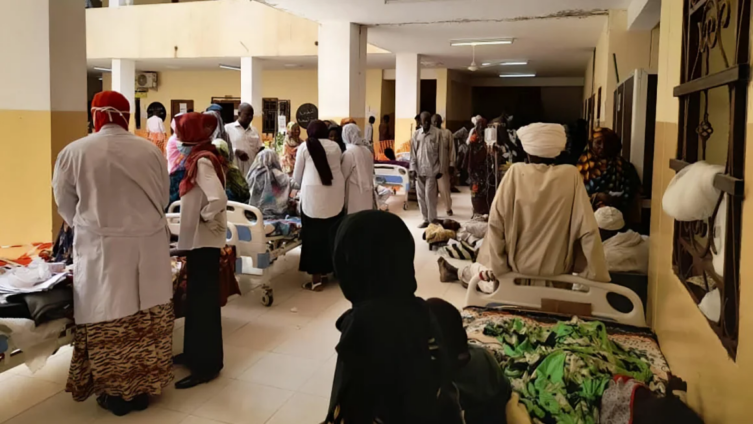
Over 130 people have died at a single hospital in Sudan's besieged city of El Fasher, in the Darfur region, according to medical charity Médecins Sans Frontières (MSF).
Fighting between rival groups in Sudan's civil war in the battle for control of the city has recently intensified.
The situation was "terrible," one resident told the BBC, with hospitals and markets experiencing "violent artillery shelling".
El Fasher is the last major urban centre in Darfur that remains in the hands of Sudan's army.
The army has been fighting the paramilitary Rapid Support Forces (RSF) for more than a year, in a civil war that has killed thousands and forced millions from their homes.
The army remains in control of El Fasher. The city has become a refuge for people displaced by fighting in other areas.
On 10 May the RSF intensified their assault on the city, in what UN Secretary-General Antonio Guterres called "an alarming new chapter" in Sudan's conflict.
MSF said one of its hospital was struggling to cope with the increased casualties.
South Hospital had treated 979 casualties in just over two weeks, the charity said on Sunday. 134 had died, "a sign of the violent intensity of the fighting", it added.
Supplies at the hospital are running low and will last barely a week, the UN said.
On Friday MSF said that across the city, more than 700 people had died over the past 10 days.
The medical director of El Fasher's government-run Saudi hospital told the BBC the situation was "terrible".
"Since the early morning, the RSF began violent artillery shelling of the city, targeting residential areas, markets, and hospitals," Modther Ibrahim Suliman said.
The Saudi and South hospitals are the last functioning in the region. The Saudi Hospital was previously shuttered by the violence but it partially reopened to treat emergency cases.
El Fasher residents say that access to food and water has become increasingly difficult. The RSF has been attacking the city from three sides and blocked all supply routes.
Despite the hardships, many residents in the city are not leaving their homes because of the fighting, even for emergency medical care.
Journalist Mohamed Zakaria said he had no plans to flee. "There is no place to go to... the road is very difficult and dangerous right now".
Earlier this week, a UN expert warned civilians in El Fasher were being targeted because of their ethnicity.
Special adviser Alice Wairimu Nderitu added that the Darfur region as a whole was facing a growing risk of genocide as the world's attention remained focused on conflicts in Ukraine and Gaza.
Latest Stories
-
Suhum MP vows NPP will probe Gold-for-Reserves in 2029
57 seconds -
Ghana to host Zimbabwe’s President Mnangagwa on three-day state visit
4 minutes -
Ghana pushes for stronger West African blue economy partnership at Liberia fisheries investment conference
4 minutes -
Ghana hosts high-level African climate strategy meeting ahead of COP31 and COP32
22 minutes -
Today’s Front pages : Tuesday, March 31, 2026
38 minutes -
President Mahama welcomes Zimbabwe’s Mnangagwa for three-day state visit
43 minutes -
Dr Anthony Adjiepong’s Pharmatrust Pharmacy receives top recognition at UG’s White Coat ceremony
57 minutes -
OMCs increase in fuel prices at pumps: GOIL sells petrol at GH¢13.30 and diesel GH¢17.10
1 hour -
Gender Ministry convenes Equity Committee meeting, commissions secretariat to strengthen coordination
2 hours -
Aggie Asiimwe Konde: Soil is Africa’s hidden growth asset
2 hours -
Fiscal slippage could weigh on Ghana’s credit rating – S&P warns
2 hours -
Gender Ministry reviews Anti-Trafficking Action Plan to strengthen implementation
3 hours -
Fidelity Bank supports UG’s ‘One Student, One Laptop’ initiative
3 hours -
Ellembelle MP donates 1,000 set of furniture to KIMTECK
3 hours -
We’re focused on basic needs, not Anti-LGBTQ Bill – Mahama
3 hours