

Audio By Carbonatix
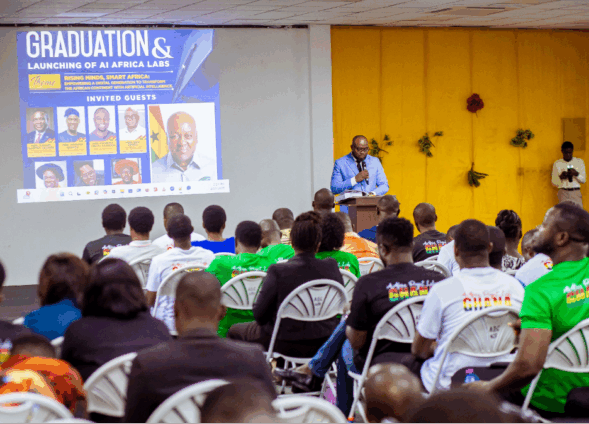
On Tuesday, August 12, the Ghana Digital Centre hosted a landmark moment in our technology story: the formal unveiling of the AiAfrica Labs network alongside the commissioning of 250 new AI graduates.
Representing the President, the deputy minister for Communication, Digital Technology and Innovations, Mohammed Adams Sukparu, performed the official duties and urged the nation to treat AI not as a fashion, but as a national capability.
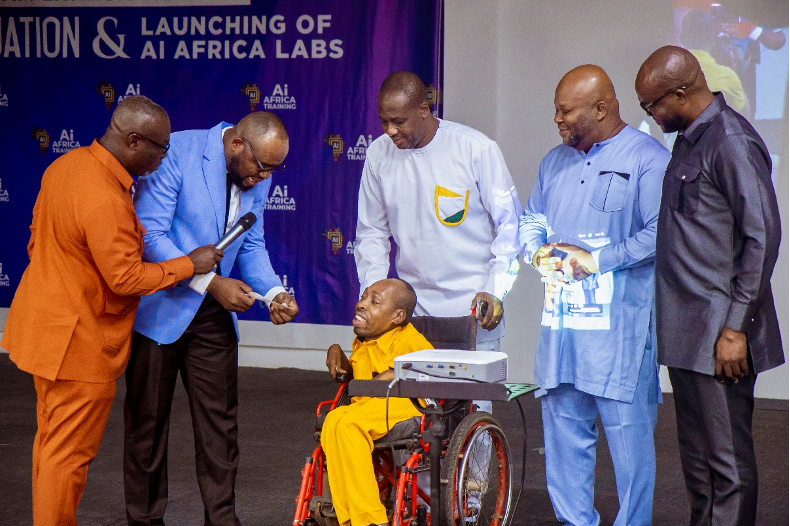
A powerful, human moment underscored the values behind the program: Mr. Nicholas Donkor, an innovator with different abilities, received his certificate from the deputy minister, who also announced a GHS 10,000 personal donation to support Nicholas’s app development.
The message was clear: inclusion is not a slogan; it’s how Ghana will build.
- What Was Launched — and Why It Matters
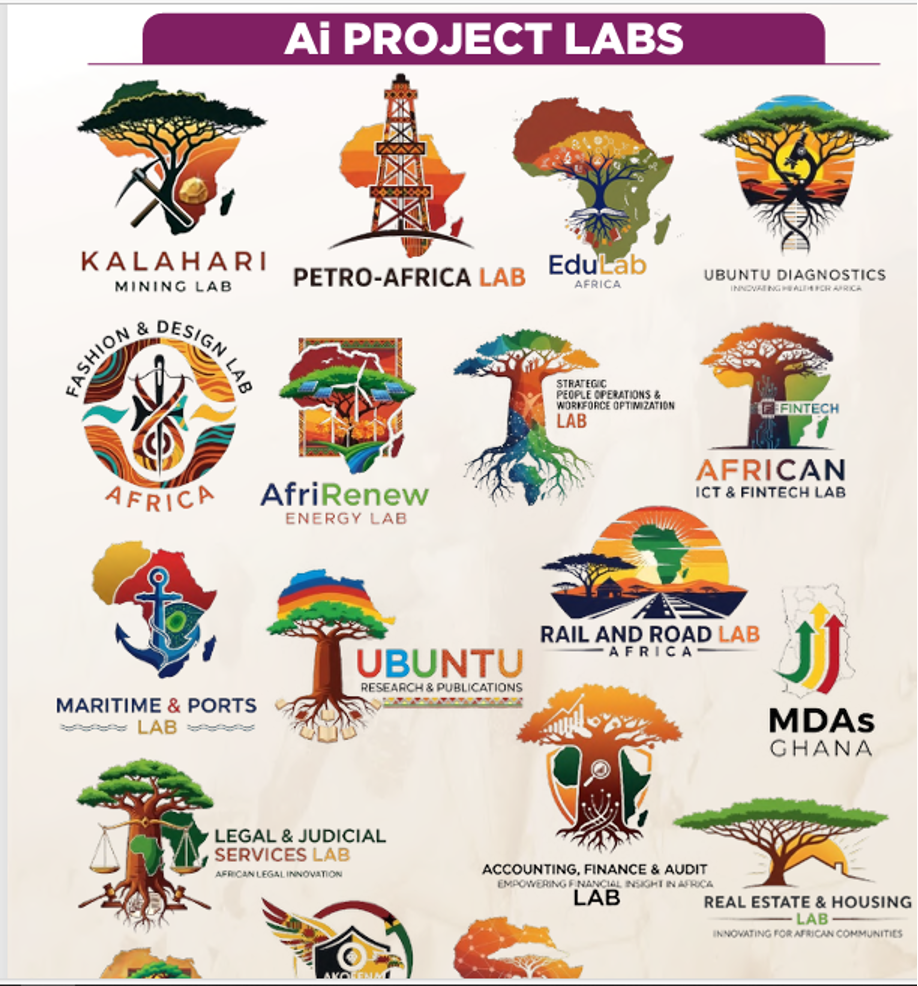
The ceremony commissioned the first 20 AiAfrica Labs (within a curated 21-lab network) as Ghana’s engine room for problem-solving across agriculture, health, finance, education, logistics, and public administration. Think of it as a three-part capability stack:
- Infrastructure for action: AiAfrica Labs (where ideas are tested until the economics and social impact are proven).
- The tool: the Ghanaian AI Prompt Bible, a 1,000+ page, country-built operating manual.
- The talent: 250 graduates trained to run Proof-of-Value (PoV) sprints and ship results.
Together, they move AI from talk to traction, replacing scattered pilots with repeatable proofs that financiers and ministries can trust.

2. Ghana Leads Africa — The Authors and the Next Launch
Ghana is the first country to launch a national Prompt Bible, authored by three practitioner-scholars:
- Dr. David King Boison — Lead Consultant & Founder, AiAfrica Labs; principal author; two decades across AI, ports, and public finance (two PhDs).
- Professor Nelson Alino — Management strategist; co-author of the Ghanaian edition and the forthcoming Nigerian edition; specialist in execution playbooks.
- Professor Iddrisu Awudu — Operations and supply-chain expert; research-to-industry bridge for logistics optimisation and data-driven policy.
Nigeria will launch its edition next month, driven by the Ministry of Digital Economy and E-Governance, with Labs hosted by Digital City Imo and most universities—creating a replication corridor and shared benchmarks across West Africa.

3. Sponsored Training — Real Scale
The 250 graduates were trained under the sponsorship of the African Diaspora Central Bank in collaboration with the Vanuatu Trade Commission in Ghana—a partnership that backs skills for production. The wider program has already reached 2.3 million Africans, including 250,000+ Ghanaians and thousands of specialists now in the workforce. Imo State, Nigeria, offers a vivid demonstration: 2 million+ youths and businesses “plugged in,” using AI in Igbo, advising farmers, and generating viable business plans. This scale traces to the 30 April 2024 continental mission launched at the British Council, Accra, targeting 11 million trainees (including 1 million Ghanaians) in prompt engineering, model creation, and applied AI.
4. Language Should Never Be a Barrier
Lead Consultant Dr. Dr. David King Boison emphasised that the real work is inside the Labs: training models to understand and speak Ghanaian languages so farmers, traders, nurses, and artisans are not left behind. By building tools in Twi, Ga, Fante, Bono, Hausa and more, AI shifts from urban novelty to national utility. This is inclusion with teeth: voice interfaces for extension officers, local-language advisory for SMEs, and service bots that respond in the language people speak.
5. Institutions Already Trained — and Counting
Ghana’s momentum rests on real institutional uptake spanning the public sector, academia, industry, media, and community actors, including:
- GARCC, GFZA, Ghana Digital Centers Limited
- Accra Technical University, Sunyani Technical University, Ho Technical University, Wisconsin International University College (Ghana)
- College of Health (Yamfo), Jospong Group of Companies, Institute of Paralegal Training & Leadership Studies
- GJA – Tema Regional Branch, Amenfeman Rural Bank, Ghana National Tailors & Dressmakers Association – Tema, Adidome Traditional Area
Cross-border partners include Liberia, Nigeria (Imo State), Vanuatu, and Eswatini. Newly announced collaborators: GJA – Tema (newsroom transformation), AIDEC (industry convening), and EP Church, Lashibi (community learning and inclusion). - What the Labs Do — Practical, Sector by Sector
AiAfrica Labs are working bays, not showrooms. Graduates co-create with ministries, universities, firms, and cooperatives to deliver measured outcomes:
- Agriculture: yield optimisation, input planning, disease advisories, and local-language extension.
- SME Finance & Banking: credit scoring, document classification, fraud detection, MSME chatbots.
- Education: generative content for TVET, administrative automation, and student wellness triage.
- Health: triage workflows, stock-level forecasting, referral optimisation.
- Public Administration: e-forms, case management, citizen-service chat, data extraction to cut queues.
The design principle is Proof-of-Value: run short sprints, log the data, audit the results, scale only what performs.
6. Governance & Accountability — Funding Only What Works
The launch carried a clear charge to banks, S&Ls, pension funds, and DFIs: prioritise Lab-Proven solutions. Financing the proof (not the pitch) reduces risk, accelerates adoption, and protects deposits and public funds—while creating value in the real economy. The Ghanaian AI Prompt Bible doubles as a due diligence manual for investment committees and budget holders: checklists, prompts, workflows, and evaluation templates that can be tested, repeated, and scaled. Open data standards and algorithmic auditing raise transparency and trust.
8. Inclusion by Design
From day one, the program has insisted that every region and every language matters. Training models in Twi, Hausa, Ga, Fante, and Bono ensures a cocoa cooperative in Juaboso, a poultry farmer in Dormaa, a fish farmer in Ada, or a seamstress in Tema can interact with AI in a language they own. This is how AI becomes a national productivity lever, not a corporate buzzword—aligned with best practice in equitable digital public infrastructure.
9. The Ecosystem Behind the Stage
The AiAfrica Project is a networked relay, not a lone sprint. Ministries, legislators, the Knowledge Web Centre team, senior research fellows, and sector partners coordinate to keep training pipelines, Lab supervision, and industry placements moving. Even the launch program reflects this hand-over rhythm: welcome; graduation; documentary highlights; goodwill messages; formal Lab launch; and Prompt Bible launch—a sequence designed to move from recognition → responsibility → results.
10. An Invitation — and a Charge — to Ghanaian Institutions
- Universities & TVETs: Co-host a Lab; embed prompt engineering; publish applied research for transfer to industry.
- MDAs & MMDAs: Table concrete problem statements; open non-sensitive datasets; test pilots in permits, licensing, revenue, health supply chains, and extension.
- Banks, S&Ls & Pension Funds: Create Lab-Proven product lines that finance only solutions vetted in Labs and audited for responsible AI.
- Media & Civil Society (incl. GJA – Tema): Tell the stories that build trust; convene communities to shape use-cases.
- Faith & Community (incl. EP Church, Lashibi): Host weekend clinics in local languages to bridge last-mile digital literacy.
- Industry Platforms (incl. AIDEC): Co-design sector sandboxes; publish procurement-ready briefs; channel vetted startups into supply chains.
- Leadership, Ownership, and the Road Ahead
As Dr. Boison reminded the audience, AI sovereignty requires infrastructure + talent—plus the will to use both. The Labs are the infrastructure. The Prompt Bible is the tool. The graduates are the talent. Discipline is next: validate, fund, and scale what works—in our languages, with our data, for our communities. Imo State proves scale is achievable; Ghana proves inclusion is possible. Now we must lead.
11. Final Word — From Launch to Livelihoods
This launch is a beginning, not a finish line. The AiAfrica Labs exist to turn pilots into products, training into jobs, and ideas into enterprises. When banks and public budgets back Lab-Proven solutions, we minimise waste, accelerate adoption, and protect the public purse.
The call to duty:
- To universities: open your doors and co-create.
- To ministries and agencies: bring your hardest problems.
- To banks and funds: finance what the Labs prove works.
- To communities, churches, and mosques: bring your language, your needs, and your imagination.
- To every graduate: your certificate is a covenant—build with it.
“You now have a Bible for Building.” Let’s use it—together—to make AI Ghanaian, practical, and profitable—and to light the path for Africa, with Nigeria’s national Prompt Bible launching next month under the Ministry of Digital Economy and E-Governance, with Labs hosted by Digital City Imo and most universities across the state.
Latest Stories
-
President Mahama is not sincere with Ghanaians on LGBTQ bill matter – Hassan Tampuli
5 minutes -
Gov’t to establish Prison Industrial Hub to equip inmates with income-generating skills – Prison Service boss
24 minutes -
Alhassan Tampuli donates cement, roofing sheets to support storm victims in Gushegu
24 minutes -
Alhassan Tampuli appeals for urgent support for storm victims in Gushegu
27 minutes -
The hypocrisy must stop; pass Anti-LGBTQ+ Bill now – Alhassan Tampuli to Mahama
31 minutes -
Imprisonment should be rehabilitative, not punitive – Ghana Prisons boss at UNGA
53 minutes -
Ga Adangbe traditional priests petition Mahama over McDan aviation licence revocation
1 hour -
Anti-LGBTQ Bill: NDC’s arrogance is worrying – Hassan Tampuli
1 hour -
Let’s give OSP time to mature, not to scrap it – Hassan Tampuli
1 hour -
Nigeria convicts 386 Islamist militants in mass trials
1 hour -
Djibouti president wins election with 97.8% of vote, state media says
1 hour -
We don’t have mandate to deduct tax from rent allowance of security services personnel – Interior Ministry clarifies
2 hours -
Ablakwa receives Presidential Special Envoy on Reparations to advance global agenda
2 hours -
Christina Koch becomes first woman to travel around the moon on Artemis II
2 hours -
Epstein survivors’ calls to meet King Charles and Queen harder to ignore as US visit approaches
2 hours