

Audio By Carbonatix
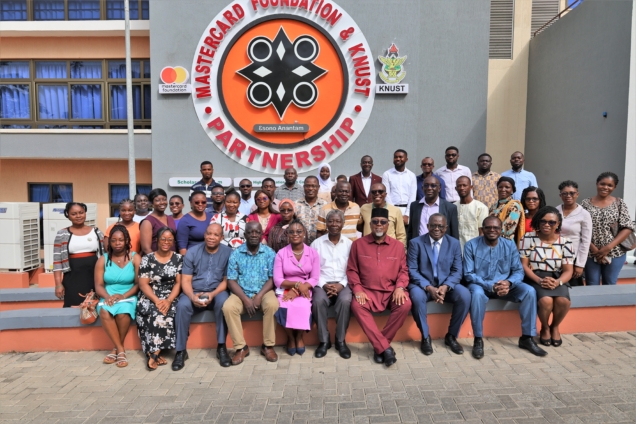
Twenty primary healthcare workers are receiving training in strategic leadership by the Africa Higher Education Health Collaborative at the Kwame Nkrumah University of Science and Technology in partnership with Mastercard Foundation.
The short course, Strategic Leadership for Health Systems Transformation in Developing Countries (SLHSTDC) which is the first of its kind in the world seeks to empower healthcare workers with the requisite skills to drive transformative growth in developing countries.
It is spearheaded by the Health Employment pillar led by Dr. Kofi Akohene Mensah.
Speaking at the opening ceremony, course coordinator, Prof. Easmon Otupiri from the KNUST School of Public Health, attributed global poor health systems to lack of strategic leadership.
“When you add the challenges that we have as a result of pandemics, you’ll realise that health systems have weakened further. Without strategic leadership it’s impossible to get the health systems to function.
“When the health systems don’t function, those sub-populations that are in greatest need never get services they’re supposed to get. Therefore the statistics will remain very poor,” he said.
Director of the KNUST School of Graduate Studies, Prof. Eric Fokuo commending the achievements of the Collaborative suggested the short course is extended to directors of health services across the country.
Dean of the KNUST School of Public Health, Prof. Sam Newton expounding the benefits derived from the Collaborative so far was “hopeful of future collaborations”.
The Africa Higher Education Health Collaborative in partnership with the Mastercard Foundation seeks to advance healthcare in Africa through three pillars: Health Employment, Health Entrepreneurship and Health Ecosystem.
The Health Entrepreneurship pillar aims to develop an entrepreneurial mindset and culture that supports entrepreneurs to create meaningful innovations and employment opportunities in the health sector.
The Health Ecosystem pillar also aims to train and prepare a new generation of talented professionals with the broad sets of skills required to drive equitable and inclusive growth.
The Health Employment pillar also aims to expand and improve current capacities to train primary healthcare workers. This workshop is under the auspices of the health employment pillar. The Principal Investigator, Prof. Ellis Owusu-Dabo hinted of more short courses in the coming months, geared towards strengthening primary healthcare in Ghana.
Latest Stories
-
Gold edges lower with focus on Fed minutes, rate path clues
27 minutes -
Oil prices rise as storms and air strikes threaten supply
36 minutes -
Nigeria nears 2,000 repatriations from South Africa after latest evacuation flight
45 minutes -
World Bank maintains Ghana’s growth rate forecast at 4.8% in 2026
2 hours -
Cedi was worst African currency in quarter 2, 2026 – World Bank
2 hours -
AI gains can lift three times as many people out of poverty in Ghana – World Bank
2 hours -
Scammers target ECG customers with fake meter sales and MoMo payment calls
4 hours -
Banker in court for allegedly stealing GH¢1 million
5 hours -
Police arrest suspect over jewellery theft during fire outbreak
5 hours -
EOCO returns Hanan’s £6,700, GH¢2,750 and devices after defence challenge
5 hours -
Opplift Youth Entrepreneurs Summit 2026 equips entrepreneurs with skills, mentorship and support
5 hours -
Rival clubs want range of punishments for Man City
5 hours -
Tear gas in Paris and Marseille as school protests grow across France
5 hours -
Kane inspires England to win over Czech Republic in UEFA Nations League
6 hours -
Finland orders halt to work on two Google data centres
6 hours