

Audio By Carbonatix
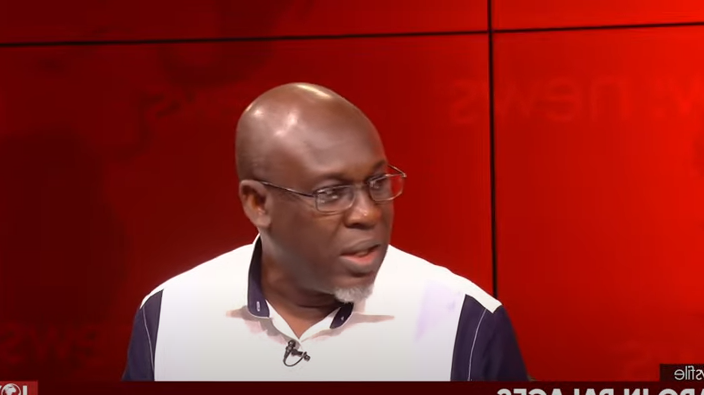
Vice President of policy think tank IMANI Africa, Kofi Bentil, has cast doubt on the feasibility of President John Mahama’s proposed 24-hour economy policy, warning that Ghana may achieve less than 30% of its targets if past governance trends persist.
Speaking on JoyFM’s Newsfile on Saturday, Mr Bentil likened the plan to previous “fanciful ideas” that yielded minimal results despite heavy spending.
Mr Bentil accused successive governments of recycling grandiose pledges without addressing core challenges.
He cited the 1D1F initiative, where over $541 million was invested in 169 enterprises, most of which now struggle.
“We create excuses for underdevelopment, then excuses for failed projects, and finally excuses for wasted funds,” he said.
The policy analyst dismissed the 24-hour economy’s proposed pilot phase, arguing it mirrors a pattern where “pilots” absorb funds but leave no tangible impact.
“They’ll access $300 million, dig a few trenches, and declare progress. By 2028, we’ll be probing where the money went,” he asserted.
Mr Bentil stressed that without fixing critical bottlenecks—water, energy, roads, and telecoms—no 24-hour economy can thrive.
He revealed that providing water to Accra-Tema alone would cost $2 billion over four years, far exceeding the policy’s $6 billion budget.
“Prioritise basics, and round-the-clock productivity will follow organically,” he urged.
The plan to establish a “24-Hour Economy Authority” drew sharp criticism.
“Ghana’s bureaucracy already consumes 80% of revenues. We don’t need new agencies; we need existing ones to work,” Mr Bentil said, referencing IMF warnings against bloated governance.
Mr Bentil’s critique aligns with Imani’s long-standing stance on Ghana’s “parallel systems”, where governments sidestep structural reforms with flashy policies.
His remarks come amid President Mahama’s pledge to formalise the informal sector through night-shift incentives, tax breaks, and enhanced security.
NDC representatives have defended the policy as “transformational”, but Mr Bentil remains sceptical, insisting, “When you process development this way, you end up with glossy magazines and empty achievements.”
Mr Bentil’s warning underscores a pivotal question whether Ghana will break its cycle of “branded underdevelopment” or whether the 24-hour economy will join the list of unmet manifesto promises.
Latest Stories
-
The truth about doing business in Ghana — Jacob West CEO Michael Kyei-Ayensu shares experience
20 minutes -
From UK losses to Ghana gains: CEO of Jacob West Limited Michael Kyei-Ayensu details real estate journey
50 minutes -
Over 1,000 Kenyans enlisted to fight in Russia-Ukraine war, report says
1 hour -
Robert Mugabe’s son arrested in South Africa on suspicion of attempted murder
1 hour -
Minority rejects Security and Intelligence Agencies Bill, cites ‘excessive executive powers’
1 hour -
Islamist militants accused of killing 34 in raids on Nigerian villages
1 hour -
DVLA commissions new premium service centre in Kumasi to better serve customers
1 hour -
BoG warns of downside risks to cedi as a result of dividend payments
2 hours -
Consumer spending posted mixed performance in 11 months of 2025 – BoG
2 hours -
Wa District Magistrate Court convicts three for unlawful possession of firearms and ammunition
2 hours -
There is no governance gap at Defence Ministry – Kwakye Ofosu
2 hours -
Mahama to appoint Defence Minister ‘at the right time’ – Government
2 hours -
GRA boss donates to Mahama Cares
2 hours -
Education Ministry warns of severe consequences for assault on teachers
2 hours -
Absence of substantive Defence Minister a strategic risk – Amankwa-Manu
2 hours