

Audio By Carbonatix
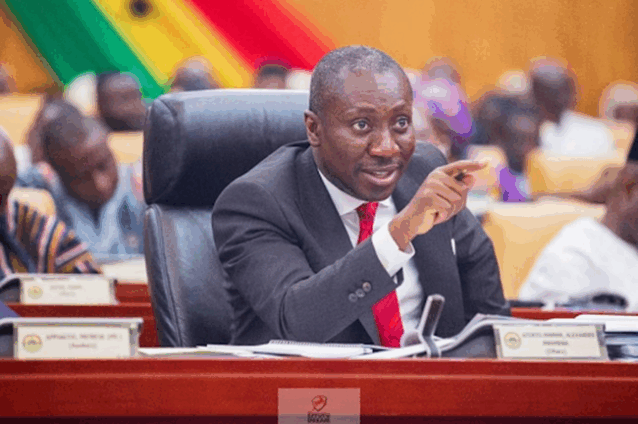
The Minority Caucus in Parliament has rejected the proposed Security and Intelligence Agencies Bill, 2025, describing it as deeply flawed and overly centralising power in the Presidency.
In a statement dated February 18 and signed by Minority Leader Alexander Afenyo-Markin, the caucus said while it supports reforms to modernise Ghana’s national security architecture, it cannot support the bill in its current form.
“Let me be clear. The Minority Caucus supports the need to reform Ghana’s national security architecture,” the statement said. “However, in its current form, this Bill is deeply flawed.”
The Minority argued that the legislation concentrates excessive appointing powers in the President, weakens independent oversight, and expands intrusive surveillance authority without adequate human rights safeguards.
On presidential powers, the caucus warned that the bill allows key security appointments without parliamentary vetting.
“It is unacceptable that they operate without legislative scrutiny,” the statement noted, adding that the offices involved control agencies with coercive powers and access to sensitive national data.
The Minority also criticised the proposed oversight structure, arguing that placing the National Security Council, chaired by the President, as the governing body of intelligence agencies amounts to self-regulation.
“That amounts to self-oversight,” it stated.
On parliamentary scrutiny, the caucus raised concerns about provisions allowing security officers to withhold documents if disclosure is deemed prejudicial to national security.
“There is no requirement to provide reasons or even redacted versions,” the statement pointed out.
The Minority further objected to criminal sanctions of five to ten years for certain disclosures, arguing that the bill provides no explicit protection for whistleblowers.
On surveillance powers, it described the warrant regime as “deeply troubling,” warning that administrative authorisation for intercepting communications undermines the principle that only courts should approve invasions of privacy.
The caucus also expressed concern about the structure of Regional and District Security Councils, cautioning that their composition could risk politicisation, particularly during election periods.
“For these reasons, we cannot support the Bill in its present form,” the statement concluded.
The Minority called for independent oversight mechanisms, judicial-only warrant authorisation, stronger whistleblower protections, clearer human rights safeguards, and improved financial transparency.
“National security and civil liberty are not opposing goals. We can protect our nation without eroding the freedoms of our people. Parliament must get this balance right,” the statement said.
Read the full statement below


Latest Stories
-
‘Whatever the personal cost, I will not abandon my duty’ – Baffour Awuah assures Salomey Bafoh
1 minute -
Government to increase funding for Houses of Chiefs to speed up dispute resolution
3 minutes -
Govt’ to introduce digital property rate system to boost MMDAs’ revenue – Mahama Ayariga
5 minutes -
Traditional Medicine Practice Council closes three unlicensed spa and massage centres in Ashanti Region
7 minutes -
Let’s accept the reality and move along – Mike Oquaye on NPP’s decision to make flagbearer party leader
9 minutes -
Early presidential primary helped cool tensions in NPP – Prof. Mike Oquaye
27 minutes -
NDC congratulates new NPP executives, urges national interest above party interests
30 minutes -
NPP implementing 2024 election review recommendations in stages – Prof Mike Oquaye
31 minutes -
Ghana Rugby Union announces managerial changes
32 minutes -
US removes all bombers from RAF Fairford base
32 minutes -
France closes up to 500 schools Monday over student protests
33 minutes -
Girl, 12, fatally shot in US during ‘dispute over parking space’
33 minutes -
NPP is a party for all classes – Prof. Mike Oquaye
34 minutes -
Chief Justice urges Judiciary to strengthen foundations of justice
34 minutes -
Rescuers suspend search for survivors after plane went missing off US coast
35 minutes