

Audio By Carbonatix
About 30,000 household toilet facilities are expected to be provided for people in low-income communities in the Greater Kumasi Metropolitan Area (GKMA).
Additionally, a total of 5,000 households will be supported to connect potable water into their homes, under the Greater Kumasi Sanitation and Water Project.
This is to help ensure increased access to improved toilet and water facilities to the majority of poor and vulnerable people in urban and peri-urban communities.
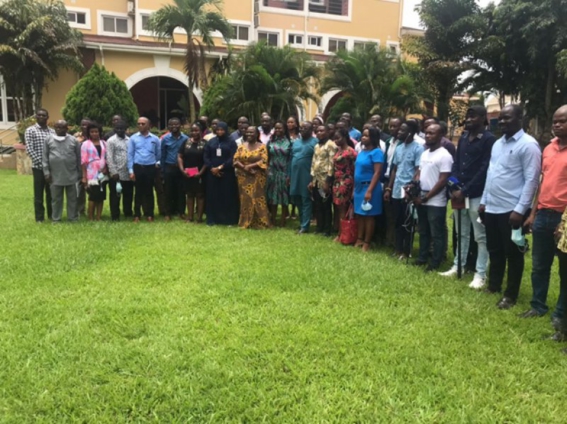
Minister for Sanitation and Water Resources, Cecilia Abena Dapaah said this at a day’s orientation workshop on the Greater Kumasi Sanitation and Water Project for some media personnel in Kumasi.
The workshop was aimed at introducing the project which was launched in November last year to the media in the Ashanti region.
The project, according to the Minister, has four components which were mainly to increase access to sanitation services to people in low-income and deprived areas.
It would also help to support the expansion of the water distribution networks in GKMA to provide water for an estimated 150,000 people.
Again it would strengthen institutions and provide technical assistance to stakeholders in the water and sanitation sector.
The project beneficiaries are the eight Metropolitan and Municipal assemblies in the GKMA, which include the Kumasi Metropolitan Assembly (KMA), Asokwa, Oforikrom, old Tafo, Suame, Kwadaso, and the Asokore Mampong Municipal Assemblies.
Madam Dapaah said the facilities would be maintained and expanded as the population in those areas increased.
The Minister pointed out that the water supply in Kumasi was not good, saying the Owabi headworks in the Atwima Nwabiaqya District would soon be dredged.
The government she said was providing pragmatic measures to find a lasting solution to the water and sanitation problems in Kumasi.
Madam Dapaah called on the media to take an active part in making sure that the agenda of making the country clean was achieved,
The Project Coordinator, Mr George Asiedu said a steering committee had been established to ensure the sustainability of the project to provide a safe sewage system.
Engineer for the project, Kwadwo Gyasi pledged to work to provide sustainable clean, and hygienic toilet facilities for the people.
He said it was Bio-digester technology that degrades faecal matter into smaller particles,
Mr Gyasi called on the media to educate the public on improved water and sanitation practices.
Latest Stories
-
GUTA calls for suspension of Publican AI system over trade disruptions, demands temporary halt in import activities
39 seconds -
TTAG raises alarm over proposed recruitment of 7,000 teachers, demands national posting roadmap
34 minutes -
Civilians feared killed after reports of air strike on Nigerian market
44 minutes -
Bishop Simon Kofi Appiah installed as new Jasikan Diocese Bishop
45 minutes -
Trump’s Strait of Hormuz blockade threat raises risks and leaves predicaments unchanged
47 minutes -
US Court backs extradiction of former MASLOC CEO Sedina Tamakloe-Attionu’s to Ghana
1 hour -
Seven arrested as NAIMOS dismantles illegal mining camp, seizes firearms at Boin River
1 hour -
Fire erupts at Madina Ritz Junction, destroys multiple wooden structures and containers
1 hour -
Daniel-Kofi Kyereh returns from long-term injury, registers assist for Freiburg U23
2 hours -
Knifeman calling himself ‘Lucifer’ slashes three at NYC’s Grand Central
2 hours -
Brands are built from within to without
2 hours -
Matriculants urged to pursue excellence as gov’t reaffirms support for Maritime education
2 hours -
See the areas that will be affected by ECG’s planned maintenance on Monday, April 13, 2026
2 hours -
GPL 2025/26: Salim Adams double fires Medeama back to summit after Kotoko rout
2 hours -
Two robbery suspects convicted following violent gold dealer attack in Obuasi
2 hours