

Audio By Carbonatix
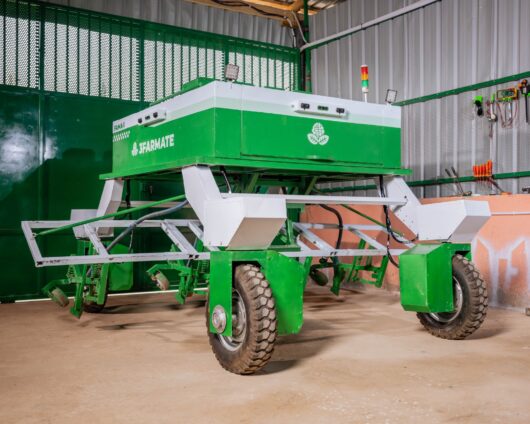
Ghanaian Agritech startup 3Farmate is poised to transform the country's agricultural sector with its innovative autonomous farming robot, FAMA, which promises to address longstanding challenges in farming while boosting productivity, reducing costs, and enhancing food security.
Founded in 2021 by Clinton Anani and Elijah Ocupualor, both Computer Engineering graduates from the Kwame Nkrumah University of Science and Technology (KNUST), 3Farmate began as a humble dorm-room project.
The founders constructed early prototypes using simple materials like wood, plastic, and metal pipes.
After four years of development and eight iterations, FAMA has evolved into a sophisticated, full-scale autonomous robot engineered, designed, and assembled entirely in Ghana.
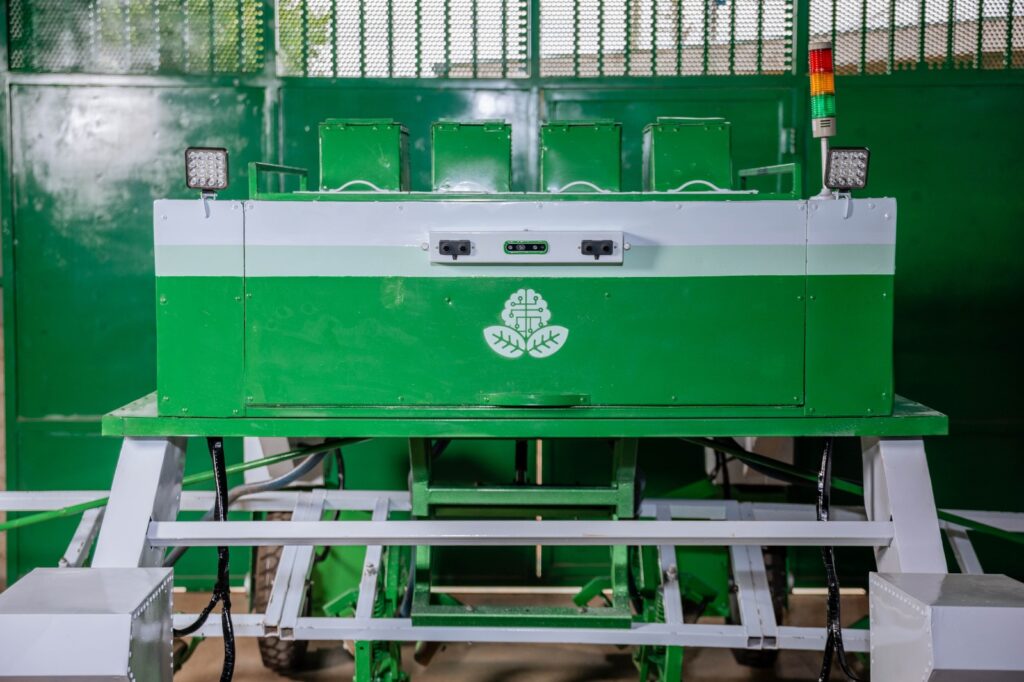
FAMA stands out for its AI-powered computer vision navigation, eliminating reliance on GPS systems that can falter in rural or variable terrains.
The solar-powered, battery-operated robot autonomously performs critical tasks: planting seeds with sub-85mm precision, applying fertilizer, weeding, and spraying crops.
The robot covers an impressive 27 to 35 acres per day and requires only one operator to supervise multiple units, making it highly scalable for large-scale operations.
The company has conducted over 60 test runs across more than 100 acres under real farm conditions, with positive results. 3Farmate is now in discussions with over 70 farmers as it prepares for commercial rollout.

Operating on a service-based model charging farmers per acre serviced FAMA targets up to 60% cost reduction compared to traditional manual or semi-mechanized planting and maintenance methods.
FAMA will automate labor-intensive tasks, reducing dependency on scarce manual workers, minimizing input waste through precise application, and enabling faster, more consistent operations even in challenging conditions.
A widespread adoption of FAMA could significantly increase overall agricultural output, strengthen food security amid a growing population, lower food production costs to make staples more affordable, and create a ripple effect in the Ghanaian local economy.
Latest Stories
-
Ghana ‘showing up differently’ on global stage – Joyce Bawah Mogtari
5 minutes -
Ghana’s tuna industry in crisis as 20 hook-and-line vessels collapse
44 minutes -
South Tongu MP launches apprenticeship programme for 159 young people
58 minutes -
The Pusiga connection behind Gertrude Atongi’s work in New York
1 hour -
Teachers took promotion exams in December to beat government clearance deadline – GNAT
1 hour -
NPA launches 2026 staff welfare week with focus on teamwork and employee wellbeing
1 hour -
Ghana, Saint Kitts and Nevis sign labour deal to strengthen protections for Ghanaian nurses
2 hours -
Delayed promotions put teachers’ retirement benefits at risk – GNAT
2 hours -
No ‘Bawumia candidates’ in NPP executive elections – Anthony Karbo
2 hours -
Over 3,000 displaced as flooding overwhelms Hohoe communities
2 hours -
Sunyani East NPP executives begin reconciliation drive ahead of 2028 polls
2 hours -
Agric Minister engages Ga Mantse on agriculture transformation agenda
2 hours -
Aayalolo expansion targets private car users, not trotro operators – Mahama Ayariga
2 hours -
KNUST, GMTF explore AI partnership to transform healthcare delivery
2 hours -
MTTD records 9,000 preventable crashes, over 900 deaths in eight months
2 hours