

Audio By Carbonatix
River blindness is known to have a serious socioeconomic impact on affected communities.
However, recent reports indicate control measures have been successful with a significant decrease in prevalence.
Though Mass Drug Administration has been crucial in this direction, a new study has found 63.9 percent of Ghanaians are not aware of this intervention.
The findings, which are published in the journal of Parasite Epidemiol Control, were made known during a research dissemination programme in the district.
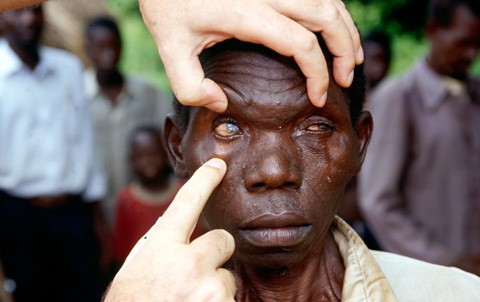
Onchocerciasis, commonly known as “river blindness”, is a neglected tropical disease caused by the worm Onchocerca volvulus.
It is transmitted to humans through exposure to repeated bites of infected blackflies. The black flies are found at the banks of fast flowing rivers.
Symptoms include severe itching, disfiguring skin conditions, and visual impairment, including permanent blindness.
More than 99% of infected people live in 31 African countries.
Population-based treatment with Ivermectin also known as mass drug administration or MDA is the current core strategy to eliminate river blindness.
Ivermectin kills the larvae and prevents them from causing damage but it does not kill the adults.
“If more people take the drugs, whenever the blackfly bites one, it cannot transmit the parasite which causes the disease. By so doing, it breaks the transmission pathway,” said Dr. Francis Adjei Osei, the lead researcher.
The study wanted to find out the extent and predictors of Ivermectin MDA coverage and uptake from the individual and health care provider perspectives in the Ashanti Region.
The community-based survey involved 2008 respondents who lived in the Atwima Nwabiagya North district.
The researchers found that more than half the respondents were not aware of the drug distribution.
They however found that people readily accepted to take the drugs in places where drugs were made known as compared to where they are not aware of the drugs existence.
“Give out the relevant information, offer the relevant supervision, and motivate the people who are doing the work. Persons in the intervention communities will benefit more from those in the controlled communities,” he explained.
They again found that the fear of side effects deterred people from taking the drugs, and 20 percent had trust issues with drug distributors.
The scientists are therefore charging the Ghana Health Service to roll out programmes to increase awareness.
“With the Ghana Health service it’s our expectations that they’ll implement the methodologies so that other areas will benefit.
“To the academic communities, this was done in one area, so it’s recommended, it will be replicated in other areas,” said Dr. Osei.
Latest Stories
-
Brandon Asante and Coventry all but promoted to Premier League despite Sheffield Wednesday draw
43 seconds -
GPL 2025/26: Late Kwartemaa strike downs Hearts in Tema
7 minutes -
Ghana Faces Sierra Leone Moment as Prosecutorial Powers come under strain
17 minutes -
Don’t consume fish or seafood from Tema Shipyard until further notice – FDA warns
22 minutes -
Why volunteering might be Africa’s most underrated career accelerator
28 minutes -
ActionAid Ghana raises concern over gender gaps in Feed Ghana Programme
30 minutes -
Windstorm wreaks havoc in Gushegu, displacing nearly 2,000 residents and damaging schools
32 minutes -
Friends of Bridget Bonnie Marks her 35th birthday with donation to Kasseh Model Health Centre
1 hour -
From Ekumfi Kokodo to the Pulpit Stage: Essi Donkor’s gospel journey takes shape
2 hours -
Landfilling waste management creates no value, it’s an economic waste
2 hours -
Photos: Speaker Bagbin Commissions MPs constituency office under parliamentary decentralisation programme
2 hours -
Black Stars technical advisor Winfried Schäfer sacked as GFA shakes up backroom staff
2 hours -
Wenchi water project almost complete, critical to gov’t agenda – GWL MD
2 hours -
Anti-LGBTQ+ bill not part of government’s legislative agenda – Inusah Fuseini
2 hours -
Anti-LGBTQ Bill: Forget the rumour mongers, I’m a man of action, and will pass the bill – Speaker
3 hours