

Audio By Carbonatix
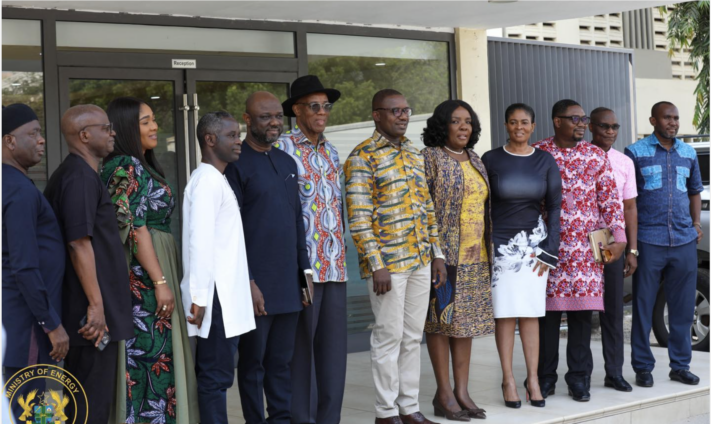
The Energy and Green Transition Minister, John Abdulai Jinapor on Friday inaugurated a seven-member committee to explore options for private sector involvement in the operations of the Electricity Company of Ghana (ECG).
The move is part of the government’s efforts to revitalise the state-owned entity.
The committee has Mr Jabesh Amisah-Arthur, an energy consultant, as Chairman and Dr Shafic Suleman as Secretary.
Other members are Mr Benjamin Boakye; Dr Simon Akorli, Mr Ebenezer Baiden, Mr Emma Akua Bulley and Mr Edward Abrokwah.
The Minister said the move came in response to longstanding challenges faced by ECG, including inefficiencies, financial losses, and growing debt, which had hindered its ability to deliver reliable electricity to Ghanaians consistently.
“…. We believe there should be private sector participation,” he said.
Privatisation or some form of private-sector involvement could provide the resources, expertise, and efficiency required to turn around ECG’s fortunes and enhance electricity supply across the country, Mr Jinapor said.
He, therefore, emphasised a non-partisan approach to the process, stating the importance of neutrality and expertise in the committee's composition.
“… We will stay off as politicians and let them develop a framework in a transparent, open, and frank manner. Once we get the buy-in of Ghanaians, we can set standards using a Request for Proposal (RFP) or competitive tender process,” he said.
During Mr Jinapor’s vetting on Monday, January 13, he explained that the committee’s primary task would be to examine and propose viable models for private-sector involvement that could enhance ECG’s financial and operational sustainability.
Mr Amisah-Arthur, the committee chairman, pledged to work diligently to address the concerns of customers, stakeholders, and the sector as a whole.
While acknowledging the importance of financial sustainability in the sector, he promised the Committee would give attention to recommendations, interventions, and lessons from past efforts.
That would be done by emphasising the Committe’s commitment to prioritising homegrown approaches and strategies, to ensure local private sector entities had the opportunity to contribute to the sector’s development.
“We will do our best to address the concerns of our customers, the owners of the business, the staff, and management,” Mr Amisah-Arthur said.
“… We will consider the main weaknesses of the distribution sector and give priority to homegrown approaches and strategies.”
He expressed the committee’s gratitude for being called upon to provide service through the members expertise to bring benefits to the sector and its customers.
Latest Stories
-
Gov’t cuts fuel taxes, deploys buses to curb impact of rising fuel prices
6 minutes -
Interior Minister calls for intelligence-driven strategy as Ghana strengthens counter-terrorism efforts
6 minutes -
Adenta Circuit Court remands Pastor William Gyimah over viral threats against Vice President
52 minutes -
“We’ve implemented changes to prevent a repeat of the AFCON final” – CAF President Motsepe
54 minutes -
Gov’t orders deployment of Metro Mass buses to cushion commuters amid fuel price hike
2 hours -
Key Indian state polls begin in test for Modi’s party
2 hours -
Playback: Gomoa Easter Carnival in photos
2 hours -
Gov’t orders removal of fuel taxes to ease pump price hikes
2 hours -
“Whatever the decision of CAS, we will respect it” – CAF President Motsepe after AFCON final meetings in Morocco
2 hours -
Emma Ankrah: When waiting becomes part of treatment – Reflections on hospital care
3 hours -
Ghana urges travellers to prepare for new EU border system roll-out
3 hours -
Mahama enforces fuel coupon ban for ministers as cabinet moves to slash fuel taxes
3 hours -
Task force probes strange fish deaths in Tema
3 hours -
Neglected traffic lights turn Awoshie–Anyaa highway into deadly hotspot
3 hours -
EOCO declares Dr Gabriel Tanko Kwamigah-Atokple a fugitive over alleged gold fraud
3 hours