

Audio By Carbonatix
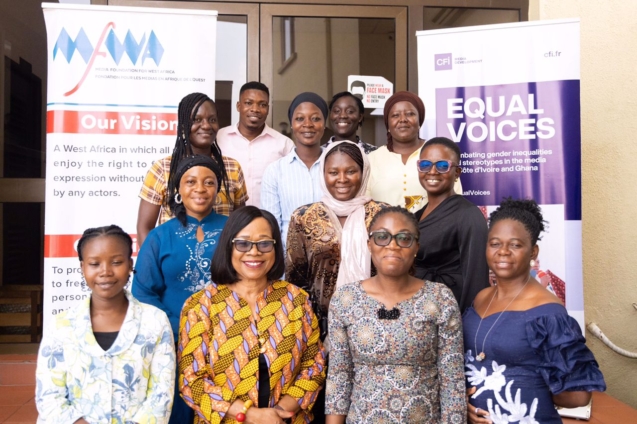
Eight female journalists from four media houses across Ghana have successfully completed a four-day women empowerment training organized by the Media Foundation for West Africa (MFWA).
This initiative, part of the Equal Voices project, aims to promote gender equality in media practices in Ghana and Côte d'Ivoire.
The training is designed to combat gender inequalities and stereotypes while promoting women in leadership roles within Ivorian and Ghanaian societies through gender-aware and gender-sensitive media practices.
Senior Programme Officer at MFWA, Adizatu Moro Maiga, highlighted the training's objective to enhance the journalists' capabilities in understanding the theories and foundations of gender and women's rights, as well as analysing media representation to address gender stereotypes.
"The women empowerment training is crucial in equipping journalists with the necessary skills to challenge existing gender norms and promote equality," Maiga said. "By understanding the representation of women in media, we can work towards creating a more balanced and fair portrayal."
On the first day of the training, participants were taken through the rudiments of women empowerment, patriarchy, and conceptualizing gender, focusing on how society expects individuals to act, gender stereotypes, and the triple burden of women's roles in society.
This session was facilitated by the Executive Director of Women, Media, and Change (WOMEC), Dr. Charity Binka.
She unpacked gender and educated the female journalists on myths, assumptions, expectations, obligations, culture, and roles.
"Gender equality recognizes that women and men have different experiences and needs but that these differences should not lead to discrimination, unequal treatment, or limited opportunities," Dr. Binka explained.
"It acknowledges that gender inequality is not just a women's issue, but affects everyone and that achieving gender equality is essential for creating a fair and just society where everyone can thrive."
Dr. Binka also provided insights into women's empowerment, which involves providing women with the resources, opportunities, and support they need to realize their rights, achieve their aspirations, and contribute to social, economic, and political development.
She emphasised the importance of challenging power imbalances, advancing gender equality, and creating enabling environments where women can fully participate, lead, and thrive.
"Positive masculinity encourages qualities such as empathy, emotional intelligence, respect for others, and a willingness to collaborate and communicate openly," Dr. Binka said.
"It involves rejecting toxic or harmful behaviours often associated with traditional masculinity, such as misogyny, violence, or the repression of vulnerability while embracing qualities that contribute to healthy relationships, personal growth, and societal well-being."
On the role of media in empowering women, Dr. Binka noted, "Gender equality benefits everyone, not just women. Gender equality recognizes that gender stereotypes and discrimination harm individuals and limit opportunities. Achieving gender equality requires changing social norms, policies, and practices that perpetuate gender-based discrimination and inequalities. Progress can be made through small, everyday actions."
The journalists were exposed to laws protecting women in Ghana and discussed gender disparity in media representation and portrayal.
Media representations shape societal perceptions of gender roles and norms. By depicting diverse and empowering portrayals of men and women, the media can challenge stereotypes and contribute to more equitable gender norms.
A lecturer at the Department of Communication Studies, University of Ghana, Dr. Aurelia Ayisi, led practical sessions.
These included discussions on conceptualising gender, the role of the media in empowering women, gender-based violence, women's leadership in the media, and self-awareness.
Dr. Ayisi introduced the Johari Window framework to help journalists become aware of their own selves and their relationships with others.
"Knowing the key players in your audience and adapting to them is crucial," Dr. Ayisi advised. "Power can exist at local, national, or global levels and in various forms. Recognizing visible, hidden, and invisible forms of power is essential for navigating and influencing media spaces."
The training also covered managing digital presence and maintaining professional integrity. "One of the most important things to have as a journalist is integrity," Dr. Ayisi stated.
"The things we do online have implications on us. It's essential to be consistent with your brand and build a strong online presence."
The Channel Manager at the Multimedia Group Limited, Kwaku Owusu Peprah and Nana Yaa Konadu Yiadom, a News Editor with Despite Media, shared their experiences.
Mr Preprah emphasised the importance of doing things outside one's scope and being open to feedback, while Nana Yaa discussed the challenges and opportunities for women in the media.
"This job is not for timid people," Kwaku said. "Do it for personal fulfillment. Live for yourself, live for your dreams."
A journalist with A1 Radio in Bolgatanga, Humul Khusum Tahiru, expressed gratitude for the training.
She has initiated a radio show in her region named Equal Voices to address gender issues.
"This training has been enlightening and empowering," said Humul. "I am excited to implement what I've learned and contribute to promoting gender equality in my community."
The Equal Voices project continues to work towards creating an inclusive media landscape that values and amplifies the voices of women across West Africa.
The participating journalists are expected to lead by example, fostering positive masculinity, challenging gender biases, and promoting collaboration and mentorship in their respective newsrooms.
Latest Stories
-
Power restoration fault suspected in Kumasi Central Market fire
3 hours -
The 7-foot giant of Ngleshie Amanfro: Seven-foot Ghanaian Ephraim Saawa dreams of joining the national basketball team
4 hours -
Government promises support for Kumasi Central Market fire victims
4 hours -
Vibes The Movie: Big Ghun’s Ghanaian film earns five nominations at 2026 REFFA
4 hours -
MamaCare CEO warns unresolved conflicts among health workers could undermine maternal and neonatal care
5 hours -
Health professionals urged to translate medical knowledge into practice to save mothers
5 hours -
Conflicts among care providers linked to maternal, neonatal deaths – Expert
6 hours -
GIS marks 10th TIME conference, champions improved teaching practices
7 hours -
BRICS Or Balance? What Ghana’s bid really means
7 hours -
GPRTU wants full TRAFFITECH-GH implementation to start in 2027
7 hours -
Mahama announces plans to import electric wheelchairs for PWDs
7 hours -
KGL U17 Colts 2026: Western beat Prempeh Elite Academy to set up final final with Greater Accra Region
8 hours -
Late Solanke strike salvages 10-man Spurs draw at Man United
8 hours -
Gender Ministry to monitor welfare of Nana Akua Addo’s children amid domestic violence case
8 hours -
Benedict Okyere Yeboah: Ghana’s football problem goes beyond sacking a coach
8 hours