

Audio By Carbonatix
Only one percent of households in Ghana can afford decent homes.
This is according to the 2024 Revised Ghana Housing Profile launched by the Ministry of Works and Housing in collaboration with UN Habitat and the United Nations Office for Project Services (UNOPS).
A decent home, as defined by the Ministry of Works and Housing, must have sufficient space for all inhabitants, be secure against forced eviction, be free from hazards, and provide access to basic needs such as water, electricity, and sanitation facilities.
Additionally, it must be situated in a safe environment.
The housing profile, compiled using data from reputable institutions such as the Ghana Statistical Service (GSS), highlights key issues affecting housing in Ghana and offers potential solutions to address these challenges.
The Minister for Works and Housing, Kojo Oppong Nkrumah, expressed hope that the report would shape the country’s development agenda and drive meaningful policy reforms in the housing sector.
“They are contributions of the body of knowledge in the area of housing which should then influence the interventions that we roll out. Let this document serve as a blueprint for coordinated action guiding us towards a housing sector that meets the aspirations of every Ghanaian,” he said on Wednesday, November 27, 2024.
During the launch event at the Alisa Hotel in Accra, the lead author and consultant of the revised profile, Professor of urban planning and current head of the Department of Planning at the Kwame Nkrumah University of Science & Technology, Clifford Amoako, expanded key issues from the report among which are:
- 1% Ghanaian households can afford decent homes that are provided by the formal sector, that is, real estate developers
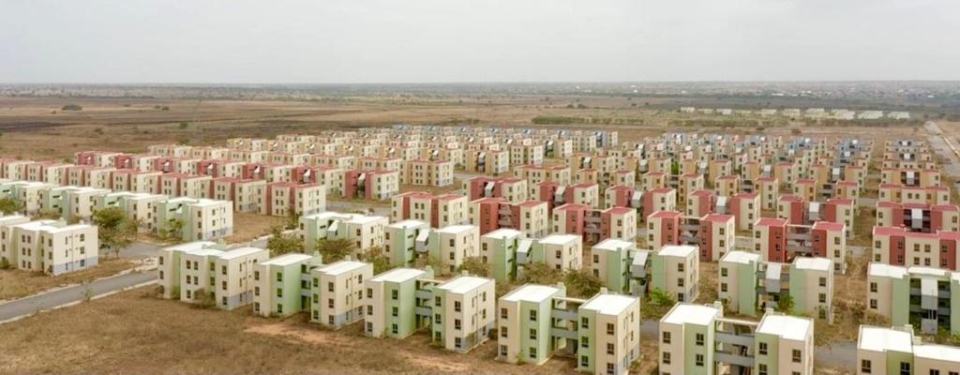
- 11% of expensive houses procured by people have been left largely empty
- The housing deficit decreased from 2.8 million to 1.8 million over a period of 10 years, reflecting a reduction of 1 million units.
The Works and Housing Minister also urged that the revised housing profile is a diagnosis of the housing sector in Ghana and only recommends solutions.
The active involvement of the private sector and other stakeholders will be crucial in improving on all highlighted defaults.
Latest Stories
-
A source of excellence across generations – Vice President Opoku-Agyemang lauds Mfantsipim
1 hour -
(Photos) Mfantsipim School launches historic 150th anniversary
2 hours -
Knights and Ladies of Marshall group backs Catholic Bishops’ stance on anti-LGBTQ+
3 hours -
Bright Simons writes: All the Filla in the Ibrahim Mahama/E&P – Gold Fields Saga
3 hours -
Monetise Idiocy In Ghana
3 hours -
ECG kicks off Phase Two of transformer upgrades at Lashibi; brief outages expected
4 hours -
The Ghanaian prophet and the mysterious death of his scottish wife Charmain Speirs
4 hours -
Nearly 400 sentenced in Nigeria for links to militant Islamists
4 hours -
Ghana’s recovery supported by gold strength despite global oil price pressures – Standard Bank Research
4 hours -
Methodist Church hails Mfantsipim@150; calls for “fresh consecration” to excellence
5 hours -
‘Excellence is our inheritance’ – Nana Sam Brew-Butler hails Mfantsipim’s 150-year reign in leadership
5 hours -
Kwaku Azar writes: A-G vs OSP
5 hours -
Mfantsipim–Adisadel rivalry built excellence, not division – Sam Jonah
5 hours -
Vice President launches Mfantsipim’s 150 years of shaping Ghana’s greatest mind
6 hours -
I assure Otumfuo, Mahama will join him to commission KNUST Teaching Hospital by end of this year – Haruna Iddrisu
6 hours