

Audio By Carbonatix
Empowering young people with knowledge of their rights is key to building a fair and inclusive society.
In Ghana, the protection and well-being of children are safeguarded by law. The 1992 Constitution of the Republic of Ghana (Chapter Five) and the Children’s Act of 1998 (Act 560) provide strong legal frameworks that guarantee the rights and freedoms of every child.
These laws ensure that children are protected, supported, and given the opportunity to grow into responsible citizens. Rights are the freedoms and privileges that every individual is entitled to under the law.
For children, these rights play a critical role in ensuring their safety, development, and dignity. One of the most fundamental rights is the right to education, which guarantees that every child has access to schooling and the opportunity to achieve their aspirations.
Children are also entitled to the right to protection, ensuring that they are safeguarded from harm, abuse, child labour, torture, and any form of cruelty. In addition, the right to healthcare guarantees that children receive proper medical attention when they are ill, helping them grow in a healthy and supportive environment.
“Every child deserves the opportunity to learn, grow, and live in an environment free from harm.''
Rights Must Be Balanced with Responsibilities
While rights are essential, they must be accompanied by responsibilities. Responsibility refers to the duties individuals perform to contribute positively to their families, communities, and the nation.
For example, the right to education comes with the responsibility for students to attend school regularly, complete their homework, and respect school rules and regulations.
Similarly, the right to shelter comes with the duty of helping parents with household chores and assisting with family responsibilities. Children also enjoy the right to freedom of speech, which allows them to express their opinions respectfully. This means they can participate in family discussions and share their ideas during decision-making processes.
“Rights empower individuals—but responsibility ensures those rights are respected by all.''
When Rights Are Violated
Despite the legal protections in place, situations may arise where a child’s rights are abused or infringed upon. In such cases, there are several institutions in Ghana dedicated to protecting citizens and ensuring justice.
These include the Commission on Human Rights and Administrative Justice (CHRAJ), the National Commission for Civic Education (NCCE), the Domestic Violence and Victim Support Unit (DOVVSU), the Human Rights Advocacy Centre (HRAC), and the Legal Resources Centre (LRC). These organizations work to promote human rights awareness and provide support to victims of abuse.
The Importance of Participation
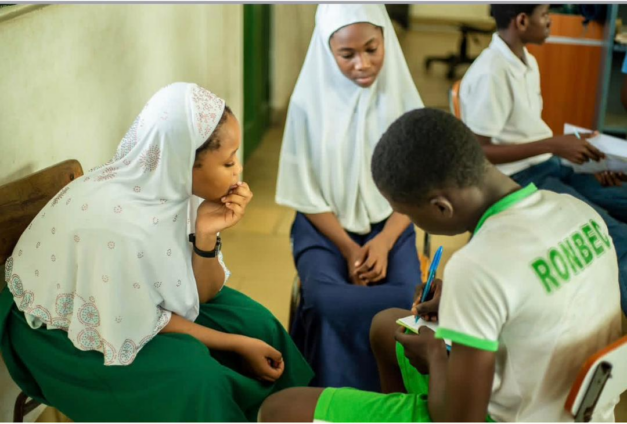
Understanding rights and responsibilities is only one part of building responsible citizens. Children are also encouraged to practice participation, which involves sharing ideas, contributing to discussions, and actively engaging in activities that benefit society.
Participation can take many forms. In schools, students may participate by answering questions in class and following school rules. At home, they may help with chores and support their families. In communities, children can participate by helping to keep their environment clean and respecting community values.
Participation can occur in various spaces, including the home, school, church, mosque, and the broader community. Through these activities, children develop confidence, teamwork, and leadership skills.
“Participation gives children the confidence to express their ideas and contribute to society.
Advocacy: Speaking Up for Change
Closely connected to participation is advocacy; the act of speaking up for fairness, justice, and inclusion. Advocacy encourages individuals to identify problems within their communities and work toward meaningful solutions. Effective advocacy involves presenting facts, sharing real-life experiences, and respectfully engaging leaders and community members.
It is about raising awareness and encouraging positive change in society. Advocacy is often confused with complaining, but the two are very different. Complaining usually expresses emotions without clear solutions, while advocacy focuses on evidence, solutions, and constructive dialogue aimed at improving situations.
“Advocacy transforms concerns into solutions and empowers communities to create change.''
Building Responsible Citizens
Ultimately, educating children about their rights, responsibilities, participation, and advocacy is essential for building a just and inclusive society.
When young people understand their rights and are empowered to speak up responsibly, they become active contributors to their communities and the nation as a whole.
By equipping children with knowledge, confidence, and a sense of responsibility, society invests in a future where fairness, respect, and justice prevail.
Latest Stories
-
We haven’t handed over our forex role to Goldbod – BoG Governor Asiama
12 minutes -
‘Trust but verify’ – MTN Ghana urges SMEs to guard against cyber fraud
21 minutes -
Let us all be mentors to our younger generation – Mahama
26 minutes -
Assemblies of God Congress: Mahama urges churches to promote compassion, integrity
32 minutes -
North Korea and China open new bridge after 12-year delay
42 minutes -
Anthropic flags revenue surge to investors ahead of stock market debut
51 minutes -
Norway’s wealth fund set to overhaul ethical rules after US scrutiny
1 hour -
‘There can be no mistake, regardless of who is picked’ – Bentil on CJ contenders
1 hour -
Ghana needs a Chief Justice who inspires public confidence – Bentil
1 hour -
Government to introduce integrated basic education model schools from 2027 – Haruna Iddrisu
2 hours -
Russell Brand was a ‘sexual predator’, prosecution alleges as rape trial begins
2 hours -
Drop-off charges at UK airports to be reviewed after sharp increase
2 hours -
Kenya confirms second Ebola case – a relative of the first victim
2 hours -
Hidden video recording device found in cabin of Australian navy ship
2 hours -
Saudi Arabia overturns death sentence for man over Facebook comment, Sri Lanka says
3 hours