

Audio By Carbonatix
The Economic Intelligence Unit (EIU) in its 2019 Global Food Security Index (GFSI) ranked Ghana 59th out of 113 countries in its 2019 index report.
This ranking falls against the 73rd ranking out of 113 countries in 2018. The total performance score improved from 50.9 per cent in 2018 to 68.2 per cent in 2019 – representing 0.3 per cent improvement.
The figures, derived from the annual baseline model, indicates the country recorded key strengths in the presence and quality of food safety net programs as the planting for food and jobs initiative (scored 100 per cent), Change in average food costs (97 per cent), food safety (81.2 per cent), urban absorption capacity (91.2 per cent), volatility of agricultural production (95.5 per cent).
This places Ghana third-best in sub-Saharan Africa with South Africa and Botswana scoring first and second respectively in 2019. When it comes to food availability, Ghana placed second to South Africa with a score of 61.7 per cent.
Meanwhile, the EIU has cited “high expenditure on agriculture research and development as well as a low Gross Domestic Product (GDP) per capita as key challenges the government must consider.
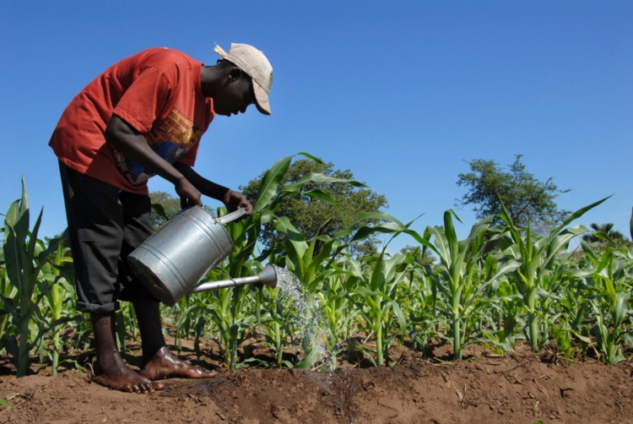
Ghana’s impressive performance follows increased production and high yields of some foodstuffs like maize, rice, sorghum, groundnuts, soya bean, cowpea, cassava and plantain, he said, have led to a decrease in the wholesale prices in market centres in major food-producing areas – all under the Planting for food and jobs programme.
The Global Food Security Index considers the core issues of affordability, availability, and quality across a set of 113 countries.
The index is a dynamic quantitative and qualitative benchmarking model, constructed from 34 unique indicators, that measures these drivers of food security across both developing and developed countries.
This index is the first to examine food security comprehensively across the three internationally established dimensions. Moreover, the study looks beyond hunger to the underlying factors affecting food insecurity.
The GFSI now includes an adjustment factor on natural resources and resilience. This category assesses a country’s exposure to the impacts of a changing climate; its susceptibility to natural resource risks; and how the country is adapting to these risks.
Latest Stories
-
Government working to address economic challenges driving youth into galamsey – Mahama
2 minutes -
Domestic Capital Africa campaign targets US$600bn pension funds for SME growth
2 minutes -
Women leaders’ wisdom and work deserve recognition – Mahama
12 minutes -
NRSA to refund surplus from auctioned vehicles of non-subscribers after deducting towing costs
14 minutes -
Ghana must integrate AI into mainstream education – DigiMarkt Project Board
14 minutes -
Armwrestling: Ghana unveils World Armwrestling Championship squad, appeals for travel support
14 minutes -
NPRA cites pensions college, data bank to justify 10-storey building project
20 minutes -
16 arrested as security team recovers guns, ammunition at Gbane mining site
20 minutes -
African group demands action on climate finance and adaptation ahead of COP 31
20 minutes -
CAF President announces 33% increase in annual subventions for the 54 CAF member associations
27 minutes -
We must account for every cedi entrusted to us as public officials – Ato Forson
60 minutes -
Supreme Court rejects Solomon Asamoah’s bid to overturn Sky Train ruling
1 hour -
Nungua Traditional Stool, WT Plastics partner to establish factory, create 1,400 jobs
1 hour -
Mahama describes Ghana’s religious diversity as its greatest treasure, defends fairness to all faiths
1 hour -
Police to arrest motorists who use pedestrian footbridges – ACP Obeng
1 hour