

Audio By Carbonatix
The Crops Research Institute of the Council for Scientific and Industrial Research (CSIR-CRI) has introduced Artificial Intelligence (AI) and smart technologies to move seed certification and storage from manual methods to faster, smarter and more efficient systems.
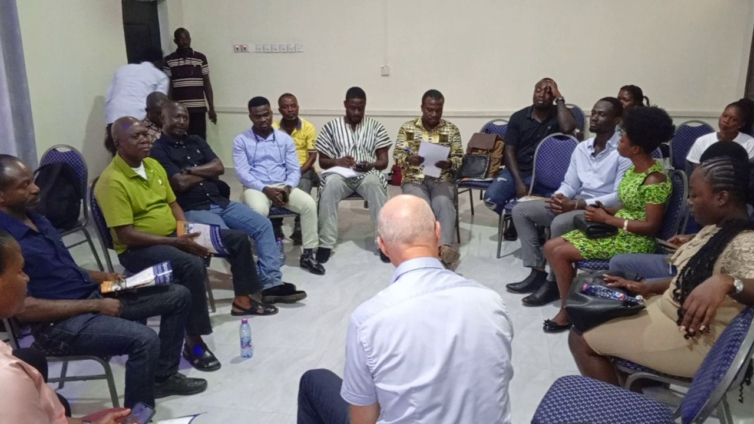
A stakeholder workshop brought together seed producers, seed regulators and policymakers to introduce these innovations and discuss their benefits to the seed sector.
Senior Research Scientist, Dr Hillary Mireku Botey, explained that the country’s cold storage facilities for seeds are limited. He noted that frequent power fluctuations and high electricity costs affect seed viability, leading to germination losses of up to 60 per cent.
To address this challenge, the Institute has introduced the AI-Controlled Thermal Block System to improve storage conditions and the quality of seeds.
“The first technology is the AI-Controlled Thermal Block System. This has been installed in the cold room at CRI-Kwadaso Station. The aim is to reduce energy consumption by charging it at an appropriate time to maintain a steady temperature over a long time. We know the energy cost is very high. We want to reduce the energy consumption and make the cost of seed storage affordable for seed companies and producers,” he said.
Dr Mireku Botey also highlighted the smart mobile application developed locally in collaboration with a Brazilian company, Smart Agri. The application currently focuses on soybeans and maize.
Instead of manually counting germinated seeds each day, users can take pictures, and the app will calculate the germination percentage and seed vigour, which are important parameters for seed producers and farmers.
He said the technology works 15 times faster than the manual method, improving accuracy and efficiency.
Founder and Managing Director of SeedSure and SporeSmart Demo Stakeholders Meeting, Luke Murrell, emphasized the economic importance of the project and improving cold storage facilities to reduce seed wastage and lower energy use.
“So if we improve cold storage facilities, we don’t have so much wastage of seeds, so that has an economic impact. We also use less energy, so we have systems now that are cleaner, greener types of technologies to provide cold storage. The other side of it is around how we produce varieties of seeds that are more climate resistant. We have some technology now that we can use to track the germination rates of seeds and start to understand in more detail how do we produce the best seeds, what are the best varieties,” he said.
The Ashanti Regional Director of the Ministry of Food and Agriculture, David Anamba, also addressed the impact of climate change on farming. He said recent rainfall patterns have changed, with rains occurring in January and February, which is unusual and risky for farmers who plant early.
“As for Climate change, we’re getting rains in January, February, which is unusual. Resilience is what we’re looking at. How do we adapt to climate change so we can get the seed that can be resilient to the drought. Farmers should not rush to plant now. If you plant now, along the line we’ll have drought,” he asserted.
Mr. Anamba further advised farmers to buy seeds only from certified and reliable sources instead of open markets to ensure quality and traceability.
The stakeholder’ meeting highlighted the importance of strengthening seed traceability and addressing challenges in the seed sector. The initiative, a collaboration between CSIR-Crops Research Institute in Ghana, Smart Agri in Brazil, and two United Kingdom-based firms, aims to replace manual seed storage practices with advanced technology to improve efficiency and reduce losses.
Latest Stories
-
Sam George cautions ministers against reading unverified AI-generated speeches
31 seconds -
Ghanaian entrepreneur Mary Nyamekye Asamoah wins Africa Travel 100 award
3 minutes -
Obuasi SHTS abuse: Sanction all officials who failed to act – Moving Masculinity
9 minutes -
Lucy Agyepong honoured for excellence in engineering education at maiden GAAS Women’s Awards
11 minutes -
Harriet Afia Konadu Asiedu
18 minutes -
AFCON 2027: Sports Minister ‘convinced’ Black Stars will qualify despite losing opening two games
20 minutes -
CUTS welcomes VAT collection on cross-border digital services, urges fair treatment of Distance Learning students on overseas programmes
24 minutes -
Leave the Chiefs and fix the Galamsey Problem: Dr Solomon Owusu Advises President Mahama
26 minutes -
Pay attention to teachers and give them what is due – Ho District GNAT tells government
30 minutes -
Authorities knew of abuse allegations against Obuasi headmaster months before suspension – JoyNews investigation
35 minutes -
US teenager appears in court over alleged Hindu temple shooting plot
37 minutes -
Academic City donates paediatric rehabilitation staircase to Ga East Hospital
41 minutes -
Services drive 7.4% expansion in Ghana’s economic activity
53 minutes -
‘I don’t make music for awards, I make it to connect people’ – Rocky Dawuni
1 hour -
Farmer jailed for three months over assault on wife in viral video
1 hour