

Audio By Carbonatix
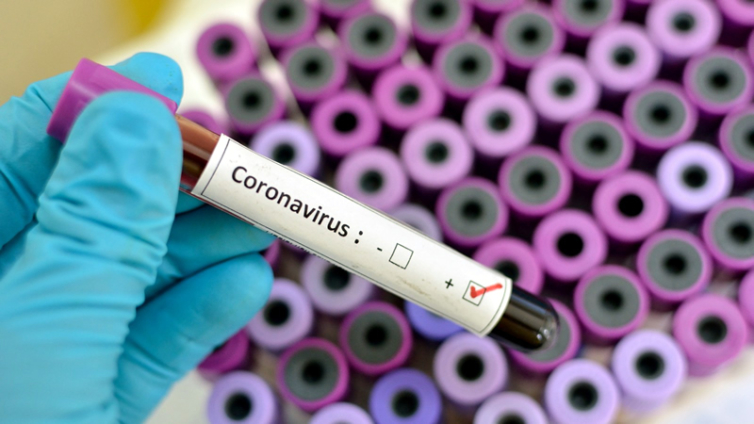
Scientists from the University of Oxford’s Engineering Science Department and the Oxford Suzhou Centre for Advanced Research (OSCAR) have developed a rapid testing technology for the novel coronavirus SARS-CoV-2 (COVID-19).
The team, led by Prof Zhanfeng Cui and Prof Wei Huang, have been working to improve test capabilities as the virus spreads internationally.
The new test is much faster and does not need a complicated instrument.
Previous viral RNA tests took 1.5 to 2 hours to give a result. The research team has developed a new test, based on a technique which is capable of giving results in just half an hour – over three times faster than the current method.
Prof Wei Huang says: "The beauty of this new test lies in the design of the viral detection that can specifically recognise SARS-CoV-2 (COVID-19) RNA and RNA fragments. The test has built-in checks to prevent false positives or negatives and the results have been highly accurate."
Additionally, the technology is very sensitive. This means that patients in early stages of infection may be identified sooner, potentially helping to reduce the spread of the coronavirus SARS-CoV-2 (COVID-19).
The technology only requires a simple heat-block which maintains a constant temperature for RNA reverse transcription and DNA amplification, and the results can be read by the naked eye. This makes it potentially useful in rural area or community healthcare centres.
The technology has been validated with real clinical samples at Shenzhen Luohou People’s Hospital in China. Shenzhen Luohu People’s Hospital has applied the rapid detection kits on 16 clinic samples, including 8 positives and 8 negatives, which have been confirmed by conventional RT-PCR methods and other clinical evidence.
The test results using the rapid detection kits were all successful.
Prof Zhanfeng Cui, the Director of OSCAR, says: "I am proud of our team that have developed a useful technology and can make a contribution in combating CoV-19, and we are very grateful to the hospital’s medical team led by Dr Xizhou Sun, Dr Xiuming Zhang and Dr Dan Xiong for their part in testing this new technology."
The Oxford scientists are now working to develop an integrated device so that the test can be used at clinics, airports, or even for home use. They are planning to run clinical validations within the UK and exploring options for production of the test kits.
The project was initiated by Oxford Suzhou Centre for Advanced Research (OSCAR), a University of Oxford centre in Suzhou Industrial Park.
The experiments to develop the technology were performed in the Department of Engineering Science at the University of Oxford.
Latest Stories
-
Hopeson Adorye calls for one-year mining ban as abandoned galamsey pits claim 23 lives in Ashanti Region
1 minute -
Adu Boahene trial: Judge’s refusal to halt proceedings despite repeat injunction application unfortunate – Atta Akyea
3 minutes -
Gov’t unveils National Workplace Compliance and Safety Management System
9 minutes -
Judge NPP chairmanship candidates on merit, not geographical grounds – Paul Afoko
10 minutes -
IMANI calls for shift from natural resource dependence to diversified economy
22 minutes -
Development must not restart after every change of government – Dr Amoakohene
22 minutes -
I’ll be chairman for every NPP member, not one faction – Paul Afoko
31 minutes -
GRA lists used fridges, air conditioners and underwear among prohibited imports
37 minutes -
‘Ejaculation does not cause blood loss’ — National Blood Service corrects misinformation
42 minutes -
Paul Afoko files NPP chairmanship nomination, promises to reunite party ahead of 2028
45 minutes -
FDA seizes flood-damaged drinks, warns public against purchasing washed products
59 minutes -
Lockerbie bombing trial postponed again after new evidence emerges
1 hour -
NLA says 12% salary offer remains on table, urges striking staff to return to work
1 hour -
MTTD officers will remain on roads despite traffic technology rollout – Interior Ministry
1 hour -
NPP backs Afenyo-Markin’s push for answers over alleged GoldBod losses
1 hour