

Audio By Carbonatix
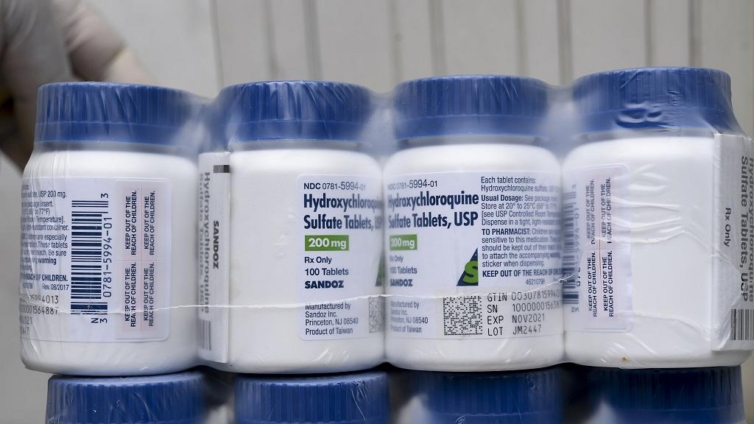
Senegal will continue treating COVID-19 patients with hydroxychloroquine, a senior health official said on Wednesday, despite a recent study indicating that the anti-malarial drug is ineffective and potentially harmful.
Authorities in the West African state opted to provide consenting patients with the drug early on during its coronavirus outbreak, citing promising clinical results.
Chloroquine and its derivative hydroxychloroquine have been used for decades against malaria and are considered cheap and safe when used correctly.
US President Donald Trump promoted its use and stunned his own administration earlier this month by revealing he was taking it as a preventive measure against the virus.
But even as countries around the world rushed to use the anti-malarials to fight COVID-19, experts urged caution and warned that the drugs can have potentially serious side effects.
A study of nearly 100,000 COVID-19 patients, released on Friday, appeared to confirm some of those concerns.
Published in the medical journal The Lancet, the study found that chloroquine and hydroxychloroquine do not benefit hospitalised patients — and even increase the risk of death and heart arrhythmia.
It recommended against using either drug outside of clinical trials.
Abdoulaye Bousso, who heads Senegal’s Centre for Health Emergency Operations, told AFP on Wednesday that the country’s hydroxychloroquine treatment programme would nonetheless continue, without offering further details.
The infectious-diseases doctor who is spearheading Senegal’s treatment of COVID-19 patients, Moussa Seydi, did not respond to requests for comment. Nor did the health ministry.
The World Health Organization said on Monday it had temporarily suspended clinical trials of hydroxychloroquine as a potential treatment for coronavirus following the Lancet study.
Scientific community divided
But medical authorities worldwide still appear divided on the use and potential harmfulness of the drugs.
France decided to ban it as a COVID-19 treatment on Wednesday, for example, while Brazilian authorities indicated that they would continue using the drug.
Seydi, the Senegalese infectious-diseases doctor, had previously said that hydroxychloroquine is offered only to consenting patients, and after medical staff perform a cardiogram.
Senegal has so far been spared a coronavirus outbreak on a par with Europe and the United States.
Authorities have recorded 3,235 cases to date, with 38 fatalities.
Latest Stories
-
Accra-Kumasi Expressway construction to begin in January 2027 – CEO
3 minutes -
Parents in Ashanti make U-turn on Category C, D Schools as reporting deadline approaches
10 minutes -
September 21 declared public holiday for Founder’s Day
14 minutes -
Indonesia rescuers battle turbulent seas in search for 129 people after passenger ship capsizes
30 minutes -
Iceland’s last whaling company shrugs off threat of permanent ban
37 minutes -
‘Out of the abundance of the heart, the mouth speaks’ – GBA President on CJ’s SOEs comments
39 minutes -
Member of UK Armed Forces dies in road traffic incident in Ukraine
41 minutes -
Mahama to honour GAF Engineers Regiment with Order of the Companion of the Volta
43 minutes -
Agbodza demands quality, value for money in Accra-Kumasi Expressway construction
45 minutes -
Companies left China to dodge tariffs, now some are heading back
45 minutes -
Bali police investigate after Australian man and children found dead in home
46 minutes -
Government will not borrow to fund Accra-Kumasi Expressway – Ato Forson
53 minutes -
‘Judicial Service’s defence of Chief Justice was lacklustre’ – GBA President
56 minutes -
Etihad Airways sees strong demand, higher passenger capacity despite Iran war, CEO says
59 minutes -
AirBaltic files for Chapter 11 bankruptcy as Iran war costs bite
59 minutes