

Audio By Carbonatix
The Ghana Education Service (GES) has highlighted the need to intensify education “targeting girls, boy and the parents” on menstrual hygiene.
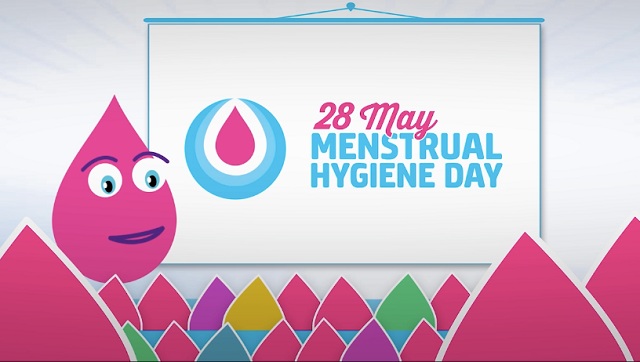
GES made a case for this move as the country commemorates Menstrual Hygiene Day on May 28, 2020.
The day is to “celebrate women and girls, to discuss menstruation, and to advocate for more favourable conditions for the many women and girls in Ghana without access to basic information on menstrual hygiene management, dignified toilets, safe water and safe sanitary hygiene materials.”
The 2020 edition is under the theme, "It's Time for Action’.
In a press release signed by the Deputy Director-General Anthony Boateng, the Service emphasised the need to look at the menstrual hygiene in the context of the ensuing Covid-19 poandemic.
It explained that the closure of schools over the need to contain the novel coronavirus may lead to “fewer girls and boys having basic information in relation to menstrual hygiene management.”
The GES among others things called for “provision of toilet facilities which are gender friendly with changing rooms, easy accessibility to menstrual hygiene products, even during the COVID-19 pandemic and demystification of myths and taboos connected with menstruation.”
Read full statement below
2020 Menstrual Hygiene Day Commemoration
Today is Menstrual Hygiene Day (28 May). It is a day to celebrate women and girls, to discuss menstruation, and to advocate for more favourable conditions for the many women and girls in Ghana without access to basic information on menstrual hygiene management, dignified toilets, safe water and safe sanitary hygiene materials.
The theme for this year is "It's Time for Action’.
This year’s celebration takes place in the context of the coronavirus (COVID-19) pandemic – a health crisis which has thrown a spotlight on the importance of adequate water, sanitation and hygiene.
According to the Multiple Indicator Cluster Survey 2017/2018, (MICS 2017/18) in Ghana, fewer than one in two (48.5 %) of households have handwashing facilities with water and soap and one in three women do not have access to a toilet during menstruation. Many did not have access to sanitary products and managed their menses using unhygienic unhygienic items like newspaper or leaves.
The economic and other social factors of COVID-19, including potential loss or reduction in family income, coupled with school closures and increase in cost of commodities may result in many adolescent girls and women having less ability to afford or access relevant sanitary materials.
In addition, the closure of schools may lead to fewer girls and boys having basic information in relation to menstrual hygiene management.
There is the need to continue advocacy on the following:
- Continuous education targeting girls, boy and the parents
- Provision of toilet facilities which are gender friendly with changing rooms
- Easy accessibility to menstrual hygiene products, even during the COVID-19 pandemic
- Demystification of myths and taboos connected with menstruation.
2020 Menstrual Hygiene Event
This year’s Menstrual Hygiene Day is being commemorated via social media, radio and television broadcasts.
Activities include the following:
- Webinar Seminar for the commemoration on the 28th May, 2020 from 9:30am-11:00 am broadcast online. The 90-minute event will include a keynote address delivered by the Hon. Minister of Education. Speakers and panelists from the Ghana Health Service, Ministry of Sanitation and Water Resources, Ghana Education Service, UNICEF, CONIWAS and other Development Partners.
- Short films of well-known personalities from all sectors - including government ministers, religious and traditional leaders, adolescents and broadcasters - celebrating Menstrual Hygiene Day
- Media interviews with representatives of the National Technical Committee on Menstrual Hygiene Management.
- Social media influencer endorsement
- Discussions on MHM on GTV Adult education programme as post MH Day activity
A post activity will be conducted by SHEP Coordinators at the Regional and District level
We are grateful to the National Technical Committee on MHM as well as those who coordinated the programme from Ministry of Education / Ghana Education Service, Ministry of Gender, Children and Social Protection, the Ministry of Health / Ghana Health Service, the Ministry of Sanitation and Water Resources. Other partners include UNICEF, Greater Accra Metropolitan/Municipal Area (GAMA) Sanitation and Water Project, World Bank, World Vision Ghana, WaterAid Ghana, Days for Girls, Global Communities and USAID and Coalition of NGOs in Water and Sanitation (CONIWAS).
We urge them to continue their support.
ANTHONY BOATENG
DEPUTY DIRECTOR GENERAL (MS)
FOR: DIRECTOR-GENERAL
Latest Stories
-
If CJ needs ethics law to know SOE comments were wrong, he may not be worthy of office – Arthur Kennedy
37 minutes -
Stop touring state agencies and focus on the Judiciary’s problems – Arthur Kennedy to CJ
43 minutes -
Apologise and don’t do it again – Arthur Kennedy to Chief Justice over SOE comments
49 minutes -
Chief Justice remains committed to judicial independence, justice and equality – Judicial Service
1 hour -
Ghana concludes evacuation of citizens from South Africa; total returnees reach 1,900 – Ablakwa
2 hours -
Africa must define its own green transition path – Prof Fatima Denton
2 hours -
WASSCE 2026: English Language performance falls to 62.4% – WAEC
2 hours -
WASSCE 2026: Social Studies records sharp rebound as Maths, Science also improve
3 hours -
2026 WASSCE entry rises by 11% as 512,862 candidates sit exams
3 hours -
WASSCE 2026: English Language performance falls to 62.4% – WAEC
3 hours -
WAEC cancels 2026 WASSCE results of 8,295 candidates over examination irregularities
3 hours -
WAEC releases provisional 2026 WASSCE results for 512,862 candidates
4 hours -
CJ’s remarks on SOEs were made in good faith, not to undermine judicial independence – Judicial Service
7 hours -
Bright Future Alliance pays courtesy call on Akufo-Addo, invites him to African Leaders of Influence Lectureship Series
7 hours -
This is an attempt to break the Minority caucus – Patricia Appiagyei on alleged GH¢70k payment
7 hours