

Audio By Carbonatix
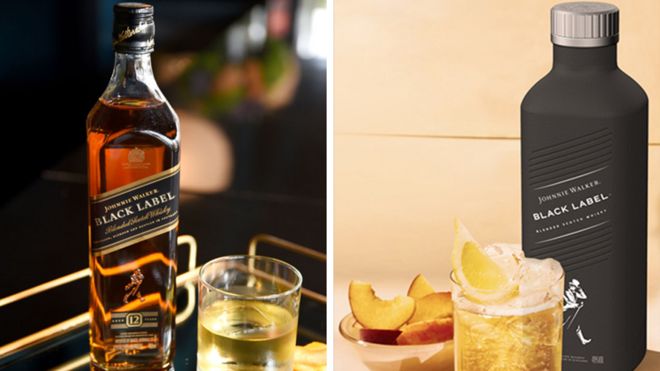
Johnnie Walker, the whisky which traces its roots back 200 years, will soon be available in paper bottles.
Diageo, the drinks giant that owns the brand, said it plans to run a trial of the new environmentally-friendly packaging from next year.
While most Johnnie Walker is sold in glass bottles, the firm is looking for ways of using less plastic across its brands.
Making bottles from glass also consumes energy and creates carbon emissions.
To make the bottles, Diageo will co-launch a firm called Pulpex, which will also produce packaging for the likes of Unilever and PepsiCo.
Diageo's paper whisky bottle, which will be trialled in spring 2021, will be made from wood pulp and will be fully recyclable, the company said.
The idea is that customers would be able to drop them straight into the recycling.
Drinks companies have been developing paper bottles to try to cut down on pollution and make products more sustainable.
Carlsberg in the process of developing a paper beer bottle.
UK firm Frugalpac produces paper wine bottles which it says are made from recycled paper with a "food grade liner".
However, drinks giant Coca-Cola in January said it would not ditch single-use plastic bottles because consumers still want them.
Plastic-free
Diageo said its bottles will be made by pressurising pulp in moulds which will then be cured in microwave ovens.
The bottles will be sprayed internally with coatings that are designed not to interact with the drinks they will contain.
Many cartons made out of paper have a plastic coating inside to stop the drinks leaking out. Diageo, however, said its drinks bottles will not have that plastic coating.
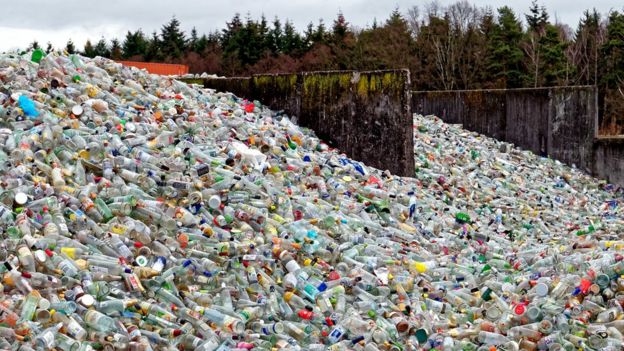
Companies are coming under increasing pressure to reduce the amount of plastic in packaging as consumers increasingly focus on damage to ecosystems.
In Europe, 8.2 million tonnes of plastic were used to package food and drink in 2018, according to ING analysts.
Diageo, which also makes Guinness and Smirnoff vodka, said it uses less than 5% of plastic in its total packaging.
However, while glass bottle manufacturers are striving to make production more efficient, they still have a significant carbon footprint.
It takes a lot of energy to power glass furnaces, many of which use natural gas to melt raw materials such as sand and limestone.
Latest Stories
-
TVET Service, Bank of Ghana explore partnership to boost skills development
40 minutes -
Ghana TVET Service, OR Foundation partner to promote sustainable fashion
53 minutes -
Achimota, Accra Academy, PRESEC Osu qualify for next stage of National Public Speaking Event
56 minutes -
NCPTA challenges GES directive on PTA dues, cites High Court injunction
59 minutes -
Majority opposes parliamentary probe into cocaine busts while investigations continue
1 hour -
Salomey Baffoe detention is a facade to divert attention from cocaine scandal – Weija-Gbawe MP
1 hour -
Francis-Xavier Sosu is doing well after GIMPA incident – Office
1 hour -
Deputy Minority Leader appeals to First Lady, Vice President over Salomey Baffoe’s detention
1 hour -
Ecobank Group commits US$2.6bn to women-led businesses and agribusinesses across Africa
2 hours -
Ghana to host high-level conference on scaling education initiatives in emergencies
2 hours -
Democracy must not be for sale: Who pays for Ghana’s politics, and how do we confront money, influence and accountability?
2 hours -
Aburi Amanfrom landowners appeal for government support for Atwapim development project
2 hours -
Cargill Ghana and International Cocoa Initiative celebrate 111 young graduates building skills for the future
3 hours -
Video: Madina MP Francis-Xavier Sosu collapses while addressing students at GIMPA
3 hours -
Hunnyboy reveals how social media landed him Shatta Wale feature
3 hours