

Audio By Carbonatix
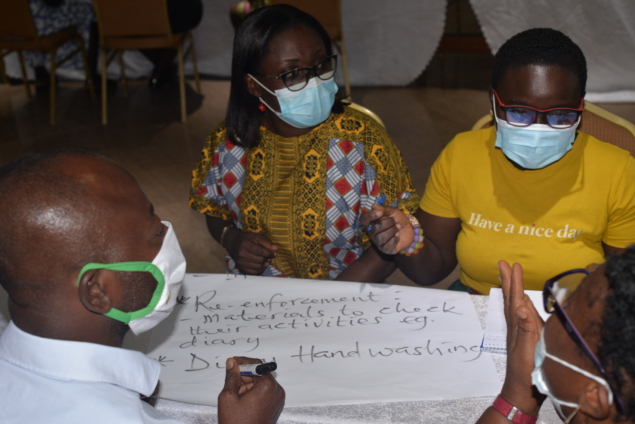
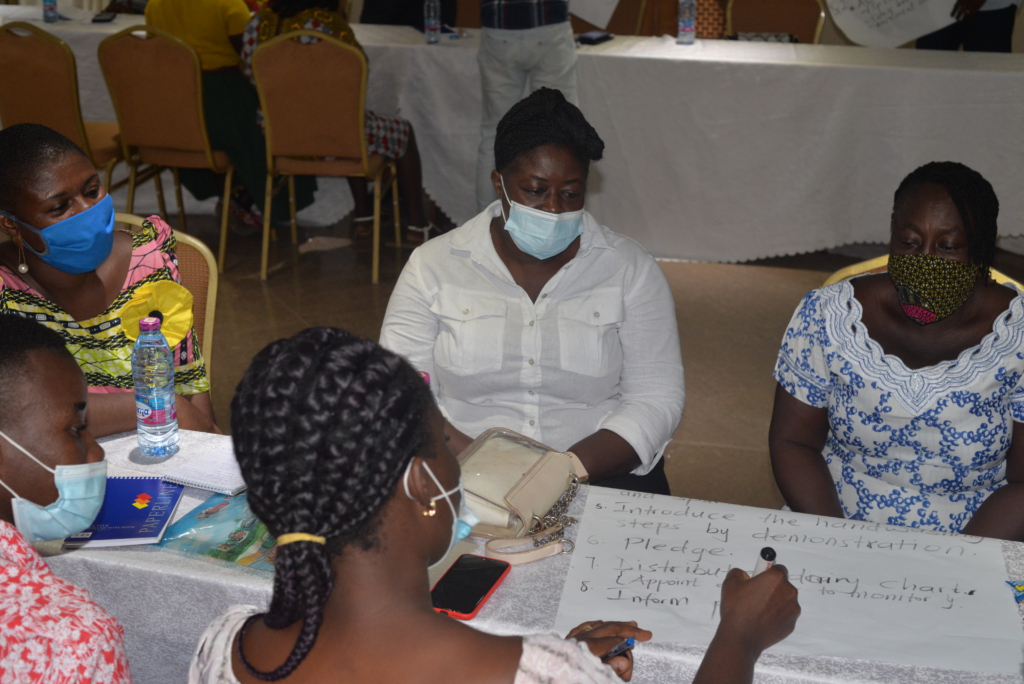
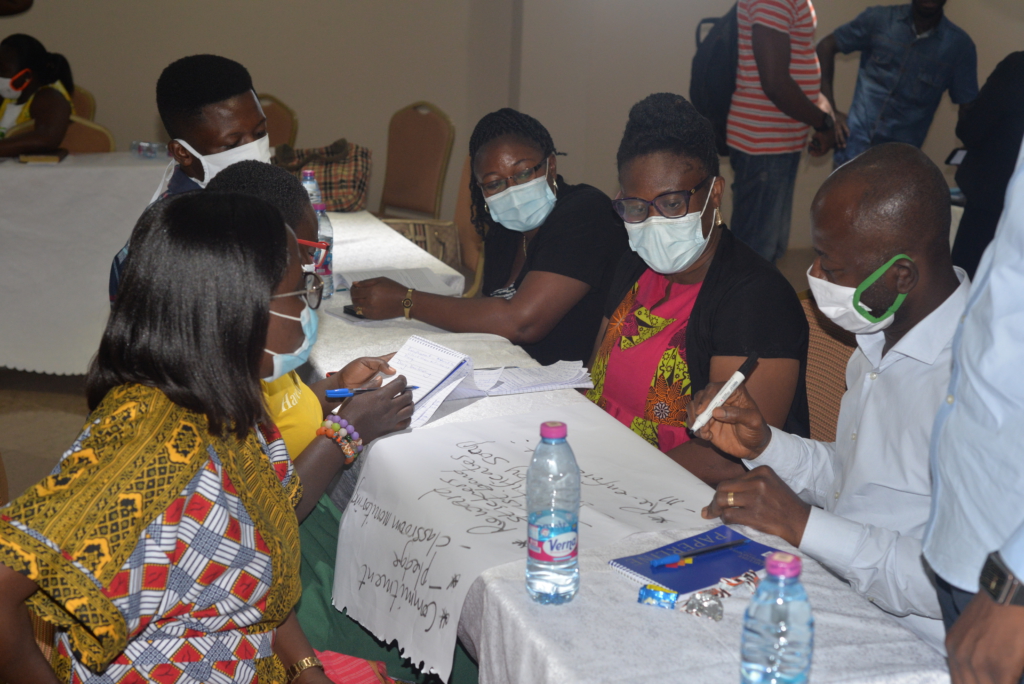
Stakeholders of the Water and Sanitation for the Urban Poor’s project ‘Building urban resilience against Covid 19’ have benefitted from a 4-day capacity building workshop in Kumasi, Accra and Tamale.
Beneficiary stakeholders include School Hygiene and Education Programe (SHEP) coordinators, National Commission for Civic Education (NCCE) officials, market leaders, assembly members, environmental health officers and Community Based Organisations.
They were equipped with knowledge, skills and approaches in hygiene behaviour change approaches as well as general COVID-19, hygiene education and community engagement skills.
Participants engaged in plenary session to discuss effective ways to propagate the hygiene education messages, factors that motivate behaviour change and target practices. They were also trained on the Uniliver School of 5 Hygiene and Behavioural Change Approach and the Lifebuoy Mums Magic Hands Concept and its pillars for behavioural change which are awareness, commitment, reinforcement and reward.
The approach was to help the participants educate people to wash their hands with soap consistently at key occasions and actions to ensure families, especially children, wash their hands with soap consistently at key occasions in order to help reduce diarrhea related diseases.
Municipal director, NCCE Oforikrom, Vera Ofei believes the workshop has helped in improving her communication skills.
“NCCE is on the platform of education. We want to see behavioral change. This workshop has helped me acquire effective communication skills,” he said.
Oforikrom SHEP coordinator Millicent Annorbah-Sarpei said “the programme has come to help us practice good hygiene in schools and communities.”
Nana Esi Owusu Ansah of the Obuasi Central market queen was confident the wearing of nose masks is an effective method of curbing the spread of covid-19 in the market setting. She said “proper communication is crucial in education of her subjects.”
District environmental officer, Obuasi East, James Gamor has identified a change in his approach.
“What we’ve come to learn here will help us to improve what we’ve already been doing on the field. We’ve realized we need to change some of our strategies to prevent the new cases,” he said.
Stakeholders in Tamale and Accra also benefitted from the 4-day workshop to equip them undertake the same hygiene and its related COVID-19 messages.
The programme is supported by the Unilever and the UK government. WSUP in October organized an education campaign for traders, schools and the general public in some Assemblies in Greater Kumasi Metropolitan Area and Tamale to increase awareness and understanding about the importance of handwashing with soap as an effective and affordable way to prevent diseases and save lives.
Latest Stories
-
T-bills auction: Government exceeds target marginally; yield on 91-day bill remains unchanged
3 hours -
GPL 2026/27: 10-man Aduana hand Kotoko defeat in Kumasi
3 hours -
GPL 2026/27: Medeama ease past Basake Holy Stars
4 hours -
Appiah Adomako writes: Why DVLA must stop treating every expired licence holder as delinquent
4 hours -
Localization must transfer decision-making power, not just project responsibilities
4 hours -
Modernising Ghana’s traditional markets through the 24-Hour Economy markets initiative
4 hours -
New economy will boost local production and create jobs – Finance Minister
4 hours -
Real-Time VAT on cross-border digital services – not a new tax and does not violate double taxation principle
5 hours -
Digitalisation, AI key to Ghana’s tourism transformation – GHATOF
5 hours -
Stronger GTA-private sector partnership needed to grow tourism – GHATOF
5 hours -
Amazon eyes Ghana for broadband expansion after talks with Mahama
6 hours -
National Investment Quiz 2026: Six schools qualify for quarter-finals
6 hours -
‘Do not let Russia pay for its madness with lives of your people’ – Zelensky to Ghana, 46 other countries
6 hours -
6,079 promotion cases fully processed and paid – CAGD says amid nationwide teachers’ strike
7 hours -
Teacher unions to meet government Monday over nationwide strike
7 hours