

Audio By Carbonatix
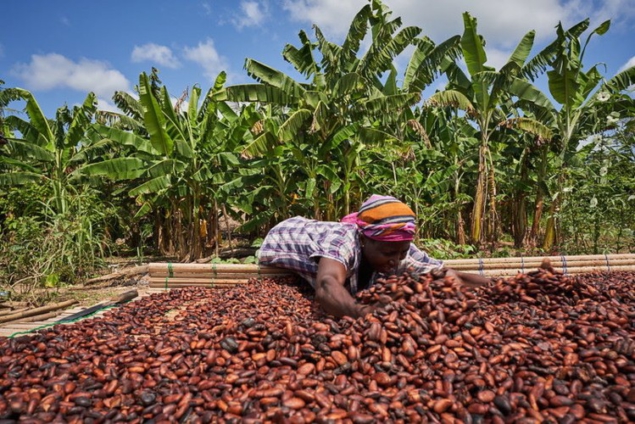
A policy and advocacy think tank, Tsa-Ke-Mo is calling for stronger public policies to encourage value-addition to cocoa produced in Ghana and Cote D’Ivoire.
The group which is geared at promoting value addition and youth job creation from natural and agricultural resources said it is rather disappointing that Africa which produces 75% of the world’s cocoa only enjoys 2% of the world’s $100billion chocolate industry.
According to them, though there have been some indications by governments to address the huge disparity identified, not much has been realized due to a lack of strong policies and commitments.
An implementation of these policies they say will generate jobs and employment for Africa’s energetic youth population.
The Tsa-Ke-Mo, therefore, suggested some actionable policies to catalyse the growth of the cocoa value addition industry in Ghana and Cote D’Ivoire.
In a press statement to mark this year’s National Chocolate Week, Tsa-ke-mo called for 60% of cocoa produced in Ghana and Cote D’Ivoire to be retained and value added.
They stated that the 60% should be made more easily accessible to processing industries at affordable prices to ensure maximum participation of the country’s private sector.
They also called for the creation of a national fund for cocoa value addition capacity building and financing for the youth of the respective countries using at least 20% of cocoa export revenue.
They further stated that to serve as an incentive for private organisations and individuals to join the drive towards higher value addition for cocoa, new cocoa processing companies should be exempted from paying taxes in the first five years, whereas old cocoa processing companies should have their taxes reduced.
Tsa-ke-mo urged the governments of Ghana and Cote D’Ivoire to put in place a free import duty regime for industrial machines and equipment for industries involved in cocoa processing or chocolate manufacturing.
Finally, increase funding for cocoa research and product development in the respective countries will go a long way to help.
The group is optimistic that, these initiatives will increase employment opportunities, contribute to a more sustainable economy, and grant the governments some bargaining power over finished products which will then generate greater revenue for the countries.
Latest Stories
-
Arrest of Techiman nurse is purely political persecution – ‘Ghana Jollof’
6 minutes -
Isak nets winner as Liverpool edge Bournemouth
39 minutes -
I dare gov’t of Ghana to extradite me; they can never do it – ‘Ghana Jollof’ speaks
41 minutes -
Semenyo scores twice as Manchester City beat Sunderland 5-3 in eight-goal thriller
51 minutes -
Parliament calls for government-private sector collaboration to improve waste management
53 minutes -
Volta Region described as cleanest so far in Parliament’s nationwide sanitation monitoring
1 hour -
Parliament urges MMDAs to enforce sanitation bylaws to curb indiscriminate waste disposal
1 hour -
Mohammed Kudus drops out of Ghana squad for AFCON 2027 qualifiers against Côte d’Ivoire and Gambia
2 hours -
Africa World Airlines unveils first Embraer E190 as part of 10-aircraft fleet expansion
3 hours -
Civilian hospitalised after alleged machete attack by prison officers, inmates
3 hours -
Toobu rejects calls to recall Parliament over 3.9-tonne cocaine shipment
4 hours -
Residents in 5 Northern Regions warned of approaching rainstorm
4 hours -
Constituency Games still a work in progress – Sports Minister
4 hours -
Team Ghana set for historic Karting Africa Showrun in Angola
4 hours -
52-year-old South African arrested with suspected heroin after arriving from Accra
4 hours