

Audio By Carbonatix
Soil erosion has become an increasing concern as climate change destroys soils due to droughts and floods.
But a practice known as Conservation Agriculture also known as No-Till Agriculture does not only protect the soil but saves farmers time and money.
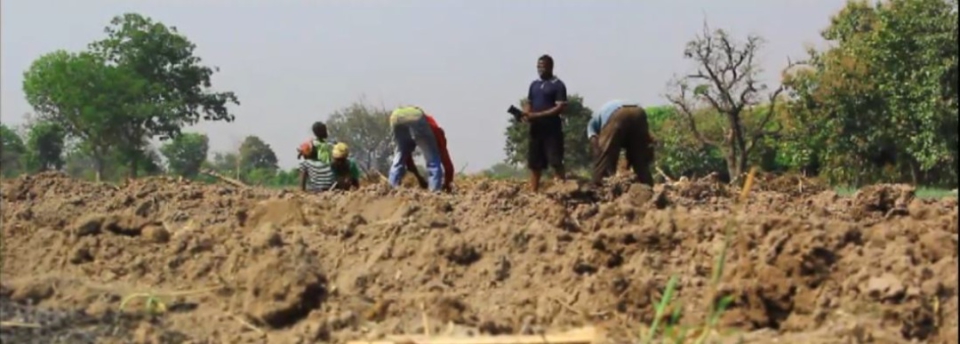
At far east of Kparigu in the NorthEast region is a farmer who tills the soil.
Ibrahim Watara is preparing the land for the season. The age-old practice to till the soil is a means of preparing the seedbeds, releasing nutrients to crops, and controlling weeds.
But according to scientists tillage poses a greater risk of erosion with potentially disastrous consequences.
The loss of topsoil destroys farmlands and causes environmental pollution.
Scientists say global soil degradation issues are compounded by climate change and also frequent extreme weather events have an increased impact on land degradation.
Due to the rapid release of greenhouse gases, soil degradation is responsible for climate change.
The service centre manager at the Centre for No-Till Agriculture says there is a solution and that is conservation agriculture.
Francis Akudgudu says farmers do not plow the soil nor disturb it to restore its structure and ecosystem.
They leave crop residue in the field to reduce soil erosion, evaporation and manage weeds.
Mr. Akudgudu who has been working with the centre for some time now says farmers diversify rotational species to enhance soil resistance to pests and diseases.
This allows farmers to reduce the number of pre-season operations.
There are added benefits to saving money and enabling more efficient and timely management of farm practices.
"Conservation agriculture reduces soil erosion and makes farmland more productive," he says.
If the soil contains more organic matter, it acts like a sponge and contains nutrients.
It is challenging to change an age-old practice like tilling the soil.
But the benefits of conservation agriculture can keep farmers productive for the next generation, at a lower cost of adoption.
Mr. Akudgudu says it is high time farmers adapt the system to increase yield and productivity.
The IPCC special report “Climate Change and Land” (2019) includes conservation agriculture as an additional adaptation option to address climate risks.
The three main principles of conservation agriculture which include minimum soil disturbance, crop diversification, and permanent soil cover help to protect the environment and reduce impacts of climate change on agricultural systems.
It also reduces the contribution of the agricultural practices to greenhouse gases (GHG) emissions through sustainable land management.
Latest Stories
-
Mobile Money Fintech LTD, UMB train hairdressers and beauticians
1 hour -
Asylum votes show people want help, says Kemi Badenoch
2 hours -
Badenoch welcomes expanded grooming gangs inquiry
2 hours -
GACL MD sues Samuel Buabeng over alleged Facebook defamation
2 hours -
Christa Pike in critical condition after surviving two lethal injections, lawyer says
2 hours -
Kemi Badenoch backs face covering ban at protest
3 hours -
Man City not ‘above the rules’, says No 10 after backlash to Burnham remarks
3 hours -
Real Madrid submit ‘substantial’ dossier in Barca payments case
3 hours -
Messi completes purchase of second Spanish club
3 hours -
Government must engage horticulturists on tomato crisis – GhIH
3 hours -
King Promise’s ‘Can’t Tame Us’ becomes official Chelsea anthem
3 hours -
Afenyo-Markin demands Baffour Awuah’s release from EOCO’s custody, end to alleged political intimidation
3 hours -
Rapper Rick Ross arrested on domestic violence charges
3 hours -
Minority demands security review of Ghana-Colombia visa waiver and port deals
4 hours -
Pursue drug kingpins, not persecute political opponents – Afenyo-Markin tells EOCO
4 hours