

Audio By Carbonatix
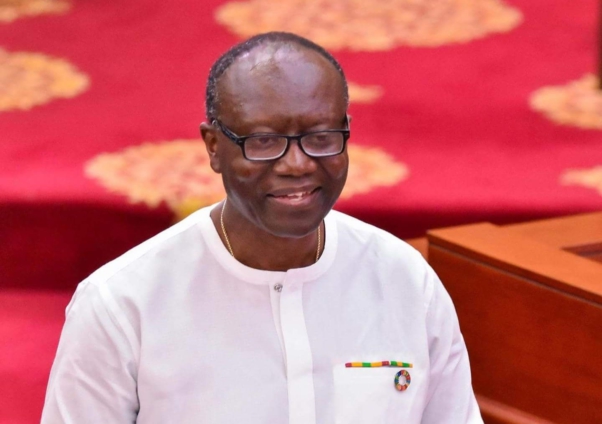
Minister of Finance, Ken Ofori-Atta designate says Ghanaians should embrace the call to share the financial burden of the state.
Speaking at the Appointment' Committee vetting, he said that burden-sharing will not only help transform the country but also ensure the country also shares the opportunities that come afterwards.
“The essence of the budget is that it is a battle cry for us to join together to look at growth and transformation as opposed to bending our heads down because of covid. is there a good time ever for taxes, I am not sure anybody will ever say that.”
Mr Ofori-Atta said that the government will ensure that the revenue raised is used to productively towards growth across the country.
His comments come after many people expressed concern about the introduction of new taxes amid the Covid-19 pandemic.
While delivering the 2021 budget statement, Osei Kyei-Mensah-Bonsu announced the government is also introducing a Covid-19 Health Levy of 1% on VAT, Flat Rate Scheme (VFRS) and a 1% on National Health Insurance Levy (NHIL) as part of revenue measures to help the economy recover.
Government also introduced a Sanitation and Pollution Levy to help address the issues of sanitation in the country.
The Sanitation and Pollution Levy of 10 pesewas will be incorporated into the proposed fuel levy.
This new rate will be charged on the price per litre of petrol/diesel under the Energy Sector Levies Act (ESLA).
There will also be an increase in the energy sector recovery levy and road tolls.
Some Ghanaians including Buisila South MP, Dr Clement Apaak, condemned the introduction of new taxes by government in the 2021 Budget Statement.
He said because of the Covid-19 pandemic it is unfair for the government to put additional strain on citizens when production is low and personal income has dwindled.
However, Mr Ofori-Atta believes the country needs to address its many challenges adding that this revenue will help secure the growth of the country after suffering because of the pandemic.
“We have proposed a number of taxes that would affect petroleum which will lead to revenue for a delta fund for energy for capacity charges because we continue to have a gap between what ECG should be paying and what the rates are. So that was to make sure that we get the energy sector operations. We also have a huge sanitation problem that you all know about and I think that is a health hazard for the years ahead.”
He stated that the government prior to Covid-19 built a resilient economy, which was unfortunately affected by Covid-19, but now, “We need to create a society that we can also share the opportunities as we grow,” he added.
Latest Stories
-
GNFS contains fire outbreak at Teshie Lekma Road near Lekma Hospital
6 hours -
Samia Nkrumah rejects the narrative that Ghanaians were happy after Nkrumah’s overthrow
7 hours -
A Mother’s pain: Tribute by Ivan Baidoo’s mother
7 hours -
‘Forgive us for staying away’ — Samia Nkrumah leads family back to Nkroful, pledges to preserve Nkrumah’s legacy
7 hours -
Ernest Nuamah scores twice as Lyon beat Rennes
7 hours -
‘My dear Ivan’ – A father’s tribute to a son tragically killed
7 hours -
GNPC Explorco advances Voltaian Basin drilling preparations with 13.5km access road
8 hours -
Cabinet approves facility manager for Borteyman Sports Complex – Kofi Adams
8 hours -
Sanitation is improving; critics may be ‘living in another world’ – Salaga South MP replies Bekwai MP
9 hours -
Government must do more to tackle sanitation crisis – Bekwai MP
9 hours -
World Cleanup Day: GFF begins sanitation education in local communities
9 hours -
EU Ambassador, IGP discuss stronger cooperation on policing and security
9 hours -
Africa Nations Volleyball Championship: Ghana set up quarterfinal clash with Cameroon after beating Chad
9 hours -
Meet Dr Benjamin Appiah Osei — Ghana’s three-time tourism awards winner
10 hours -
UEFA & CONCACAF demand Fifa pays $10m to all 211 members
10 hours