

Audio By Carbonatix
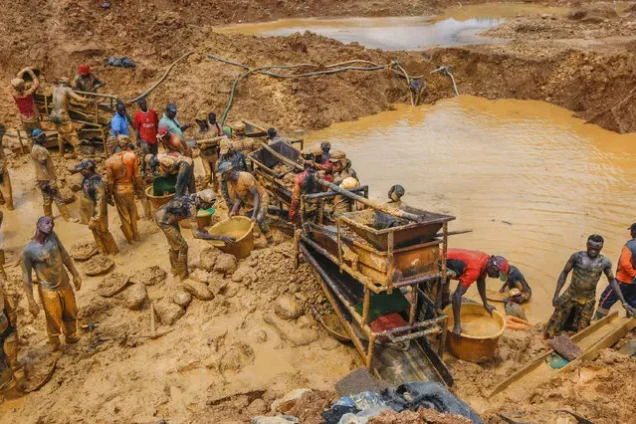
Galamsey has become one of Ghana’s most public national failures. Polluted rivers, destroyed forests, militarised crackdowns, and endless speeches have become a familiar cycle. Every government declares war on illegal mining. Every government loses. Why? Ghana treats galamsey as a law-and-order problem when it is fundamentally a jobs-and-leadership problem.
Yes, impunity exists. Yes, political compromise weakens enforcement. Yes, institutions such as the EPA, NIAMO, and security agencies matter. But, here is the hardest truth: you cannot shut down an economy, even an illegal one, without replacing it.
When enforcement is not paired with viable livelihoods, galamsey does not end; it adapts, relocates, and deepens. This is why arrests fail, why task forces collapse, and why galamsey persists.
For 32 years of the Fourth Republic, we have produced leaders who manage elections better than economies, slogans better than systems, and crises better than transformations. We raid forests, but we avoid the harder work of restructuring labour and opportunity.
This conversation must move beyond arrests and excavator seizures to jobs at scale. You cannot police people out of poverty. You cannot save forests with speeches. You cannot win this fight without jobs.
Ghana’s real crisis is not galamsey: It is leadership without thought
Galamsey is a symptom. Since 1992, Ghana has largely produced political leaders who are more “talkers” than “thinkers.”
Our leaders have been overwhelmingly transactional, focused on delivering short-term gains, appeasing constituencies, and surviving the next election, rather than being transformational and capable of reimagining the economy and restructuring. And, this is why galamsey persists. You cannot solve a structural problem with speeches, task forces, and press conferences. You need thinking leadership, not just talking leadership.
Ghana is blessed with rich geography, forests, minerals, rivers, culture, and human capital. Yet what we are witnessing is not a resource curse; it is an imagination deficit.
Across the world, states facing harsher conditions have demonstrated what deliberate planning can achieve. Saudi Arabia is reclaiming desert land through large-scale afforestation. Israel has turned arid terrain into productive agricultural zones through irrigation and technology. The United Arab Emirates has built global tourism economies around landscapes once dismissed as useless (deserts). Norway, conscious of intergenerational responsibility, limits present consumption of oil revenues and invests for the future.
Ghana is moving in the opposite direction. Minerals are depleted unsustainably, forests are destroyed irreversibly, non-renewable wealth is converted into short-term consumption, while environmental and economic costs are deferred to generations with no voice in today’s decisions.
This is not merely a policy failure. It is a moral failure. Galamsey thrives because it reflects the logic of the state itself: extract now, explain later; consume today, worry tomorrow.
A Political System That Rewards Failure
Until Ghana shifts from elections to plans, from slogans to systems, and from transactions to transformation, the fight against galamsey will remain political theatre rather than a policy solution.
The internal incentives of Ghana’s dominant political parties, the NDC and the NPP, reinforce this cycle. Loyalty is rewarded over competence, charisma over strategy, and immediate popularity over long-term nation-building. As a result, every administration inherits the same unresolved crises: illegal mining, youth unemployment, underdeveloped agriculture, and decaying infrastructure.
Leadership failure explains why galamsey persists at the top. Jobs explain why it survives at the bottom. Illegal mining is not sustained by speeches; it is sustained by livelihoods. Where legal employment is absent, environmental destruction becomes a source of income.
Until enforcement is deliberately paired with credible, large-scale job creation, Ghana will continue to recycle the same tragic pattern: forests destroyed, rivers poisoned, and young people trapped between poverty and illegality. The fight against galamsey cannot be won by force alone. It requires leadership that thinks, plans, and builds an economy capable of offering real alternatives.
*******
Frederick Kwaku Gyekete Afari is a Human Resource and Policy Practitioner with over 20 years of experience across multiple industries. He is a strategic HR and administrative leader with a focus on infrastructure governance, sustainable development, and public-sector reform. He is a member of Progressive Alliance for Ghana (PAG)'s Communication Team. He can be contacted at afarfred@gmail.com
Latest Stories
-
Gender Ministry launches breast cancer campaign, pushes support over stigma
13 minutes -
Feed Ghana Programme cuts food import dependence
17 minutes -
Mahama welcomes Global Mercy Hospital Ships back to Ghana
21 minutes -
Tourism Minster calls for improved maintenance, consistent storytelling at tourist sites
27 minutes -
Katamanso Police Station appears complete outside but unfinished inside – Aidoo
33 minutes -
COMAC wants fuel taxes frozen to ease pressure on consumers
51 minutes -
COMAC pushes for crude oil revenue windfall to support struggling downstream sector
1 hour -
Gold slips before US payrolls data, set for second weekly loss
1 hour -
New Mexico wants Meta to pay up to $40 billion in penalties after data privacy trial
2 hours -
Oil rises slightly as market weighs mixed supply signals
2 hours -
Jordan ‘Last Dance’ jersey sells for £9m
2 hours -
Nigeria charges man with running fictitious government agency
2 hours -
COMAC renews call for full deregulation of fuel prices
2 hours -
Putin warns West that Russia is ready to use every weapon to protect Kaliningrad
3 hours -
Fuel sector overcrowded as 245 OMCs compete for market share – COMAC CEO
4 hours