

Audio By Carbonatix
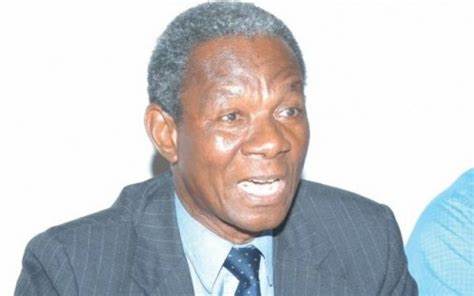
Renowned economist, Kwame Pianim, has criticized the license revocation approach adopted by the Bank of Ghana and the Securities and Exchange Commission in cleaning up the financial sector.
As part of the efforts to sanitize the financial sector, the Central Bank and the SEC were forced to withdraw licenses of firms that were insolvent.
But speaking at the Tesah Capital Webinar on “investing in the financial sector post clean up”, Mr. Pianim said this should have been the last approach.
He also raised issues about the lack of regulatory coordination of the sector.
“I think that what happened in the past was due partly to lack of jurisdiction. With some of the ponzi schemes, it was not clear whether the Bank of Ghana or the Securities Exchange Commission was to regulate them.”
“Revoking a license is not the right way to do to these companies. The idea is to be there, guide them when they are going wrong and let them know that you’re monitoring their accounts so if they’re not paying their bills, you are going to deal with them,” he said.
Meanwhile, the Deputy Director General of the Securities and Exchange Paul Ababio has been giving details on payment to be made to customers of Black Shield Capital.
“Gold Coast is still in court with us so we haven’t got a liquidation order for them. So, on that side, it’s a partial bailout but once we secure the liquidation order or know the outcome, we’ll know the way forward.”
“What is happening now is that those we have liquidated are those we bring into the full bailout. So those who do not have will be in the partial bailout until it is completed,” he said.
Financial sector clean-up
On Monday August 14, 2017, the BoG revoked the licenses of two prominent indigenous banks – Capital Bank and UT Bank.
At the same time, the Central Bank had approved a Sale and Purchase Agreement that allowed GCB Bank to immediately take over the assets of the distressed banks.
It followed with subsequent revocation of licenses of uniBank, The Royal Bank, Beige Bank, Sovereign Bank, and Construction Bank that were merged into Consolidated Bank Ghana (CBG).
Governor, Dr. Ernest Addison explained at a press briefing that these banks were vulnerable with inadequate capital, high levels of non-performing loans, and weak corporate governance.
Latest Stories
-
TMA is highest authority in Tema, TDC must comply with its regulations — President
13 minutes -
Cyanide, unregistered cigarettes hidden under bags of millet, soya beans in major highway bust in Techiman
17 minutes -
Security agencies call on civilians to volunteer information to combat crime
21 minutes -
New maternal units commissioned in North Tongu to improve access to care
21 minutes -
Enterprise Insurance reaffirms industry leadership with 4 wins at 6th CIIG
30 minutes -
GES release national harmonised prospectus for 2026/27 SHS admissions
30 minutes -
Presidency orders TMA, TDC to end dispute over Tema development authority
36 minutes -
Ayew brothers among Ghanaians without clubs after transfer window closes
55 minutes -
GPHA records GH¢2.82bn net profit as revenue rises to GH¢7.62bn
1 hour -
Today’s front pages: Thursday, September 3, 2026
1 hour -
Police arrest over 10 students over Okuapeman-Mount Sinai clashes
1 hour -
WAFU B WCLQ: Ampem Darkoa Ladies thrash Dynamique FC to reach final
3 hours -
Chief Justice should avoid partisan political arena – Prof Kwaku Asare
3 hours -
GMTF Administrator hails Mintah Akandoh’s support as Fund marks first year
3 hours -
GPHA honours 410 staff for outstanding service
3 hours