

Audio By Carbonatix
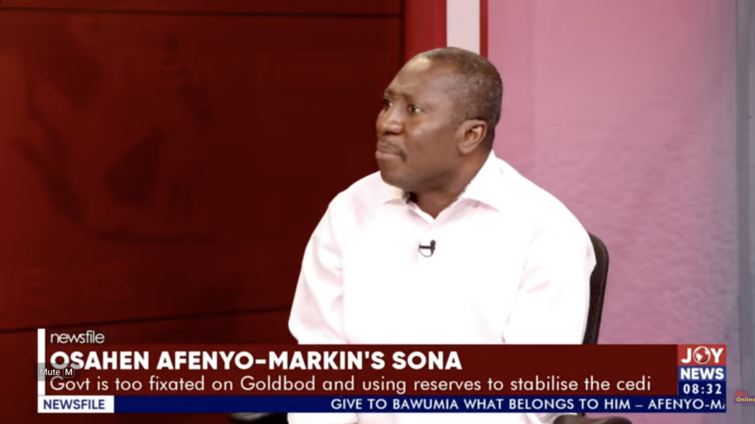
Minority Leader Alexander Afenyo-Markin says Ghanaian entrepreneurs are worse off under the current administration, citing what he describes as a lack of tax incentives and an increasingly aggressive revenue collection drive by the Ghana Revenue Authority.
Speaking on Newsfile on Saturday, a day after President John Dramani Mahama delivered his 2026 State of the Nation Address, Afenyo-Markin said government policies were putting undue pressure on the few businesses still operating in the country.
The Minority Leader, who is also a lawyer, revealed that his own law firm had recently been subjected to a tax audit, which he described as part of a wider pattern of pressure on private businesses.
“I challenge anyone to mention a single incentive for the private sector since they came into office. Rather, GRA is always on their neck,” he said.
He argued that instead of creating a supportive environment for entrepreneurs, the government appeared focused on maximising revenue at the expense of business growth and sustainability.
Afenyo-Markin’s comments come amid a significant expansion in tax collection efforts. According to the GRA’s Domestic Tax Revenue Division, it mobilised GH¢130.2 billion in 2025, representing a 20.3 per cent increase over 2024. The authority has set a target of GH¢162.59 billion for 2026, a further 21 per cent rise.
As part of its new strategy, the tax authority plans to decentralise audit operations and strengthen what it describes as “risk-based interventions” across different categories of taxpayers.
While acknowledging that revenue mobilisation is necessary, Afenyo-Markin warned that the current approach could be counterproductive.
He said the government should prioritise policies that stimulate investment, expand production, and grow the tax base, rather than “chasing a shrinking pool of compliant businesses”.
“The problem is not collecting taxes. The problem is how you do it, and whether you are helping businesses to grow so they can pay more in the long term,” he added.
In defence of its economic approach, the government has pointed to measures in the 2026 budget aimed at easing pressure on businesses. These include the abolition of the COVID-19 Health Recovery Levy and a reduction in the effective VAT rate to 20 per cent.
Officials say the measures are intended to lower operating costs and improve the business climate.
However, Afenyo-Markin insists the reforms do not go far enough.
He argued that without clear, targeted incentives for entrepreneurs, small and medium-sized enterprises would continue to struggle, thereby limiting job creation and economic growth.
Latest Stories
-
Power restoration fault suspected in Kumasi Central Market fire
4 hours -
The 7-foot giant of Ngleshie Amanfro: Seven-foot Ghanaian Ephraim Saawa dreams of joining the national basketball team
4 hours -
Government promises support for Kumasi Central Market fire victims
4 hours -
Vibes The Movie: Big Ghun’s Ghanaian film earns five nominations at 2026 REFFA
5 hours -
MamaCare CEO warns unresolved conflicts among health workers could undermine maternal and neonatal care
5 hours -
Health professionals urged to translate medical knowledge into practice to save mothers
5 hours -
Conflicts among care providers linked to maternal, neonatal deaths – Expert
7 hours -
GIS marks 10th TIME conference, champions improved teaching practices
7 hours -
BRICS Or Balance? What Ghana’s bid really means
8 hours -
GPRTU wants full TRAFFITECH-GH implementation to start in 2027
8 hours -
Mahama announces plans to import electric wheelchairs for PWDs
8 hours -
KGL U17 Colts 2026: Western beat Prempeh Elite Academy to set up final final with Greater Accra Region
8 hours -
Late Solanke strike salvages 10-man Spurs draw at Man United
8 hours -
Gender Ministry to monitor welfare of Nana Akua Addo’s children amid domestic violence case
9 hours -
Benedict Okyere Yeboah: Ghana’s football problem goes beyond sacking a coach
9 hours