

Audio By Carbonatix
The Ghana Revenue Authority (GRA) in the Ashanti Region has intensified efforts to improve tax compliance in the informal sector with the rollout of a digital Modified Taxation System (MTS) aimed at expanding revenue mobilisation.
The initiative, which introduces a mobile shortcode *880#, is designed to simplify tax payments and make it easier for traders and small businesses in the informal sector to comply with tax obligations.
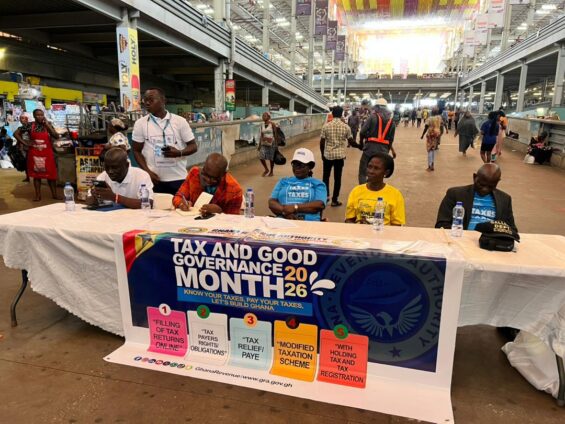
Speaking during a taxpayer education exercise at the Kejetia Market in Kumasi, Ashanti Regional Area Director of the GRA, Agnes Adu Gyamfi Adjei, said the Authority is focusing on both education and enforcement to improve compliance levels.
“We have a point of presence here at the Kejetia ‘Dubai’ market. Our team moves from shop to shop daily to ensure that once you are earning income and selling taxable products, you are duly registered,” she explained.
The engagement formed part of the GRA’s annual Tax and Good Governance Month, a nationwide campaign aimed at encouraging individuals and businesses to file returns and comply with tax regulations.
The informal sector remains a major focus for the Authority, contributing an estimated 27.4% to Ghana’s GDP, but accounting for less than 5% of total tax revenue — a gap officials say must be addressed for sustainable national development.
Under the new system, businesses that meet the required turnover threshold are expected to register for Value Added Tax (VAT), in line with existing tax laws. Failure to comply attracts sanctions, including daily penalties on outstanding liabilities.
The GRA says it has also expanded its presence in the region, upgrading taxpayer service centres in areas such as Tafo-Pankrono and Bekwai, bringing the total number of tax outlets in the Ashanti Region to ten.
Mrs. Adu Gyamfi Adjei stressed that while enforcement remains important, the Authority’s current approach prioritises education and voluntary compliance, especially among small-scale traders.
“Taxes are what the government uses to run the machinery of the country. Roads, schools, hospitals, and markets are all funded through tax revenue. That is why we are committed to educating the public,” she said.
As part of the outreach programme, traders were also given the opportunity to make on-the-spot payments for outstanding VAT and personal income tax obligations.
The exercise further included a free health screening exercise for participants, with a medical team deployed from Accra to attend to traders and visitors.
According to the GRA, the health intervention is part of efforts to support taxpayer wellbeing, which it says is closely linked to productivity and economic contribution.
Latest Stories
-
Linking LEAP to productive inclusion could cut extreme poverty by 2030 – UNICEF
12 minutes -
Trade Ministry backs use of creative arts to rehabilitate prison inmates
13 minutes -
Negotiations with government to continue despite strike suspension – GNAT
17 minutes -
‘Ghana cannot afford to waste public resources; every cedi has a job’ – Ato Forson
19 minutes -
Ghana expects economic boost as World Assemblies of God Congress brings 10,000 delegates to Accra
26 minutes -
Joy in Nayilifong as Farouk Aliu Mahama donates 100kVA transformer to improve power supply
54 minutes -
Chief Justice urges employers to tackle mental health stigma in workplaces
2 hours -
Analysis: Ghana’s yellow fever numbers reveal a gap between vaccination and protection
2 hours -
Education Ministry welcomes suspension of teachers’ strike
2 hours -
Vice Chancellors Ghana appeal to striking university administrators to resume work
3 hours -
KNUST postpones 2026/2027 academic year reopening indefinitely amid GAUA strike
3 hours -
Fire destroys mattress factory at Sokoban in Kumasi
3 hours -
ECOM-SMS Ghana launches ‘Agriculture Our Future Clubs’ to address threat of ageing farmer population
3 hours -
Nicholas Atsu Kumi
3 hours -
Cherif Sarr: Economic participation needs more pathways, not one prescribed route
3 hours