

Audio By Carbonatix
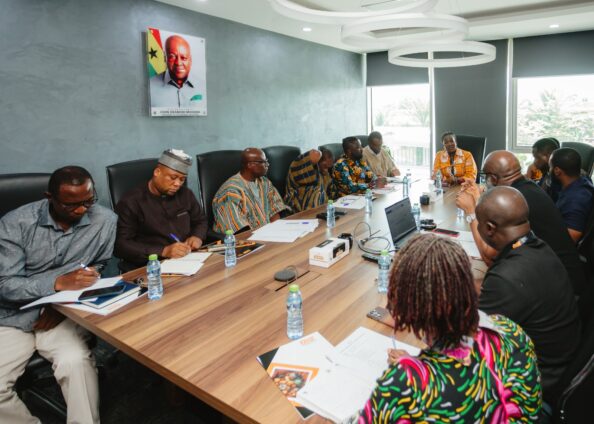
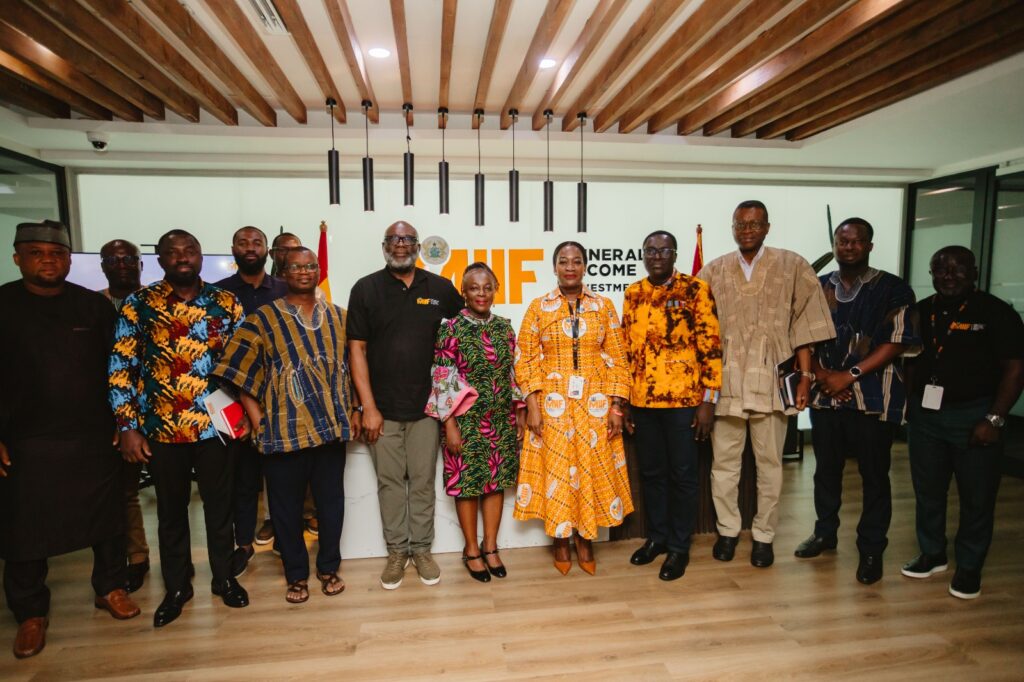
The Minerals Income Investment Fund (MIIF), in collaboration with key state institutions within Ghana’s extractive sector, has revived an inter-agency committee aimed at strengthening the monitoring, verification and collection of mineral royalties and other mining-related revenues due to the state.
The committee comprises representatives from MIIF, the Ghana Revenue Authority (GRA) the Minerals Commission, the Ghana Standards Authority (GSA), the Minerals Development Fund (MDF), the Economic and Organised Crime Office (EOCO), GoldBod, Environmental Protection Authority (EPA) and the Ministry of Lands and Natural Resources.
The committee is chaired by the Acting Commissioner of the Domestic Tax Revenue Division of the Ghana Revenue Authority (GRA), Dr Martin Yamborigya.
The inaugural meeting of the reconstituted committee was held at MIIF’s boardroom in Accra on Friday, 8 May 2026.
Deliberations focused on restoring effective coordination among institutions responsible for monitoring royalties, licenses, production declarations and regulatory compliance within Ghana’s mining sector.
In her remarks, the CEO of MIIF, Justina Nelson, stated that reviving the committee had become necessary following a period of inactivity during recent institutional transitions, which created gaps in coordination, monitoring and enforcement.
She noted that the renewed platform would help address concerns relating to undeclared production, royalty leakages and weak regulatory oversight, particularly within segments of the small-scale mining sector.
The MIIF’s CEO further underscored the strategic importance of mineral royalties to Ghana’s economy, describing them as a critical source of revenue for national development and infrastructure financing.
Mrs. Nelson also referenced the recent revision of Ghana’s mineral royalty framework, which transitioned from a fixed royalty regime to a sliding scale system.
Dr. Yamborigya acknowledged that challenges in domestic revenue mobilisation persist, especially outside the large-scale mining industry.
He cited quarrying, salt production and other mineral operations as areas that often receive limited monitoring attention.
The committee subsequently reviewed draft terms of reference, outlining its mandate, governance framework and operational procedures.
The discussions centred on strengthening oversight mechanisms, enhancing inter-agency data sharing, and ensuring consistent reporting on production volumes and royalty payments.
The members also proposed the development of a comprehensive database of mining operators and mineral rights holders, alongside improved systems for tracking production levels and royalty obligations.
The meeting further examined funding and sustainability arrangements to support the committee’s operations, including field inspections and monitoring exercises. Participants discussed possible cost-sharing mechanisms among member institutions to sustain the committee’s activities.
The deliberations also highlighted the need for stronger inter-agency collaboration in combating illegal mining and ensuring that all eligible mineral operations contribute appropriately to national revenue generation.
Officials from the Ghana Revenue Authority noted that similar collaborative interventions in the past had yielded positive outcomes and expressed confidence that renewed institutional coordination would strengthen compliance and improve revenue assurance.
MIIF officials at the meeting explained that the Fund’s role would primarily focus on facilitating coordination and providing secretariat support, while emphasising that the broader objective remains the protection of national interest and the promotion of accountability within the extractive sector.
At the close of the meeting, members agreed to adopt revised operational guidelines and convene regular monthly meetings to sustain engagement and oversight efforts.
Participants also expressed optimism that closer collaboration among state institutions would strengthen royalty administration, improve transparency and enhance Ghana’s ability to derive long-term value from its mineral resources.
Latest Stories
-
MTN set to deploy 5G services after winning spectrum licenses worth US$202m
2 hours -
NPP national elections: 3,000–4,000 police to handle security, traffic in Kumasi – Karbo
4 hours -
Atta Akyea fumes as Manhyia MP is to spend another night in EOCO custody
4 hours -
SSNIT says La Beach clearance was to protect hotel investments, beaches to remain public
5 hours -
APSU congratulates St Augustine’s College after back-to-back National Investment Quiz wins
5 hours -
Renewed flood intervention at Mallam Junction raises hopes among residents, businesses
6 hours -
St Augustine’s College retain National Investment Quiz title after nail-biting grand finale
6 hours -
Education infrastructure investment will drive Banda’s development – Ahmed Ibrahim
6 hours -
Teacher unions strike: Gov’t presents fresh proposals as talks end inconclusively
7 hours -
51,000 teachers’ promotion arrears to be validated for October payment – Education Minister
7 hours -
Kwabena Boamah appointed Board Chair for Impact Investing Ghana
7 hours -
Striking teacher unions to meet Fair Wages and Salaries Commission on October 6
8 hours -
EOCO working with AG to arraign Nana Baffour Awuah before weekend court
8 hours -
Duraplast reassures customers after fire, announces October 5 reopening
8 hours -
Call off strike, gov’t will not renege on promotion arrears pledge – Haruna Iddrisu to teacher unions
8 hours