

Audio By Carbonatix
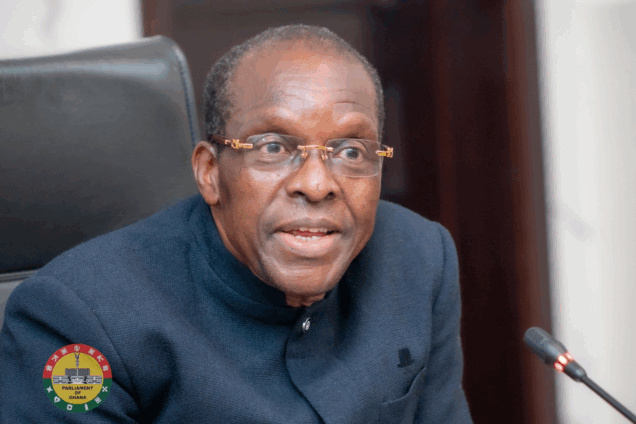
Speaker of Parliament Alban Bagbin has disclosed that he was taken aback by the passage of the Promotion of Proper Human Sexual Rights and Ghanaian Family Values Bill, popularly known as the Anti-LGBTQ+ Bill, while he was away on official duties.
The Speaker said he had expected legislators to only begin consideration of the bill on Friday, May 29 and not complete all the stages required for its passage before his return.
Speaking on the developments surrounding the controversial legislation, Mr Bagbin explained on Monday, June 1, that before he departed for other official engagements, he had instructed the House to commence deliberations on the bill.
However, he said he was later surprised to learn that Parliament had gone beyond the initial stages and approved the legislation.
"And in fact, when it was passed on Friday, it was even a surprise to me, because I knew that they were going to start the consideration of the bill, and that was the instructions I left before I went to attend to other meetings," he stated.
According to the Speaker, he anticipated that parliamentary proceedings on the bill would extend beyond Friday, especially given the complexity of the legislation and the time required for detailed consideration.
"It was Friday, and members wanted to go home early to their constituencies…and I knew they would not have completed it. But all of a sudden I read about this passage, I reacted, and later I saw on TV all the things that happened," he added.
Leadership Meeting
In the wake of the bill's passage, Mr Bagbin said he had summoned the leadership of Parliament for discussions to review the proceedings and assess the way forward.
The Speaker indicated that the legislation was of immense national importance and therefore required careful handling and broad consultation among stakeholders.
"And so this evening I have asked the leaders to meet me in my office. So they will be here for us to go through it. This is such a critical bill that will plead there will be a consensus," he said.
His comments suggest a desire to build greater agreement around the legislation, which has generated intense debate both within Ghana and internationally.
Long Legislative Journey
The bill has had one of the longest and most contentious legislative journeys in Ghana's recent parliamentary history.
First introduced in June 2021 by a bipartisan group of Members of Parliament led by the Member for Ningo-Prampram, Sam George, the legislation seeks to prohibit same-sex sexual relations, LGBTQ advocacy, promotion, funding and related activities.
Following its first reading in Parliament in August 2021, the bill was referred to the Constitutional, Legal and Parliamentary Affairs Committee, which conducted extensive consultations with religious organisations, traditional authorities, legal practitioners, academics, civil society groups and human rights advocates.
The consultations triggered widespread national debate, with supporters arguing that the legislation was necessary to safeguard Ghanaian cultural values, family systems and religious beliefs, while opponents contended that it infringed on constitutional rights and international human rights obligations.
Reintroduction in Ninth Parliament
The legislation was previously passed by the Eighth Parliament in February 2024 but failed to receive presidential assent before the dissolution of Parliament following constitutional challenges filed at the Supreme Court.
As a result, the bill lapsed and had to be reintroduced in the Ninth Parliament as a private members' bill.
After being laid before the House and referred once again to the Constitutional, Legal and Parliamentary Affairs Committee, the bill was returned to Parliament for renewed consideration.
Its eventual passage has reignited discussions among religious groups, traditional leaders, human rights organisations, development partners and political actors regarding its legal, social and economic implications.
Awaiting Presidential Assent
With Parliament having completed its work on the bill, attention is now expected to shift to the Executive for the next constitutional step.
Under Ghana's legislative process, a bill passed by Parliament must be presented to the President for assent before it can become law.
The bill's passage has attracted significant public interest because of its potential implications for Ghana's international relations, development partnerships and human rights discourse, while supporters maintain that it reflects the values and aspirations of a majority of Ghanaians.
As discussions continue, Speaker Bagbin's call for consensus is likely to shape subsequent engagements on one of the most closely watched pieces of legislation in the country's democratic history.
Latest Stories
-
Fire ravages shops, houses near Central Police Station in Koforidua
5 minutes -
NPP Delegates conference: The wisdom of the masses will prevail – Napo
37 minutes -
Flydubai co-pilot attacked captain with axe, UAE official says
46 minutes -
NPP Bosome Freho Constituency Chairman reportedly arrested over ballot paper incident
59 minutes -
Medical plane with 6 on board missing off Massachusetts coast
1 hour -
Bolt driver jailed 25 years for robbing beautician
1 hour -
Happy 76th Birthday to the Daily Graphic!
1 hour -
Amin Adam celebrates Prof. Alhassan Musah on appointment as KAAF University Vice-Chancellor
2 hours -
Mahama reaffirms commitment to Volta development at Asogli Te Za
2 hours -
Bawumia urges NPP aspirants to accept results, reunite party after elections
2 hours -
Double fibre cut disrupts Telecel services, 72,754 subscribers affected
2 hours -
Bawumia demands probe into financiers behind Ghana-linked cocaine shipments
2 hours -
Spain beat Czech Republic to maintain winning run
2 hours -
Ronaldo ‘greatest symbol’ of Portugal – Fernandes
3 hours -
NPP election: We thank NDC for making the attempt; we never expected them to show up – Karbo says after boycott
3 hours