

Audio By Carbonatix
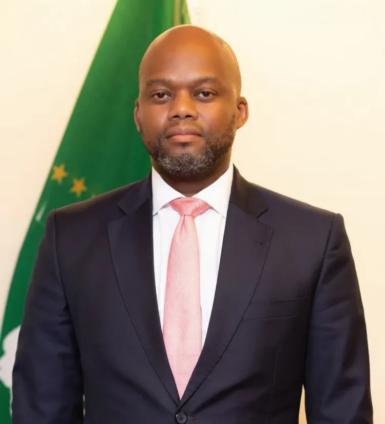
Political activist Solomon Owusu and lawyer Andrew Appiah-Danquah have petitioned the African Union (AU) to remove the Secretary-General of the African Continental Free Trade Area (AfCFTA) Secretariat, Wamkele Keabetswe Mene.
The petition, addressed to the Chairperson of the African Union Commission, the Assembly of Heads of State and Government, and the Council of Ministers Responsible for Trade of the AfCFTA, argues that Mr. Mene's continued tenure has become incompatible with the objectives and values of the continental trade bloc due to South Africa's recurring xenophobic attacks against fellow Africans.
In the petition dated May 31, 2026, the petitioners said their action was not motivated by hostility towards Mr Mene or prejudice against South Africa.
Rather, they said it was rooted in "our unwavering commitment to the ideals of Pan-Africanism, continental solidarity, African unity, and the preservation of the moral integrity of Africa's most ambitious integration project."
They contended that "the continued occupancy of the office of Secretary-General of the AfCFTA Secretariat by a national of the Republic of South Africa has become fundamentally incompatible with the objectives, values, and aspirations of the AfCFTA in light of South Africa's persistent and widely documented failure to protect fellow Africans from recurring xenophobic violence within its borders."
The Nature of AfCFTA
The petition described the AfCFTA as more than a trade agreement, calling it "the most significant economic and political integration initiative undertaken by the African Union since the establishment of the Organisation of African Unity in 1963."
According to the petitioners, the AfCFTA seeks to promote intra-African trade, facilitate the movement of goods, services, labour, capital and investment, strengthen economic cooperation among African states, deepen continental integration, and advance the Pan-African vision of a united and prosperous Africa.
They argued that the Secretary-General is not merely an administrator but "one of the principal symbols of African integration and one of the foremost ambassadors of the Pan-African project."
The Crisis of Xenophobia in South Africa
The petition cited what it described as repeated outbreaks of xenophobic violence in South Africa over the past two decades.
It noted that citizens of countries including Ghana, Nigeria, Zimbabwe, Mozambique, Ethiopia, Somalia, Malawi and the Democratic Republic of Congo had suffered physical assaults, destruction of property, looting of businesses, forced displacement, intimidation and loss of life.
According to the petitioners, the persistence of such attacks has created a perception that fellow Africans are not welcome in South Africa and are often blamed for social and economic challenges.
Failure of the South African State
The petitioners said their concern was not simply the existence of xenophobia but what they described as South Africa's inability to decisively address the problem despite repeated outbreaks, warnings, condemnations, and commitments.
"The inability or unwillingness of successive South African administrations to decisively eradicate this phenomenon has created a profound crisis of confidence among Africans throughout the continent," the petition stated.
They argued that this had fuelled a growing belief that South Africa had failed "a fundamental Pan-African test."
The Question of Moral Authority
While acknowledging Mr Mene's professional achievements and contributions to the establishment and administration of the AfCFTA Secretariat, the petitioners argued that leadership of a major Pan-African institution required more than technical competence.
"It requires moral authority," they stated.
They added that "a country whose international image has become associated with recurring hostility toward fellow Africans cannot, in our respectful view, provide the moral leadership necessary for an institution founded upon African solidarity and integration."
The petition highlighted South Africa's historical ties to the rest of the continent, noting that African countries played significant roles in supporting the anti-apartheid struggle.
It mentioned countries including Ghana, Nigeria, Tanzania, Zambia, and Angola, arguing that South Africa therefore bears a greater responsibility to uphold Pan-African values.
According to the petitioners, recurring attacks on fellow Africans in South Africa strike at the very foundation of the solidarity that contributed to the country's liberation.
The petitioners argued that AfCFTA's success depends on trust and the belief that Africans can move, trade, invest, work, and live across the continent without fear of discrimination.
"Yet the continuing xenophobic reality in South Africa sends the opposite message," the petition stated.
The document added: "Africa cannot credibly promote free movement while tolerating hostility toward Africans within one of its most influential member states."
The petition further argued that the AU must act in a manner consistent with its stated values.
It warned that the continued leadership of the AfCFTA Secretariat by a South African national amid unresolved xenophobic challenges risks undermining confidence in both the AfCFTA and the African Union.
The petitioners said the continental body must avoid any appearance of indifference to the suffering of Africans targeted because of their nationality.
The petitioners called on the African Union to undertake five actions:
- Institute an immediate review of Mr. Mene's continued suitability as Secretary-General of the AfCFTA Secretariat.
- Establish a high-level inquiry into the implications of persistent xenophobic violence in South Africa for African integration institutions.
- Consider appointing a replacement Secretary-General from a member state whose record aligns more closely with the values of Pan-African solidarity and African unity.
- Adopt a policy requiring candidates for leadership positions within key AU institutions to demonstrate commitment to Pan-Africanism and African solidarity.
- Develop a continental framework for monitoring and addressing xenophobia and discrimination against Africans within member states.
In their concluding remarks, the petitioners stressed that their action was not directed at any individual because of nationality.
"This Petition is not directed against any individual because of nationality. It is a call for consistency between the ideals Africa proclaims and the leadership it chooses," they stated.
They added that the AfCFTA represents "the economic expression of the Pan-African dream" and argued that its leadership must be "beyond reproach in matters touching African solidarity, African dignity, and African unity."
The petition concluded with a call on the African Union to "act decisively in defence of the integrity, legitimacy, and moral authority of the AfCFTA project."
The petitioners called on the African Union to undertake five actions:
- Institute an immediate review of Mr Mene's continued suitability as Secretary-General of the AfCFTA Secretariat.
- Establish a high-level inquiry into the implications of persistent xenophobic violence in South Africa for African integration institutions.
- Consider appointing a replacement Secretary-General from a member state whose record aligns more closely with the values of Pan-African solidarity and African unity.
- Adopt a policy requiring candidates for leadership positions within key AU institutions to demonstrate commitment to Pan-Africanism and African solidarity.
- Develop a continental framework for monitoring and addressing xenophobia and discrimination against Africans within member states.
Conclusion
In their concluding remarks, the petitioners stressed that their action was not directed at any individual because of nationality.
"This Petition is not directed against any individual because of nationality. It is a call for consistency between the ideals Africa proclaims and the leadership it chooses," they stated.
They added that the AfCFTA represents "the economic expression of the Pan-African dream" and argued that its leadership must be "beyond reproach in matters touching African solidarity, African dignity, and African unity."
The petition concluded with a call on the African Union to "act decisively in defence of the integrity, legitimacy, and moral authority of the AfCFTA project."
Latest Stories
-
Renewed flood intervention at Mallam Junction raises hopes among residents, businesses
13 minutes -
St Augustine’s College retain National Investment Quiz title after nail biting grand finale
22 minutes -
Education infrastructure investment will drive Banda’s development – Ahmed Ibrahim
30 minutes -
Teacher unions strike: Gov’t presents fresh proposals as talks end inconclusively
1 hour -
51,000 teachers’ promotion arrears to be validated for October payment – Education Minister
2 hours -
Kwabena Boamah appointed Board Chair for Impact Investing Ghana
2 hours -
Striking teacher unions to meet Fair Wages and Salaries Commission on October 6
2 hours -
EOCO working with AG to arraign Nana Baffour Awuah before weekend court
2 hours -
Duraplast reassures customers after fire, announces October 5 reopening
2 hours -
Call off strike, gov’t will not renege on promotion arrears pledge – Haruna Iddrisu appeals to teacher unions
2 hours -
Committee set up to validate teachers eligible for 20% deprived-area allowance – Education Minister
2 hours -
Five-member committee to search for new Black Stars coach after Sports Ministry-GFA meeting
3 hours -
Pinktober: Breast cancer survival exceeds 90% when detected early – Breast Society of Ghana
3 hours -
TCDA to adopt Upper West’s MATCO mango farm as northern prototype, issues warning against felling shea trees
3 hours -
‘Fear delegates’ tag: Afoko touts genuineness among delegates ahead of NPP delegates conference
3 hours