

Audio By Carbonatix
Former Finance Minister, Seth Tekper, is calling for a debt sustainability programme – whether ‘Home Grown’ or ‘External’ to restructure the country’s debt.
The country’s debt has hit unsustainable levels as almost 50% of tax revenue is used to settle interest payments, whilst wages and salaries also consume a sizeable amount, leaving little space for financing capital and infrastructural projects.
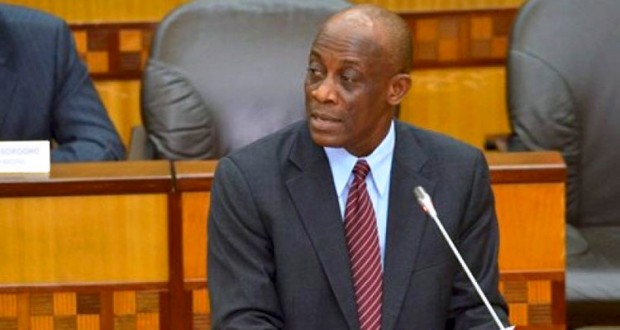
Speaking at the maiden PFM Tax Dialogue Series which centered on the fiscal economy, Mr. Tekper said such a programme to streamline the country’s debt is necessary to avoid debt default.
According to him, the country cannot continue to borrow to repay existing debt as well as finance recurrent expenditure.
“The qualification is that if you do not go into a programme to restructure your debt to maybe lengthen it, to reduce the stress and whatever you have to pay interest, it means you have to borrow because the consequences of not doing so is to default.”
“And if you default as a nation it’s very disastrous; so nations don’t like to default. So there are those you can hardly do anything about, but there are some like public sector workers wages which you can do something about”, he pointed out.
The former Finance Minister also proposed a comprehensive revenue modernization if the country is to mobilize enough revenue to finance its projects as well as pay salaries and interest payments.
Presently, the nation’s tax revenue to Gross Domestic Product is about 13%, below the Sub-Sahara Africa average of 15%.
Mr. Tekper said tax reforms are critical in generating more revenue instead of the policy of upward tax adjustment.
“We need a revenue modernization - very comprehensive one – and there were a number of tax reforms that were embarked upon...you remember 2009, we settled the question by creating GRA [Ghana Revenue Authority] to replace RAGB [Revenue Agency Governing Board] and then we merged IRS [Internal Revenue Service] and VAT Service into the Domestic Tax Division”.
Mr. Tekper’s presentation captured fiscal projections between 2013 and 2024. From the numbers, the nation recorded the highest fiscal deficit of 13.6% of GDP in 2020 [covid-19 era], the highest so far though the International Monetary Fund projected a higher deficit of above 15%.
Ghana’s debt hit GH¢291.6bn in December 2020 – BoG
Ghana’s total public debt stock reached an all time high of GH¢291.6 billion in December 2020, approximately 76.1% of GDP, the Bank of Ghana said.
According to the figures, external debt alone stood at GH¢141.8 billion, approximately US$24.7 billion. This is also equivalent to 37.0% of GDP.
The domestic debt was however slightly higher at GH¢149.8 billion at the end of 2020, about 39.1% of GDP.
The financial sector debt also stood at GH¢15.3 billion in December 2020, but GH¢100 million lower, from the September 2020 data. This is however equivalent to 4.0% of GDP.
Latest Stories
-
Ghana housing finance conference adopts communiqué to improve affordable housing access
4 hours -
Special Initiatives Minister urges Wa Technical Institute to enrol more girls as EU-backed solar training lab opens
4 hours -
In the matter of my first year at the Bar
5 hours -
ActionAid Ghana calls for an end to child marriage, greater investment in girls’ rights
5 hours -
Newsfile to tackle World Cup visa scandal, beach demolitions, education strikes, BRICS bid
5 hours -
UK-Ghana Trade & Investment Summit: Trade Resource Centre to help businesses maximise UK-Ghana trade opportunities
5 hours -
Embassy of Denmark celebrates World Maritime Day
5 hours -
Linking LEAP to productive inclusion could cut extreme poverty by 2030 – UNICEF
7 hours -
Trade Ministry backs use of creative arts to rehabilitate prison inmates
7 hours -
Negotiations with government to continue despite strike suspension – GNAT
7 hours -
‘Ghana cannot afford to waste public resources; every cedi has a job’ – Ato Forson
7 hours -
Ghana expects economic boost as World Assemblies of God Congress brings 10,000 delegates to Accra
7 hours -
Joy in Nayilifong as Farouk Aliu Mahama donates 100kVA transformer to improve power supply
7 hours -
Chief Justice urges employers to tackle mental health stigma in workplaces
8 hours -
Analysis: Ghana’s yellow fever numbers reveal a gap between vaccination and protection
8 hours