

Audio By Carbonatix
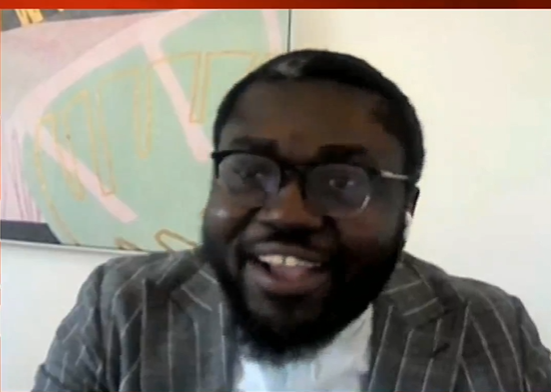
Researcher at the University of Cambridge Faculty of Law, Oliver Barker-Vormawor says the tragedy of Ghana practicing democracy is that it wipes out the past.
In his view, there are many voices that exist now and one could be misled if not properly informed.
His comment comes on the back of arguments by some school of thoughts on the Broadcasting Bill; claiming that it sets limitations for persons who would like to penetrate the media space.
According to Mr. Barker-Vormawor, all persons against the Bill must re-align themselves and ponder on all the reasons why it is important that the Bill is passed and not only rely on the views of persons who try to downplay the importance of the Bill.
He also bemoaned the situation where people misunderstood the logic behind a Bill and its relevance in governance.
“The tragedy of democracy I will say is that it wipes out the past from our collective memory and the evils that we tend to guard against becomes contextualized.
"We forget the reason why a provision was put together in the first place. So the question we need to ask ourselves is 'why is this bill bringing back authorization at this particular time'?" he quizzed.
He advised that all persons analyzing the Bill by the limitations it sets against unauthorised persons entering the media space must "spend a little more time with the Bill to fully appreciate the scope, the history and its purpose."
"Because if you do that you give yourself a broader view to understand how you can narrowly constitute and understand the limitations to it," he added.
Mr Barker-Vormawor also explained that there was certain vital information about the Broadcasting Bill that is useful in terms of the need to clarify and define the roles of the two regulatory bodies in the Media sector, that is the National Media Commission and the National Communication Authority.
The Broadcasting Bill seeks to improve the falling standards in Ghana’s electronic media sector and ensure that it starts to embrace modern best practices.
The Bill will provide comprehensive legislation on broadcasting services regulated by the National Media Commission and the National Communications Authority in a manner consistent with the Constitution.
Additionally, Information Minister, Oppong Nkrumah in an interview with the host of JoyNews' 'The Probe' Emefa Apawu stated that the Broadcasting Bill will in no way dictate to the media what they can and cannot publish in their line of work but would rather ensure that the media transmits contents that are right and unprovocative.
“Nobody can dictate to the media what to publish, the media sector is one of the most vibrant sectors,” Oppong Nkrumah said.
Latest Stories
-
Let The Constitution direct Chieftaincy to deliver “All Development Is Local”
31 minutes -
Ghana explores centre of excellence for hearing, communication and cochlear implant care
2 hours -
Schizophrenia-related disorders lead mental health cases recorded in Ghana
2 hours -
Dutch authorities enlist Ghana in hunt for fugitive drug lord Bolle Jos
3 hours -
Ghana housing finance conference adopts communiqué to improve affordable housing access
7 hours -
Special Initiatives Minister urges Wa Technical Institute to enrol more girls as EU-backed solar training lab opens
8 hours -
In the matter of my first year at the Bar
8 hours -
ActionAid Ghana calls for an end to child marriage, greater investment in girls’ rights
8 hours -
Newsfile to tackle World Cup visa scandal, beach demolitions, education strikes, BRICS bid
8 hours -
UK-Ghana Trade & Investment Summit: Trade Resource Centre to help businesses maximise UK-Ghana trade opportunities
8 hours -
Embassy of Denmark celebrates World Maritime Day
9 hours -
Linking LEAP to productive inclusion could cut extreme poverty by 2030 – UNICEF
10 hours -
Trade Ministry backs use of creative arts to rehabilitate prison inmates
10 hours -
Negotiations with government to continue despite strike suspension – GNAT
10 hours -
‘Ghana cannot afford to waste public resources; every cedi has a job’ – Ato Forson
10 hours