

Audio By Carbonatix
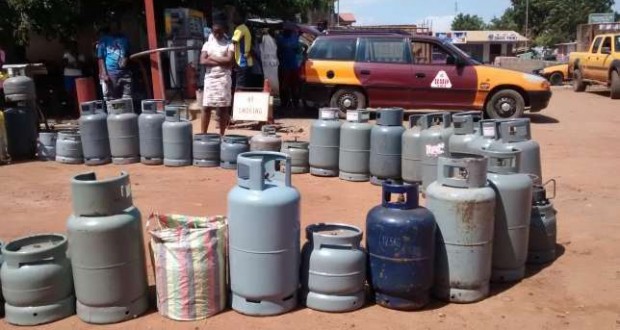
An Economics Professor at the University of Ghana wants government to, as a matter of urgency, remove taxes on liquified Petroleum Gas (LPG).
Eric Osei Assibey said, this is to reduce the burden of the hike in the cost of the commodity, on the poor and promote sustainable development.
LPG was first introduced as a cheaper fuel source to replace wood and other environmentally unfriendly fuel sources.
But now, its price build-up is made up of more than 20 per cent of taxes imposed over the years.
According to industry players, the indicative price is now GH¢6.86 from GH¢6.56 in the previous window.
The ex-refinery price has moved from GH¢4.25 in the previous window to GH¢4.55 currently. The current window on the international market closed on July 11, 2021, and the international price has gone up by 10.7%.
This will reflect in about a 5- 6% increase in the local price. This will push up the pump price to about 7.25 Ghana Cedis next widow beginning on Friday, July 16.
All of this, is expected to reflect in the average household 14.5kg cylinder costing the Consumer GH¢106. An increase of about GH¢4 from the previous current window price of GH¢102.
In an interview on the Super Morning Show, Prof. Osei Assibey explained that the recently imposed levies should be reviewed to ensure we are not unfairly targeting and overburdening the poor instead of protecting them.
“If you look at the levies, in my view, they are quite regressive in nature. Especially, when you over concentrate on VAT you will realise that it is the poor that ends up paying more within the big cities and so the targeted response is making sure it becomes more progressive so that it is the wealthy that tend to pay more.”
He then categorically stated that taxes on LPG should be removed to promote sustainable development, “Removing taxes or levies from products like LPG, if we are serious about sustainable development and conserving our environment, because these were targeted to encourage the poor to use more of LPG.
"Otherwise, it is going to be counterproductive in the sense that, they are really going to drive their demands towards the environmentally harmful energy usage products.”
Latest Stories
-
Mortgage repayments and existing debts should not exceed 50% of income – Republic Bank
10 minutes -
Republic Bank to offer up to 100% mortgage financing at JoyNews Habitat Fair clinic.
12 minutes -
You sounded like an NDC official – Arthur Kennedy criticises Chief Justice over SOE comments
39 minutes -
Lands Minister inspects Ankobra, cites progress in galamsey fight
46 minutes -
GRA clarifies phone, laptop duty rules; number of items not automatic trigger
1 hour -
2026 U20 WWC: GFA Prez Kurt Okraku visits Black Princesses in Poland ahead of opener against Ecuador on Sunday
1 hour -
Ghanaian Coaches dominate Ghana Premier League 2026/27 dugouts
2 hours -
Black Maidens drawn against Nigeria, Togo and Niger in WAFU B U-17 Cup
2 hours -
GMTF Administrator hails NHIA boss on first anniversary
3 hours -
Today’s Front pages: Friday, September 4, 2026
3 hours -
From Kantamanto to the TEDx Stage: How waste became innovation
3 hours -
MMDCEs charged to ensure Landing Beach Committees do not sell premix fuel beyond approved prices
4 hours -
The Inconvenient Truth: Democracy does not fail in The Chamber, it fails in the Committee Room
4 hours -
There is absolutely nothing wrong with what the Chief Justice said
4 hours -
App launched to help Ghanaians verify prospective partners’ marital status before marriage
4 hours