

Audio By Carbonatix
Ghanaians must do away with blind loyalty and unquestioned obedience to authority if they want to develop under a democracy, a governance expert has said.
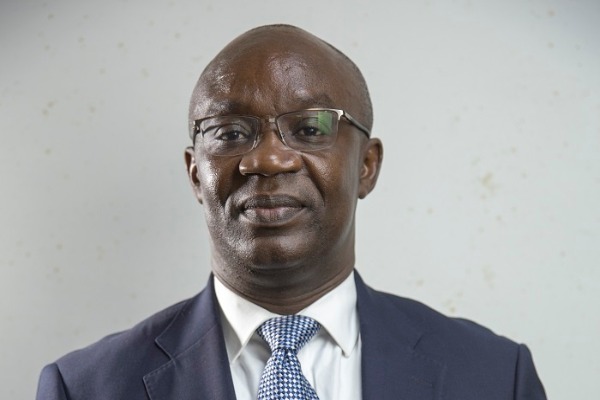
Dr Valentin Mensah noted the poor Ghanaian socio-political culture has affected every facet of the governance structure and its crippling Ghana's fledgling democracy.
He made the remark during a Corporate Governance Faculty Lecture organised by the Institute of Chartered Accounts Ghana (ICAG) on the theme, “Dysfunctional Executive Oversight and Accountability in Ghana.”
The lecture was to tease out some of the challenges and bottlenecks that have bedevilled Ghana's democratic development and recommend possible solutions.
The keynote speaker believes anachronistic culture is one of Ghana's biggest headaches in its democratic development.
In his detailed presentation, Dr Mensah, who is also a Board Member of the Graphic Communications Group Ltd, said even though Ghana had independence with South Korea around the same time and shares some cultural similarities except long term orientation, the Asian country is now described as a developed country whilst Ghana still wallow in the economic doldrums.
Explaining the gaping difference in the development of the two countries, Dr Mensah walked participants of the lecture through G Hofstede (2001) research, titled dimensions of culture, which sought to explore how culture addresses fundamental issues, including the relationship with authority, people and change.
Culture and development
Hofstede had five cultural value dimensions and how they correspond with mental programs or behaviours of citizens in eight different countries-
Ghana, Nigeria, South Korea, South Korea, Canada, Australia, US and UK.
Among these five dimensions include how citizens related to those in authority (Power Distance); whether or not policymakers were short-sighted or had a long term planning policy regime (Long Term Orientation); or whether or not they were individualistic in their decision making.
Quoting the findings of the research, Dr Mensah said Ghana, Nigeria and South Korea scored high marks in power distance which meant the citizens of Ghana and Nigeria kept a distance from their leaders without proper oversight and accountability, but Ghana scored abysmally low (4) on Long Term Orientation which relates to focus on the future, a savings culture and long term development planning.
On the other hand, South Korea scored a not too distant mark from Ghana on Power Distance but attained a 100 per cent mark on long-term orientation, which influenced their long-term policy initiatives.
According to Dr Mensah, that is the game-changer for South Korea and has led to massive development in the Asian country.
The governance expert replicated Hofstede study in Ghana for his PhD in 2008 using Customs officials across the ten regions.
The outcome was not significantly different from the original study, pointing to the dire consequences of a backwards-looking culture.
This must change, Dr Mensah noted, adding, leadership in Ghana must begin to work on the cultural consciousness of the citizens and ensure it works favourably for Ghana's developmental agenda.
Dr Valentin Mensah said Ghana may continue to needlessly blame democracy as an alien political system of governance if it fails to transform its citizens' cultural and traditional belief systems.
The Lecture on Zoom had participants from various accounting firms, public and corporate institutions.
President of ICAG, Prof William Atuilik, said governments must begin to take a critical look at the policies they implement and ensure they are sustainable long term policies.
He said the ICAG will begin to play a major role in the accountability architecture of governance and make recommendations where necessary.
He said for members of institutions that disburses funds; it will be an abdication of responsibility if they do not hold the authority to account.
Latest Stories
-
Obuasi SHTS case: Eduwatch calls for sex offenders’ register and mandatory background checks for teachers
1 minute -
GloMeF CEO urges intensified public education on new road traffic regulations
13 minutes -
‘Any tax on ChatGPT is an attack on education and innovation’- Akim Swedru, MP
16 minutes -
Obuasi SHTS sexual abuse scandal exposes systemic failure in child protection – Moving Masculinity
17 minutes -
Hubtel CEO calls for national data-sharing framework to boost AI development
19 minutes -
Twelve Golden Rules of real estate development in Ghana, Africa
24 minutes -
Five new telephony cell sites in Ashanti Region to be activated in October 2026 – Sam George
24 minutes -
Mahama cuts sod for Afienya Industrial Park, targets 120 enterprises
29 minutes -
Rush for fuel from accident tankers is stealing, punishable by law – NPA boss, Edudzi Tamakloe
35 minutes -
GhIG pushes for legislation to regulate geoscientists’ activities
41 minutes -
Mfantsipim @150: Ace Anan Ankomah leads project to preserve school’s musical heritage
45 minutes -
Gov’t launches rCOMSDEP in Ahanta West, Mpohor Fiase to promote responsible community mining
46 minutes -
AI is forcing professionals to rethink how they deliver value – Hubtel CEO
49 minutes -
Daily Insight for CEOs: Strengthening the CEO’s Leadership Legacy
50 minutes -
Jimmy Aglah’s ‘When the River Testified’ approved by NaCCA as Supplementary Reader
59 minutes