

Audio By Carbonatix
A deficient audit process and poor-quality audit reports to Parliament have over the years dealt a heavy blow to the Auditor-Generals’ quest to surcharge and disallow expenditures incurred or approved by public officials that are contrary to law.
That is the contention of a governance expert Dr Valentin Mensah.
Dr Mensah said it has become a hurdle for the Auditor Generals, past and present to comply with key aspects of the law on surcharge and disallowance which has made it difficult, if not impossible, to recover public funds misappropriated by public officials.
Citing data and figures from the 2019 deliberations on the Ghana Audit Services 2020 Budget Estimates by the Special Budget Committee of Parliament, Dr Mensah noted that “Out of the amount of ¢8,465,250,157 identified as irregularities in the various reports submitted to Parliament in 2018, only ¢67,315,066 (7.95%) had been recovered from the perpetrators.”
Taking participants through the law and process of surcharge and disallowance, Dr Mensah said the Supreme Court’s ruling on Occupy Ghana Vrs Attorney General [2017], has thrown the mandate of the Auditor General under Article 187(7)(b) of the 1992 Constitution and Section 17 of Act 584 to “disallow any item of expenditure which is contrary to law and surcharge the amount of any expenditure disallowed upon the person responsible for incurring or authorizing the expenditure” into the limelight.
However, the same constitution in Article 187(9) also allows a person aggrieved by a disallowance or surcharge made by the A-G to appeal to the High Court under the High Court (Civil Procedure) Rules, 2016 (C.I. 102), Dr Mensah said.
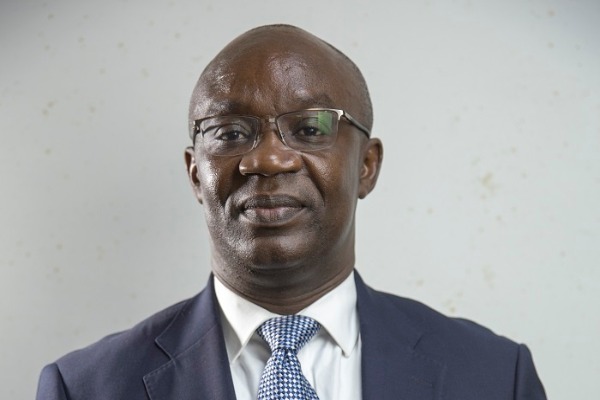
According to him, the Auditor Generals have always been found wanting when the persons against whom these certificates of surcharge and disallowance are issued trigger the appeal process.
By law, the Auditor General after receiving the notice and grounds of appeal has 14 days within which to file with the Court Registrar, five copies of all the documents used by the A-G in respect of which the appeal has been lodged and his response to the notice, setting out a concise statement of the facts and points of law that he intends to rely on.
This, the CEO of CBS Consulting noted has become a challenge, largely because the Auditor Generals do not always have the necessary documentation and sufficient audit evidence to back their allegations.
Errors in financial statements of a State Owned Company audited by the Auditor-General
He also indicated that some of the reports are error-ridden which makes it difficult to mount any substantive defence for surcharge or disallowance.
For instance, “the Report of Directors of the 2019 Financial Statements (FS) signed on 22 April, 2021 is not in line with Section 136(1) of CA 992 in many material respects: there was no disclosure of the audit remuneration of GHS250,000 charged by the Audit Service; there was inadequate disclosure of the state of affairs and no disclosure of dividend payable, etc.”
“There were many casting errors in both the 2018 and 2019 financial statements.
“2018 FS disclosed that the auditor is GAS but the report of directors states that, “in accordance with section 134(5) of the CA 1963 [the previous private audit firm] shall continue in office.”
“Misstatement of inventories in the 2018 FS: GHS191,822,000 instead of GHS387,962,000 due to casting error, which is repeated in 2019 FS as a comparative [FS].”
Way forward
While admitting that heavy audit workloads for the reports on the audit of public accounts, meeting audit deadlines and sustaining quality are difficult challenges, Dr Valentin Mensah said it is imperative that the Auditor General remains focused and obtain “sufficient appropriate audit evidence” before proceeding to publish his report on irregularities.
He said the Board of Ghana Audit Service “needs to introduce relevant amendments to the Audit Service Act and Regulations to incorporate the operationalization of the Supreme Court’s ruling on Surcharges and Disallowances.”
He said the A-G and the Audit Service must desist from being “a jack of all trades,” and must rather ‘direct the whole force of the mind to one particular object’ of auditing public accounts and issuing surcharges and disallowances as stipulated in Article 187 of the Constitution.
Latest Stories
-
Obuasi SHTS case: Eduwatch calls for sex offenders’ register and mandatory background checks for teachers
3 minutes -
GloMeF CEO urges intensified public education on new road traffic regulations
14 minutes -
‘Any tax on ChatGPT is an attack on education and innovation’- Akim Swedru, MP
18 minutes -
Obuasi SHTS sexual abuse scandal exposes systemic failure in child protection – Moving Masculinity
18 minutes -
Hubtel CEO calls for national data-sharing framework to boost AI development
21 minutes -
Twelve Golden Rules of real estate development in Ghana, Africa
25 minutes -
Five new telephony cell sites in Ashanti Region to be activated in October 2026 – Sam George
26 minutes -
Mahama cuts sod for Afienya Industrial Park, targets 120 enterprises
31 minutes -
Rush for fuel from accident tankers is stealing, punishable by law – NPA boss, Edudzi Tamakloe
36 minutes -
GhIG pushes for legislation to regulate geoscientists’ activities
42 minutes -
Mfantsipim @150: Ace Anan Ankomah leads project to preserve school’s musical heritage
46 minutes -
Gov’t launches rCOMSDEP in Ahanta West, Mpohor Fiase to promote responsible community mining
48 minutes -
AI is forcing professionals to rethink how they deliver value – Hubtel CEO
51 minutes -
Daily Insight for CEOs: Strengthening the CEO’s Leadership Legacy
52 minutes -
Jimmy Aglah’s ‘When the River Testified’ approved by NaCCA as Supplementary Reader
1 hour