

Audio By Carbonatix
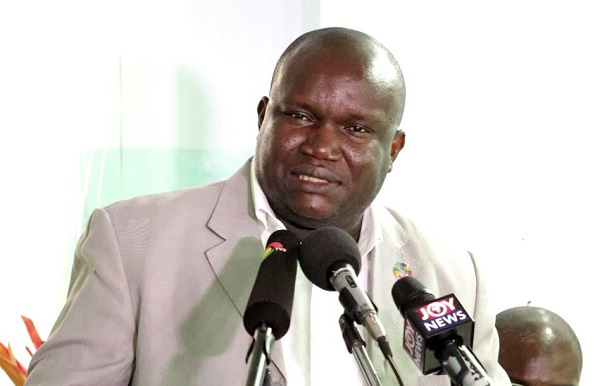
The Chief Executive Officer (CEO) of the Ghana Chamber of Telecommunications, Kenneth Ashigbey, has asked government to increase the electronic transaction levy's exemption threshold to ¢200 per day.
He said that will enable many micro and small companies that use mobile money to continue using the service.
"From the way they want to implement it [the e-levy], it is going to be between your mobile money if you’re transferring money in the same network to another person if you had done a debit card payment at a point of sale if you transfer money from your mobile money to another bank account or from a bank account to another person’s mobile money."
"Our suggestion is that even this particular levy may be increased to ¢200 per day, but it should be on a wallet," he said on Joy FM's Super Morning Show on Monday.
In announcing the levy in the 2022 budget, the Finance Minister, Ken Ofori-Atta, indicated that the ¢100 limit for the e-levy is meant to protect the poor and vulnerable in society.
Deputy Finance Minister, Dr John Kumah, also explained that “we noticed that about 30 per cent of people who use Momo in Ghana do not do more than ¢100 a day and that covers the poor category of Momo users.
"This policy exempted any Momo transaction that is up to ¢100 and below ¢100," he spoke on Joy FM’s Super Morning Show on Thursday, November 18.
Mr Ashigbey bemoaned the labelling of the levy as 'MoMo' tax, saying it is discriminatory and unfair because it is meant for all electronic transactions and transfers.
He said efforts being made to push QR code payment in the country might not yield the desired results due to the introduction of the electronic levy.
"So all of these conversations are things that we need to look at, and we should ensure that we can generate the revenue that government needs without killing the digitisation agenda of government [and] without impacting on financial inclusion.
"More importantly, it should be equitable. This should be an electronic transaction tax, not a mobile money tax," he added.
Meanwhile, Policy Risk Analyst, Dr Theo Acheampong, has also proposed that the ¢100 limit “should also be increased. I think [it] could possibly go up to about ¢175 a day and that, cumulatively, is around ¢5,000 a month.”
Latest Stories
-
He entered at eight. He is now 16: Ghana’s children growing up in prayer camps
2 hours -
‘Development must not always begin from Accra’ — Anwelle Foundation launched in Jirapa
2 hours -
PKO trio eye victories at Odwira Festival
5 hours -
346 Ghana Navy recruits pass out after 26 weeks of intensive training
5 hours -
Newsfile to discuss EOCO-MP arrest, drug trafficking, speech arrests and $235m water debt
6 hours -
JoyNews gets results as listeners raise GH¢40,000 to help 17-year-old student with cerebral palsy attend SHS
6 hours -
Vice President calls for stronger local pharmaceutical production to reduce medicine imports
6 hours -
The brewing tension at KNUST; Beware the Ides of October….
7 hours -
Health Ministry moves to integrate traditional medicine into mainstream healthcare
7 hours -
550 pupils in Kintampo South get educational lifeline as ‘Seeds of Hope’ reaches farming communities
7 hours -
Opoku Mensah urges Christian Council, House of Chiefs to speak up on democratic freedoms
8 hours -
Teacher unions’ strike: Minority demands immediate payment of teacher arrears, 20% deprived area allowance
8 hours -
The Accra-Kumasi Expressway: Building it right
8 hours -
Beyond gold exports: Building value and economic resilience from Ghana’s gold
8 hours -
2027 AFCONQ: Ghana under pressure as Gambia beat Somalia 2-1
8 hours