

Audio By Carbonatix
Engineers at the Kwame Nkrumah University of Science and Technology (KNUST) are warning against consumption of vegetables grown along the Bibini River in Kumasi.
This is due to the detection of unsafe levels of heavy metals such as lead and cadmium and harmful bacteria.
The Bibini river is found within KNUST and is a tributary of Wiwi river.
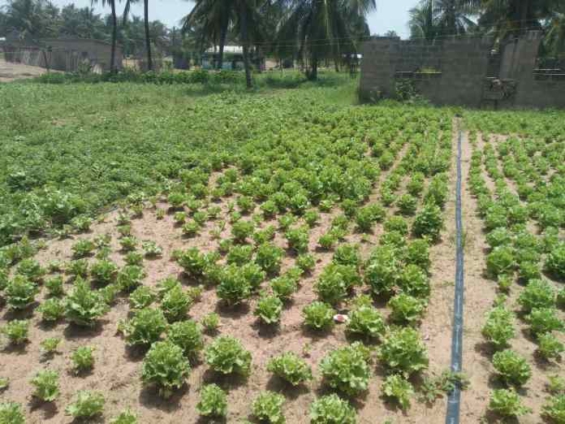
It serves as a source of irrigation water for vegetables especially lettuce grown around the area.
Restaurants and food vendors in Kumasi and Accra purchase vegetables from farms along the Bibini river.
However, the river receives waste materials from a drain that has its content coming from a petroleum filling station, a car washing bay, gymnasium, hair salons, and greywater drains from adjoining hostels as well as drains from some KNUST engineering laboratories.
These activities result in the introduction of heavy metals and bacteria.
With time, these waste materials accumulate in agricultural soils and into food crops thus causing health problems.
The study therefore sought to find out the quality of the Bibini river used for irrigation and its impact on vegetable quality cultivated along the river.
The study published in the Journal of Environment & Ecosystem Science (EES) found the water from the river to be of low quality.
“The water quality indicators; dissolved oxygen, biochemical oxygen demand and water temperature were not within the recommended standards of Ghana’s Environmental Protection Agency,” lead investigator, Dr. Bennetta Koomson of the Department of Materials Engineering explained.
The research team also found that heavy metals including Cadmium, Lead and Chromium were present in the water, soil and vegetables.
Cadmium and lead found in vegetables were above the permissible limits.
Harmful bacteria were also found in the irrigation water as well as the lettuce.
“This makes them unsafe for human consumption as they can have adverse health implications on consumers.
“Microbial populations of faecal coliforms were found in the irrigation water as well as on vegetables produced beyond required levels indicating the vegetables produced are contaminated and of low quality hence can affect human life when consumed,” she said.
The team wants farmers to relocate to other areas to avert any future unfortunate events. “Farmers must be extensively educated and encouraged to relocate to other suitable farming land,” she advised.
Latest Stories
-
Ghana explores centre of excellence for hearing, communication and cochlear implant care
1 hour -
Schizophrenia-related disorders lead mental health cases recorded in Ghana
1 hour -
Dutch authorities enlist Ghana in hunt for fugitive drug lord Bolle Jos
2 hours -
Ghana housing finance conference adopts communiqué to improve affordable housing access
6 hours -
Special Initiatives Minister urges Wa Technical Institute to enrol more girls as EU-backed solar training lab opens
7 hours -
In the matter of my first year at the Bar
7 hours -
ActionAid Ghana calls for an end to child marriage, greater investment in girls’ rights
7 hours -
Newsfile to tackle World Cup visa scandal, beach demolitions, education strikes, BRICS bid
7 hours -
UK-Ghana Trade & Investment Summit: Trade Resource Centre to help businesses maximise UK-Ghana trade opportunities
8 hours -
Embassy of Denmark celebrates World Maritime Day
8 hours -
Linking LEAP to productive inclusion could cut extreme poverty by 2030 – UNICEF
9 hours -
Trade Ministry backs use of creative arts to rehabilitate prison inmates
9 hours -
Negotiations with government to continue despite strike suspension – GNAT
9 hours -
‘Ghana cannot afford to waste public resources; every cedi has a job’ – Ato Forson
9 hours -
Ghana expects economic boost as World Assemblies of God Congress brings 10,000 delegates to Accra
9 hours