

Audio By Carbonatix
The central bank announced its biggest ever interest rate hike on Monday as it seeks to slow rampant inflation that threatens to create a debt crisis in one of West Africa's largest economies.
The Bank of Ghana (BoG) raised its main lending rate by 250 basis points to 17%, signalling an aggressive stance against the rocketing price of goods from flour to sugar to fuel, and against a depreciating local currency that has dented investor confidence.
"The uncertainty surrounding price development and its impact on economic activity is weighing down business and consumer confidence," the bank's governor, Ernest Addison, told a news conference. "The risks to inflation are on the upside."
Ghana was long seen as a rising star among Africa's emerging market economies, but underwhelming oil revenues and supply chain disruptions amid the Covid-19 pandemic have dampened expectations.
Consumer inflation reached 15.7% year-on-year in February, the highest since 2016. Food, transportation and housing prices have seen the greatest spikes. read more
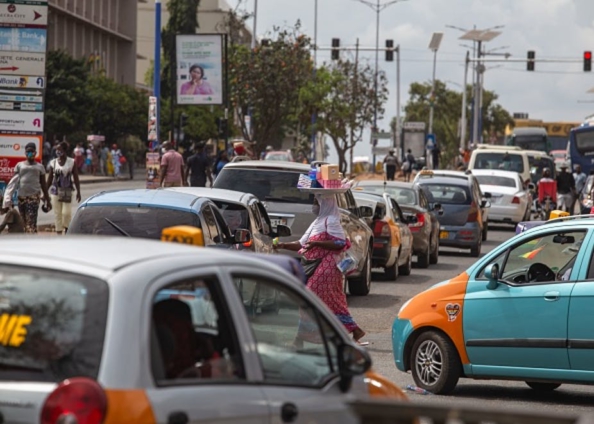
Restaurants and bakeries have downsized menus and laid off staff. The national taxi drivers union has threatened to strike over spiralling fuel costs.
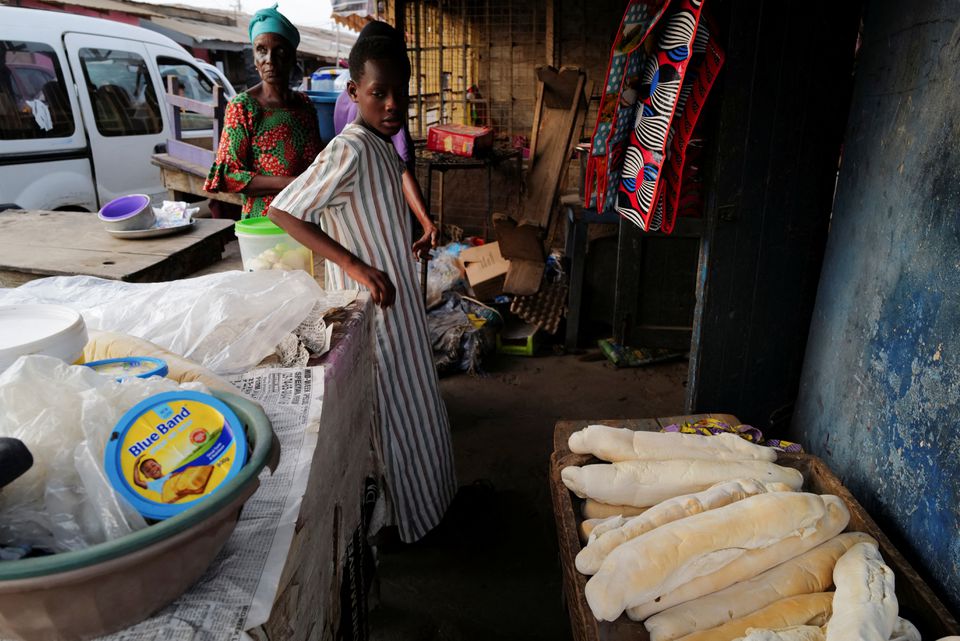
The war in Ukraine will likely make things worse. Ghana imports nearly a quarter of its wheat from Russia and around 60% of its iron ore from Ukraine, Addison said, though he expects inflation to return to its targeted band of 8% plus-or-minus 2% by the end of the year.
Meanwhile, Ghana's cedi has weakened by about 20% against the dollar this year, making it the second-weakest currency after the Russian rouble in a list of some 20 emerging market units tracked by Reuters.
Addison blamed that in part on recent downgrades by credit ratings agencies Moody's and Fitch, which he said shook investor confidence.
According to central bank figures, Ghana's total public debt stands at $50.8 billion (351.8 billion Ghanaian cedi), about 80% of the country's gross domestic product.
The central bank has made efforts to improve the situation. Monday's rate hike marks the first time it has increased the prime rate twice within one year since 2015, after a previous one in November.
Economists have warned the fiscal deficit may spark a full-on debt crisis if more money doesn't come in.
Ghana's ruling party says the solution lies in a 1.75% tax on all electronic payments, locally known as the 'e-levy', a proposal so detested by the opposition that it caused a brawl in parliament last year.
Latest Stories
-
COKA urges NPP executives to return to party’s core values ahead of 2028
1 minute -
NSMQ 2026: Nsutaman stages comeback against Serwaa Nyarko Girls, Hope College to book One-Eighth spot
10 minutes -
NSMQ 2026: Fafraha Community SHS defy odds to secure one-eighth spot
27 minutes -
Tolon Naa dies days after Yaa Naa, plunging Dagbon into further mourning
40 minutes -
CLOGSAG’s Bampoe Addo was a formidable voice for workers – FWSC eulogises
52 minutes -
Galamsey destroys over 100 acres of farmland at Akyem Atobriso
56 minutes -
GRIDCo completes tower replacement on Tema-Achimota transmission line
1 hour -
Republic Bank-JoyNews Habitat Fair Mini Clinic ends on a high note at Achimota Retail Centre
1 hour -
7-month-old baby found dead in a drain at Obuasi Old Estate
2 hours -
Tunisia coast guard recovers eight bodies of migrants whose boat sank
2 hours -
One man diagnosed with prostate cancer in the UK ‘every eight minutes’
2 hours -
We couldn’t afford prepaid credit after I lost 2012 election – Obuobia Darko
3 hours -
NSMQ 2026: Kpando SHS brush aside Abor, Jukwa to storm One-Eighth stage with 32 point gap
4 hours -
Duncan Amoah: Gov’t should create conditions for 24-hour economy, not build markets
4 hours -
JoyNews-Republic Bank Habitat Fair finale turns homeownership dreams into real possibilities
5 hours