

Audio By Carbonatix
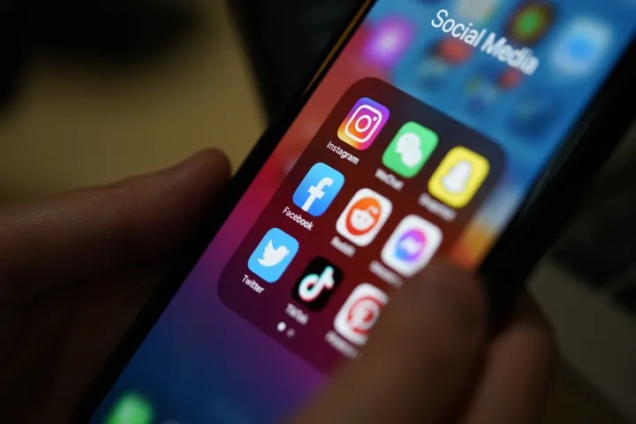
Child online protection experts are worried that Ghanaian parents are spending about 24 per cent of their productive hours on social media.
A survey conducted in about 2,000 households has revealed that screen time is significantly increasing among the adult population at the expense of their parental duties.
It added that on average, sleep takes 24%, entertainment scores 12% while household chores and errands consume 8% and 4%, respectively of the time of the adult population.
At a workshop organised by non-profit group Child Online Africa, Desmond Israel explained that the situation may have serious implications on families if the trends do not change.
The facilitator highlighted that the adult population spend about 16.7% of their time with their families, while using 50% of their time for work.
"Work covers everything else from school for the young ones and then work for the adult who are actually engaged in something productive.
“But if you look at the statistics in details, the real use of the time has varied. You’d see that you actually give only 4% to family…and social media is a whopping 24%. Work takes 24%. So, your productive work hours is now competing with social media,” he disclosed.
Meanwhile, the Executive Director of the group, Awo Aidam Amenyah, has urged parents to guide their wards to be responsible users of the internet.
“You know that when you connect to a device, it gets so exciting, you get to do things easily; it's all fun. Nobody thinks about any other thing apart from being able to do the work effectively. That has to do with the connectivity but then when it’s time for us to disconnect, it’s hard for us.
“Some of us, during the Covid-19 situation, we had difficulty just staying at home without our devices or without being connected to our devices. All these things that we do have implications for us and even for children that we are dealing with.
“When you sit down and think through what the effect of overuse of a device brings to you, it only bring some fear in you to be mindful whether you should even purchase the device for the child or not.
"Clearly, it has short and long-term effects and these effects will have to be deliberately thought through before we can be able to meaning of them,” she stated.
Latest Stories
-
Imagination Africa, Mentors Chess Academy to host second African Genius Chess Championship at Ghud Park
2 hours -
Nana B passport claims a diversionary tactic — Abu Jinapor
2 hours -
Pope Leo diagnosed with cancer as doctors remove lobe of lung, Vatican says
2 hours -
Legal Aid Commission takes free legal services to Techiman main lorry terminal
3 hours -
Nana B denies seeking passport favour, accuses Ablakwa of failing to account for GH¢16.4m
3 hours -
Young girls demand climate action, stronger protection against child marriage
3 hours -
Ex-gang boss sentenced to 40 years for orchestrating Tupac Shakur’s murder
3 hours -
From near-deferral to three awards: UMaT graduate’s academic journey
3 hours -
Atta Akyea denies seeking presidential pardon for Wontumi in galamsey case
4 hours -
Photos: Mahama commissions 85-bed Police Hospital ward, donates two ambulances
4 hours -
GTEC directs Ghana’s public universities to reopen by October 16 and begin lectures on October 19
4 hours -
Star Oil donates GH¢1million towards construction of new CID facility
4 hours -
Court hands Adjetey Sowah, two others lifetime bans after Amputee Football legal dispute
4 hours -
NDC appoints Julius Kwame Anthony as a Deputy Communications Director
4 hours -
Ghana repatriates 120 Nigerians rescued from suspected cybercrime centres
4 hours