

Audio By Carbonatix
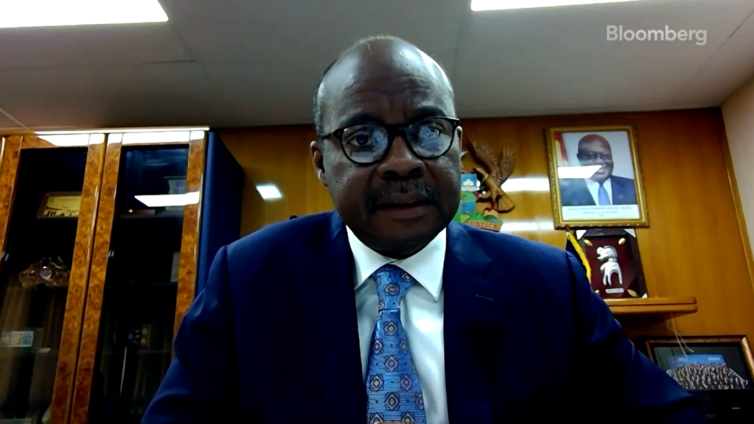
The Governor of the Bank of Ghana, Dr. Ernest Addison, has described the rising inflation rate of nearly 24% as a complicated matter that will be dealt with decisively in the ongoing Monetary Policy Committee (MPC) meeting that began today, May 18th, 2022.
In most scenarios, the Policy Rate – the rate at which commercial banks borrow from the Bank of Ghana - is higher than the inflation rate, but that will not be the case this time around.
Speaking to Bloomberg, the Governor said the rising inflation is a surprise to his team, but will take a major decision to address the issue.
“It’s an issue which in a sense is baffling to all of us. A year ago, inflation in Ghana was near single digit, particularly we were at 7.5% and then we find ourselves a year later in high double digits. It’s a very complicated environment, as you yourself you are aware we have come out of COVID-19. But Ghana fortunately was able to weather the impact of COVD well without recording high interest rates.”
“And is seem as if the economy has pick up significantly with a positive growth rate of 5.4%. At the Central Bank, we have anticipated this. In November last year, we raised the policy rate by 100 basis points [2.0%], and then we were rather surprised by the inflation rate which came out later on. After that in February [2022] in particular which triggered the 250 basis points [2.5%] adjustment in the policy rate”, he explained
Continuing, Dr. Addison said “this week, the MPC will be meeting, I do not want to preempt what the Committee will decide but I think is a very complicated issue. As we said inflation is nearly 24%, we need to take a position on what to do with the current policy rate at 17%”.
On stabilizing the economy, the Governor said his outfit has had limited set of instruments to manage liquidity and interest rate.
However, he believes, it has done well to support government to manage situation.
“The role of the Central Bank in stabilising has been very clear. I mean we have limited set of instrument trying to manage liquidity and trying to manage interest rates; and that is what we have done in the last year or so.”
“As you heard, we have to be conscious of the impact of both external developments and internal developments on exchange rate. And if market get tighter and we see capital beginning to flow out, obviously, interest rates instruments will have to do part of the work”, he added.
Latest Stories
-
JoyNews gets results as listeners raise GH¢40,000 to help 17-year-old student with cerebral palsy attend SHS
7 minutes -
Vice President calls for stronger local pharmaceutical production to reduce medicine imports
22 minutes -
The brewing tension at KNUST; Beware the Ides of October….
43 minutes -
Health Ministry moves to integrate traditional medicine into mainstream healthcare
1 hour -
550 pupils in Kintampo South get educational lifeline as ‘Seeds of Hope’ reaches farming communities
1 hour -
Opoku Mensah urges Christian Council, House of Chiefs to speak up on democratic freedoms
2 hours -
Teacher unions’ strike: Minority demands immediate payment of teacher arrears, 20% deprived area allowance
2 hours -
The Accra-Kumasi Expressway: Building it right
2 hours -
Beyond gold exports: Building value and economic resilience from Ghana’s gold
2 hours -
2027 AFCONQ: Ghana under pressure as Gambia beat Somalia 2-1
2 hours -
Eastern NPP Women’s Organiser calls on AG, Police to secure bail for Salomey Baffoe
2 hours -
Poverty, illiteracy driving acceptance of vote-buying among women – Damongo Queen Mother
3 hours -
Photos: Democracy Is Not For Sale forum in Savannah region
3 hours -
GNFS launches 2026/27 National Anti-Bushfire campaign in Atebubu, records 62.8% reduction in bushfire cases
3 hours -
I’ll vote for a female president; women are less likely to steal from the state – Okyeame Kwame
3 hours