

Audio By Carbonatix
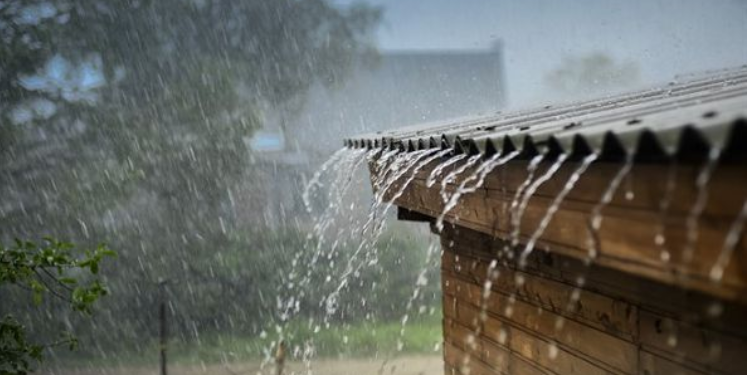
Children and adults are at risk of dangerous health effects from drinking roof runoffs.
That is the conclusion of a research by the scientists at the Department of Chemistry, Kwame Nkrumah University of Science and Technology.
With no potable water running through taps in many homes in Ghana, rainwater harvesting is an alternative source of water.
However, the roofing materials have been identified to affect the water quality.
The research published in the 2022 edition of the journal, Science of the Total Environment, sought to find certain substances and how they can impact consumers’ health.
“We wanted to assess heavy metals concentration, physicochemical and bacteriological parameters in roof runoffs and estimate the water quality index and health risk these metals pose to consumers,” lead scientist, Prof. Osei Akoto said.
For the study, rainwater was harvested from Aluzinc, Aluminum, Galvanized, and Asbestos roofing materials within the Ejisu municipality.
The scientists used rainwater collected directly from the sky as comparison.
They found heavy metals such as Cadmium, iron, chromium and some germs were above the WHO standard.
Cadmium in runoffs from asbestos roofing, for instance, was found to pose the biggest risk.
“All runoffs from the four roofing materials recorded Cd, Fe, Cr, turbidity, pH, E.coli, total and fecal coliform levels above WHO limit for drinking water.
“Cadmium recorded the highest non-cancer health risk to children and adults in all the roof runoffs,” he explained.
“The estimated water quality index for runoffs from the four roofing materials exceeded 100 indicating their unsuitability for drinking.
“Hazard quotients of 9.53 and 4.08 were estimated for a child and an adult respectively via oral exposure to Cd in runoffs from Asbestos roofing material,” he said.
The water collected directly from the sky was however much safer.
“There was a significant variation in pH, EC, Zn, Cd, Cr, Fe, E. coli, total and fecal coliform levels between control samples and roof runoffs,” he noted.
The researchers are therefore advising against drinking rainwater.
Latest Stories
-
GNFS contains fire outbreak at Teshie Lekma Road near Lekma Hospital
4 hours -
Samia Nkrumah rejects the narrative that Ghanaians were happy after Nkrumah’s overthrow
5 hours -
A Mother’s pain: Tribute by Ivan Baidoo’s mother
5 hours -
‘Forgive us for staying away’ — Samia Nkrumah leads family back to Nkroful, pledges to preserve Nkrumah’s legacy
6 hours -
Ernest Nuamah scores twice as Lyon beat Rennes
6 hours -
‘My dear Ivan’ – A father’s tribute to a son tragically killed
6 hours -
GNPC Explorco advances Voltaian Basin drilling preparations with 13.5km access road
6 hours -
Cabinet approves facility manager for Borteyman Sports Complex – Kofi Adams
7 hours -
Sanitation is improving; critics may be ‘living in another world’ – Salaga South MP replies Bekwai MP
7 hours -
Government must do more to tackle sanitation crisis – Bekwai MP
7 hours -
World Cleanup Day: GFF begins sanitation education in local communities
7 hours -
EU Ambassador, IGP discuss stronger cooperation on policing and security
7 hours -
Africa Nations Volleyball Championship: Ghana set up quarterfinal clash with Cameroon after beating Chad
7 hours -
Meet Dr Benjamin Appiah Osei — Ghana’s three-time tourism awards winner
8 hours -
UEFA & CONCACAF demand Fifa pays $10m to all 211 members
8 hours