

Audio By Carbonatix
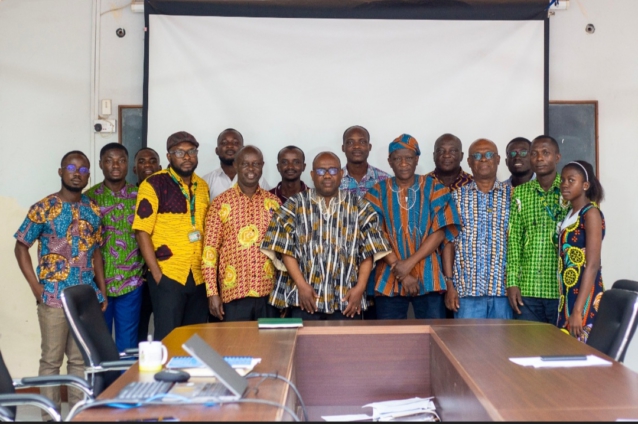
Geophysicists at the Department of Physics, Kwame Nkrumah University of Science and Technology, are set to commence geophysical/geoarchaeological investigations into one of Ghana’s oldest slave centres in the southeastern part of Ghana.
It is in partnership with the Department of Archeology and Heritage Studies, University of Ghana.
The project aims to advance the field of geophysics and geoarchaeology and also train a new generation of geoscientists in Ghana by exploring the use of geophysics. It will complement the methods that archaeologists use in investigating the past; especially in excavating and documenting the myriad nature of the relics of the slave trade in southeastern Ghana.
The project funded by the Society of Exploration Geophysicists (SEG) is in collaboration with the KNUST Geophysical Society.
The two-week field camp would trace the different slave routes and living conditions of enslaved people essentially for enriching historical contexts.
The project would provide a proper understanding of the varied nature of the trade in enslaved people.
It would discover relics of slavery such as shackles, rifles, unearthed remains, pottery, beads, and evidence of cultural practices.
Giving an overview of the project, Project Lead, Dr. Cyril D. Boateng, said “the project will significantly impact the growth of geophysics and geoarchaeology in slavery-related heritage studies in the West African region”.
Head of Department of Physics, Prof. Reuben Yao Tamakloe indicated “the maiden project would continue to keep the Department at the forefront of geophysical research and training in Ghana”.
In a move to expand the knowledge base in geophysics in Ghana, the project would train at least twenty-five geophysics students.
They will be equipped on site with the technical know-how in using geophysical implements for archaeological explorations.
The two-week field camp is said to commence in the first two week of October, 2022.
Project co-lead, Prof Wazi Apoh from Department of Archeology and Heritage Studies, University of Ghana indicated the project will contribute to the achievement of SDGs 4, 10 and 11 before the 2030 deadline.
President of KNUST Geophysical Society, Gad Thompson emphasized the relevance of application of geophysical techniques to national development.
He called for the preservation and maintenance of the Ghanaian heritage.
The first KNUST SEG Geophysics Field Camp has been launched with applications open to the general public with interest in geophysical science.
Apply to join the 1st KNUST SEG Geophysics Field Camp and complete the process.
Latest Stories
-
140 migrants in single dinghy rescued in English Channel
20 minutes -
FIFA president Infantino will stand for re-election
29 minutes -
Catholic Bishops reject calls for Chief Justice’s resignation over political remarks
38 minutes -
Germany’s far-right AfD set for big win in eastern state, just short of majority
59 minutes -
Catholic Bishops urge Chief Justice to avoid remarks that could raise doubts about impartiality
1 hour -
Mrs Doris Emma Doryumu (Nee Dove)
1 hour -
Illegal mining concessions easier to obtain than lawful ones in Ghana – Prof Frimpong-Boateng
2 hours -
At least 5 dead after Amazon cargo plane barreled off runway at Miami airport
2 hours -
Frimpong-Boateng proposes Environmental Restoration Fund funded by mineral royalties
2 hours -
Corrupt individuals are worse than pathogens; their actions cause premature deaths – Prof Frimpong-Boateng
2 hours -
No illegal mining operation will find refuge on Akyem Essase lands — Chief declares
2 hours -
Flight price rises due to ‘foolish leaders’ starting wars, Virgin’s Branson says
2 hours -
Consult traditional authorities before granting mining concessions on stool lands — Baffour Sikabede to gov’t
2 hours -
Why are European countries moving their gold out of North America?
2 hours -
Galamsey: Chiefs must not trade rivers for mining royalties – Baffour Sikabede
2 hours