

Audio By Carbonatix
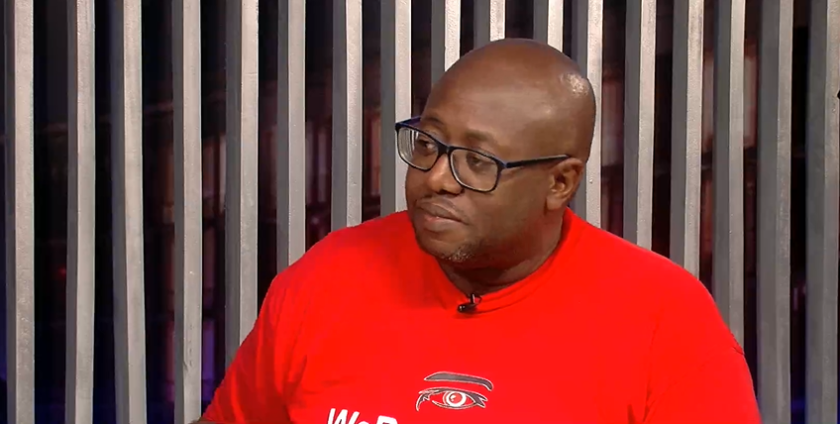
The Director of Advocacy at the Centre for Democratic Development (CDD-Ghana), Dr. Emmanuel Kojo Asante, says the decision to focus on the Auditor-General’s powers of surcharge and disallowance is due to its importance in Ghana’s accountability architecture.
According to him, the Auditor General’s refusal to exercise his powers of surcharging and disallowance in his reports since 2019 is a matter of worry as it is encouraging impunity within state agencies and institutions.
Speaking on JoyNews’ PM Express, he noted that the Auditor General recommending the erring institutions to recover misused money is not the way to go.
“It was important for us to focus on this very important tool which kind of brings the whole accountability architecture together because the Auditor General has independence, and that independence ensures that if he makes that finding against an entity he doesn’t leave that entity to take the task of recovering that misuse or whatever.
“He has the tool outside of that entity to surcharge an individual who is responsible for that loss to the state. When that happens it ensures that people are held accountable,” he said.
He added that leaving the retrieval of misused funds etc to the erring institutions produces no desirable outcomes.
He explained that there has not been an established mechanism to track and ensure the retrieval of these misused funds by the agencies thus leading to uncollected funds from previous years being mentioned again in new reports.
“If you rely on the same offender to go and recover that money, if they don’t do it, there’s really no mechanism for tracking, following and making sure that that is done. And that’s why when you see the Auditor General’s report there’s a long list of recommendations that have not been implemented from the previous year. So there’s really no serious tracking.
“If anybody who has been involved in the private sector with auditing, that will be a serious matter if the next audit comes and you have not even dealt with it. So it’s a key component and it’s a deterrent effect.
“If you don’t apply it then people don’t think the next time that I have to be careful, I have to make sure I follow the rules otherwise I will pay from my pocket,” he said.
Latest Stories
-
The Paradox of Plenty — When every smartphone becomes a newsroom
27 minutes -
GTA sensitises taxi drivers in ‘Know Ghana’ tourism campaign
2 hours -
Archbishop Agyinasare calls for responsible speech amid growing social media abuse
2 hours -
‘It will be inexcusable for gov’t not to honour payment of teachers’ arrears by 30th October’ – Haruna Iddrisu
2 hours -
Forbes’ World’s Best Employers 2026: No Ghanaian firm ranked among 900 companies
2 hours -
Electronic processing of teachers’ data: ‘The decision is the Controller’s’ – GES boss
2 hours -
Teachers’ Strike: Haruna Iddrisu questions paper-based processing of promoted teachers’ data
2 hours -
Savannah Region: Kunfusi bridge collapses again, leaving nearly 4,000 residents cut off
2 hours -
Teachers’ strike: GES targets Monday deadline to submit promotion data to Controller
2 hours -
Inflation to average 11.3% in 2027 – Fitch Solutions
3 hours -
‘I didn’t campaign for NDC to come and do this nonsense’ – Kpebu on EOCO’s conduct
3 hours -
Fitch Solutions maintains policy rate forecast of 14% by December 2026
3 hours -
Diaspora Nasara Caucus congratulates Mohammed Ali Suraj, new NPP executives
5 hours -
Dr Antwi-Boasiako’s cybersecurity book showcased at UN crime prevention congress
5 hours -
We will empower the grassroots and protect every vote – NPP’s 1st Vice Chair Kojo Bamba
5 hours